US Diplomatic Outreach to Jamaat-e-Islami Sparks Regional Concerns
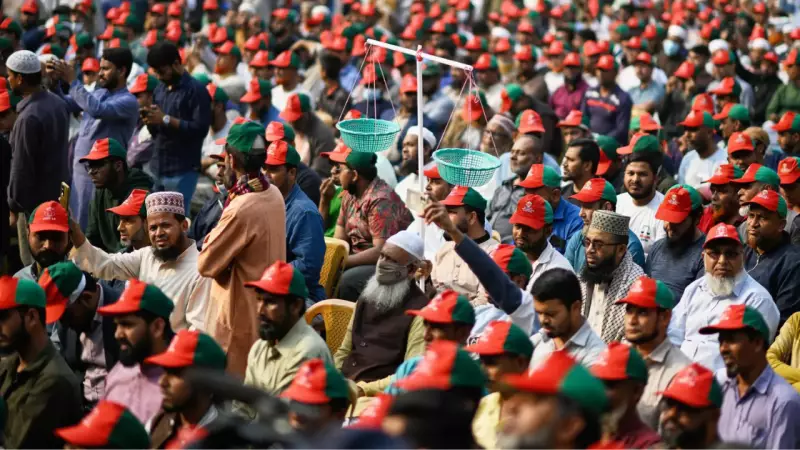
In a significant diplomatic development, the United States has been actively cultivating ties with Jamaat-e-Islami (JI), a political party in Bangladesh with a long history of opposing India and the country's 1971 liberation movement. According to a detailed report by the Washington Post, officials from the US embassy in Bangladesh recently convened with leaders of Jamaat-e-Islami at the party's regional office in Sylhet. This meeting represents the latest in a series of contacts between the US State Department and various Islamist groups in the lead-up to Bangladesh's crucial February elections.
"We Want Them to Be Our Friends": US Diplomat's Remark
The Washington Post report cites a US diplomat explicitly stating, "We want them to be our friends," during an interaction with the local press. This candid admission underscores a strategic pivot in American foreign policy towards engaging with Islamist factions in Bangladesh. However, the US embassy in Dhaka has moved to clarify its position, dismissing any notion of partisan support. Monica Shie, a spokesperson for the embassy, emphasized that the December conversation was merely a routine, off-the-record discussion with local journalists where numerous political parties were discussed.
"The United States does not favour one political party over another and plans to work with whichever government is elected by the Bangladeshi people," Shie was quoted as saying. Despite this official stance, the pattern of engagement tells a more nuanced story.

Expanding US Engagement with Jamaat-e-Islami
US involvement with Jamaat-e-Islami has been steadily intensifying over the past two years, marking a notable shift in diplomatic strategy. This outreach began in earnest in 2023 when a US diplomat met with a senior Jamaat leader in Dhaka, coinciding with violent protests against the government of Sheikh Hasina. The pace of engagement accelerated significantly in 2025, with several high-profile interactions:
- In March, two former US ambassadors visited Jamaat's headquarters.
- By June, the party was invited to the US embassy for discussions on internal governance, as well as its stated positions on women's and minority rights.
- In July, Traci Anne Jacobson, the chargé d’affaires, met with Jamaat chief Shafiqur Rahman at the party's headquarters.
Perhaps most tellingly, the US granted Rahman a visa in November 2025, despite his record of extremist rhetoric. This includes praising Yahya Sinwar, the leader of Hamas, and making openly antisemitic remarks. This visa issuance underscores Washington's growing willingness to engage with the Islamist group as Bangladesh approaches a pivotal electoral period.
Implications for India: A Rocky Road Ahead
This evolving US-Jamaat dynamic carries profound implications for India, which views the situation with increasing apprehension. With the Awami League—traditionally the only pro-India political force in Bangladesh—currently banned, and its leader, Sheikh Hasina, residing in India, the geopolitical landscape appears increasingly challenging for New Delhi. Anti-India sentiments have already manifested in a troubling rise in crimes against minorities, particularly Hindus, in recent times.
The Emerging Political Trio in Bangladesh
In the absence of the Awami League, three primary political forces are poised to dominate the upcoming polls:

- Bangladesh Nationalist Party (BNP): Having rebuilt after skipping the 2024 elections, the BNP has nominated candidates for 237 seats. Its campaign centers on "Bangladeshi nationalism," often tapping into "India Out" sentiment and advocating a tougher, sovereignty-first stance.
- Jamaat-e-Islami (JI): The historically anti-India party that opposed Bangladesh's 1971 liberation. Its organizational strength was demonstrated by its student wing's victory in the Dhaka University poll in 2025.
- National Citizen Party (NCP): A youth-led, reformist alternative that emerged from the 2024 student movement, led by figures like Nahid Islam.
Together, these groups are expected to significantly shape the outcome of the 2026 elections. The overarching concern for India is that, regardless of which party secures victory, bilateral ties are likely to remain on a rocky and uncertain path.
Scenario Analysis: Potential Outcomes for India
A Jamaat-e-Islami Victory: This outcome would be particularly worrisome for India. Given the party's foundational anti-India ideology and opposition to the 1971 liberation, sustaining close ties with New Delhi would be improbable. Jamaat could actively push Bangladesh to diversify its alliances away from India, potentially leaning towards China or Pakistan in areas such as defense and infrastructure. Despite some softer public messaging, the party's core ideology remains anti-secular, posing a clear security concern for India.
A BNP Victory: This scenario might result in a cooler, yet more pragmatic, relationship with India. The BNP has shown a willingness to engage on practical matters like trade and security. Recent goodwill exchanges, such as the party's positive response to Prime Minister Narendra Modi's message regarding the health of Khaleda Zia, indicate a potential for managed diplomacy, albeit within a framework of heightened nationalistic rhetoric.
An NCP Victory: Relations with this youth-led party have only deteriorated from India's perspective. The NCP grew out of protests against the Hasina government and its leadership has been critical of traditional political structures, complicating diplomatic engagement.
The Hasina Factor and Bilateral Tensions
Compounding the situation is the ongoing demand from Bangladesh for the return of ousted Prime Minister Sheikh Hasina, who fled to India last year following violent protests. Since then, the relationship between the two neighboring nations has been tumultuous, with both countries temporarily suspending visa services recently, citing security concerns.
Adding to the tension, Sheikh Hasina has repeatedly criticized the interim administration in Bangladesh from her location in India. She has placed full responsibility for the country's turmoil on Muhammad Yunus, who leads the interim government. Hasina has accused the administration of emboldening extremist elements, failing to safeguard minorities, and weakening ties with New Delhi. She alleges that radical groups are using Yunus to steer foreign policy without public consent, asserting that relations with India could stabilize only once legitimate governance is reinstated.
It is important to note that Sheikh Hasina has been convicted of "crimes against humanity" and sentenced to death by a Dhaka court. A report by the UN human rights office estimated that as many as 1,400 people died between July 15 and August 15 during the "July Uprising," following a sweeping security crackdown ordered by her government.
This complex interplay of domestic Bangladeshi politics, shifting US diplomatic priorities, and India's strategic concerns creates a volatile regional scenario. The upcoming elections in Bangladesh are not merely a domestic affair but a geopolitical event with significant ramifications for South Asian stability and international relations.