

America's Strategic Pivot: Implications for India's Defense Posture
The recent release of America's National Defense Strategy (NDS) has sent clear signals about Washington's evolving global priorities, with significant implications for India's security calculus in the Indo-Pacific region. Coming on the heels of the National Security Strategy (NSS), this document reveals a fundamental shift in how the United States views its defense commitments worldwide.
The Burden-Sharing Imperative
The NDS delivers a blunt message to American allies: they must assume greater responsibility for their own defense. The document explicitly criticizes past administrations for creating what it terms "dependencies" among partner nations. This philosophy extends across multiple theaters—from Europe facing Russian pressure to South Korea confronting North Korean threats, and West Asian allies dealing with Iranian aggression.
What makes this particularly significant for India is how this burden-sharing doctrine applies to the Indo-Pacific region. While the United States maintains its commitment to the area, the expectation that regional powers will shoulder more of the security load has never been clearer.

Peace Through Strength in the Indo-Pacific
The NDS articulates a "peace through strength" approach that forms the cornerstone of American strategy in the Indo-Pacific. This centers on defending the First Island Chain—a crucial maritime boundary designed to contain China's expansion—through what strategists call "deterrence by denial."
This approach seeks to prevent adversaries from achieving their objectives rather than relying on retaliatory threats. The strategy represents a sophisticated attempt to counter Chinese ambitions without triggering direct confrontation, possibly reflecting Beijing's significant trade leverage over Washington.
Notable Omissions: The Quad's Absence
From India's perspective, two glaring omissions stand out in the NDS document. First, there is no mention of the Quadrilateral Security Dialogue (Quad) that brings together India, the United States, Japan, and Australia. Unlike the NSS, which acknowledged the Quad's role as a security anchor in the region, the NDS remains conspicuously silent on this important partnership.
This absence could be interpreted in multiple ways. Some analysts suggest it might indicate Washington's potential drift toward a G-2 arrangement with China, leaving traditional allies more vulnerable to Beijing's coercion. However, this interpretation must be balanced against continued bilateral defense engagements between the United States and individual Quad members, including India.
Second, India itself receives no specific mention in the NDS. While the NSS made passing reference to New Delhi's regional role, the defense strategy document focuses overwhelmingly on protecting the American homeland and maintaining influence in the Indo-Pacific, while expecting Eurasian partners to handle their primary defense needs independently.
Industrial Mobilization and Technological Competition
The NDS commits to "supercharging" America's Defense Industrial Base (DIB) to consolidate military power. While previous administrations have pursued similar goals, the current emphasis reflects heightened awareness of technological challenges posed by China's expanding military capabilities.
This industrial mobilization underscores the long-term nature of strategic competition in the Indo-Pacific and highlights the importance of sustained defense investment.
India's Strategic Imperatives
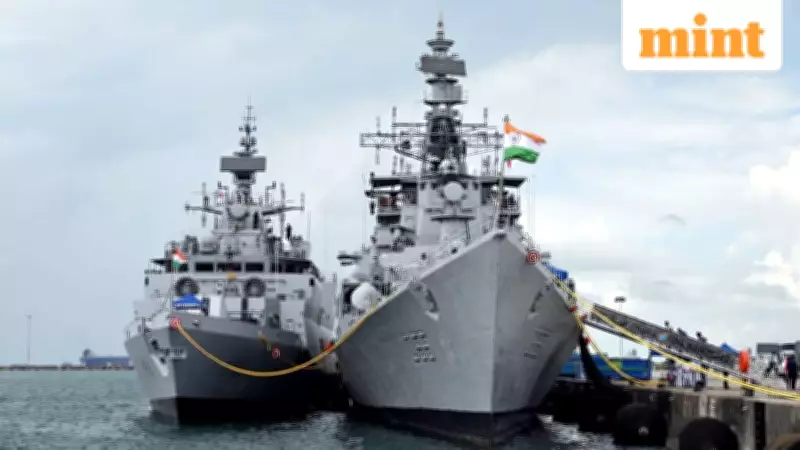
The forthcoming Union budget presents a critical opportunity for New Delhi to respond to these strategic shifts. India must boost defense spending beyond previous allocations and prioritize naval power projection capabilities, particularly east of the Malacca Strait and into the Western Pacific.
Several factors make this investment imperative:

- The NDS treats the Indo-Pacific as vital to American security interests, but India cannot take Washington's commitment for granted
- Greater self-reliance in regional security could provide insulation against unpredictable policy shifts in Washington
- Naval power projection represents a crucial capability gap that must be addressed to secure India's interests in the broader Indo-Pacific
While the Quad's absence from the NDS might seem concerning, practical cooperation continues through mechanisms like the Indo-Pacific Logistics Network (IPLN), which conducted field exercises in December to enable rapid responses to regional contingencies.
Long-Term Strategic Thinking Required
India faces a critical juncture in its defense planning. The NDS reveals an American administration focused on concentrating strength where it matters most—the Indo-Pacific—while expecting regional partners to contribute substantially to their own security. This clinical approach to power deployment demands an equally calculated response from New Delhi.
Investing in naval capabilities represents not just a military necessity but a strategic imperative. As the United States recalibrates its global defense posture, India must ensure it has the capabilities to protect its interests and contribute to regional stability, regardless of how Washington's priorities might evolve in coming years.
The authors, Harsh V. Pant and Kartik Bommakanti of the Observer Research Foundation, provide crucial insights into these strategic dynamics at a time when India's defense decisions will have lasting consequences for its regional standing and security.





