

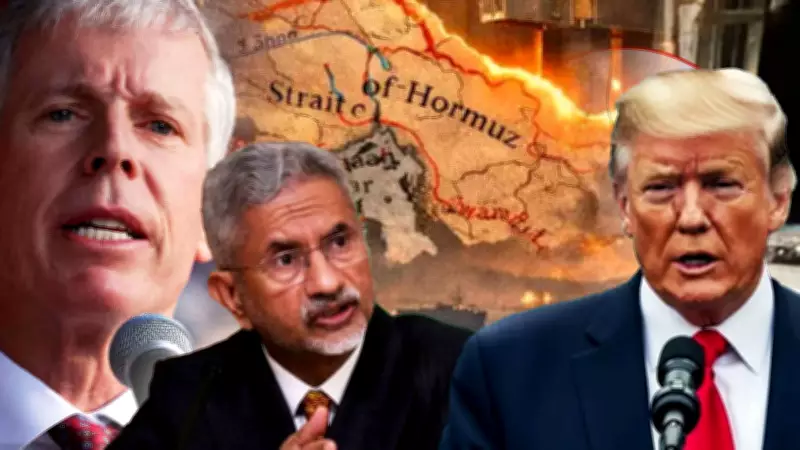
US Signals India's Potential Role in Strait of Hormuz Security Coalition
The escalating crisis around the Strait of Hormuz is positioning India at the center of a significant geopolitical dialogue. As tensions continue to threaten global energy supplies, the United States has subtly indicated that New Delhi could be a key player in efforts to secure this vital maritime passage.
US Energy Secretary Outlines Coalition Plans
US Energy Secretary Chris Wright has revealed that former President Donald Trump is actively engaging with multiple nations to form a coalition dedicated to protecting commercial shipping through the strait. This narrow waterway, connecting the Persian Gulf and the Gulf of Oman, serves as a conduit for approximately 20 percent of the world's oil trade, making its security paramount to global economic stability.
High Stakes for India's Energy Security
For India, the implications are profound. The nation relies heavily on energy imports from the Gulf region, with a substantial portion of its oil and gas supplies transiting through the Strait of Hormuz. Any disruption in this corridor could severely impact India's energy security and economic growth, elevating the urgency of its potential involvement in the proposed coalition.

Jaishankar Clarifies India's Position on Iran
Amid these developments, External Affairs Minister Subrahmanyam Jaishankar has provided crucial clarification regarding India's diplomatic stance. He emphasized that there is no overarching agreement with Iran guaranteeing safe passage for Indian vessels through the strait. Instead, each ship is cleared individually through diplomatic channels, underscoring the nuanced and case-by-case nature of India's engagements in the region.
Geopolitical Ramifications and Global Response
The US initiative to form a coalition reflects broader concerns over maritime security and energy flow stability in the face of rising regional tensions. India's potential role highlights its growing geopolitical influence and the balancing act it must perform between its strategic partnerships and energy dependencies. As global powers assess their responses, the situation underscores the interconnectedness of international trade, diplomacy, and security in critical chokepoints like the Strait of Hormuz.






