

US Imposes June Deadline for Ukraine-Russia Peace, Zelenskyy Announces
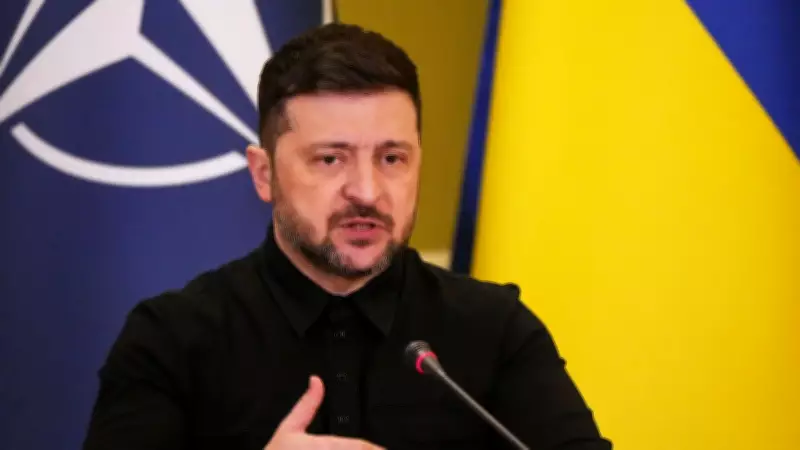
Ukrainian President Volodymyr Zelenskyy has publicly confirmed that the United States has issued a firm deadline to both Ukraine and Russia, demanding a conclusive agreement to end the protracted war by June of this year. This significant development underscores the Trump administration's intensified push for a diplomatic resolution to the nearly four-year-long conflict that has reshaped global geopolitics.
Pressure Mounts as Deadline Looms
President Zelenskyy explicitly stated that the American administration is likely to exert substantial pressure on both warring parties should they fail to meet this critical summer deadline. "The Americans are proposing that the parties end the war by the beginning of this summer and will probably put pressure on the parties precisely according to this schedule," Zelenskyy was quoted by the Associated Press. "And they say that they want to do everything by June. And they will do everything to end the war. And they want a clear schedule of all events." This directive signals a decisive shift in Washington's diplomatic strategy, moving from facilitation to active deadline-driven mediation.
Next Round of Trilateral Talks Set for Miami
In a related move, Zelenskyy announced that Ukraine has formally accepted a Washington proposal to host the next crucial round of trilateral peace talks in the United States next week. The discussions are anticipated to be held in Miami, Florida, marking a historic first for such high-stakes negotiations to occur on American soil. This follows the second round of US-brokered talks, which recently concluded in Abu Dhabi. While those talks facilitated a major prisoner exchange, they failed to yield a breakthrough on the core political and security issues prolonging the war.

The Intractable Deadlock Over Donbas
The central obstacle to peace remains the status of the Donbas region in eastern Ukraine. Russia continues to insist that Kyiv withdraw its forces from this territory, where intense fighting persists—a condition Ukraine has vowed never to accept. The Donbas, encompassing the Luhansk and Donetsk oblasts, was once the industrial heartland of Ukraine.
According to analyses from the Centre for International Relations and Sustainable Development (CIRSD), a think-tank associated with the World Economic Forum, the region holds immense strategic value. It accounts for over 50 percent of Ukraine's coal reserves, 20 percent of its gas fields, and hosts fertile farmland, vital water resources, and vast deposits of critical minerals essential for renewable energy technologies.
Russia justifies its occupation through its "Novorossiya" historical narrative, claiming large parts of southeastern Ukraine as historically Russian lands. Current assessments, including those from the US-based Institute for the Study of War, indicate Russia controls nearly all of Luhansk and approximately 70 percent of Donetsk oblast.
This territorial impasse is compounded by shifting public sentiment. Reports, including from The New York Times, suggest a growing number of Ukrainians might consider ceding the parts of Donbas still under Kyiv's control to Russia if it would definitively end the war. This perspective found an echo in October 2025 when, following a summit with Russian President Vladimir Putin in Alaska, US President Donald Trump suggested that Ukraine's Donbas region should be "cut up," with much of it remaining under Moscow's control, as a potential pathway to peace.
The upcoming Miami talks, set against the backdrop of this new American-imposed June deadline, represent a pivotal moment. All parties are now navigating increased pressure to bridge seemingly irreconcilable differences over sovereignty, security, and the future of a strategically vital region, with the summer of 2026 poised as a potential turning point in one of Europe's most devastating modern conflicts.






