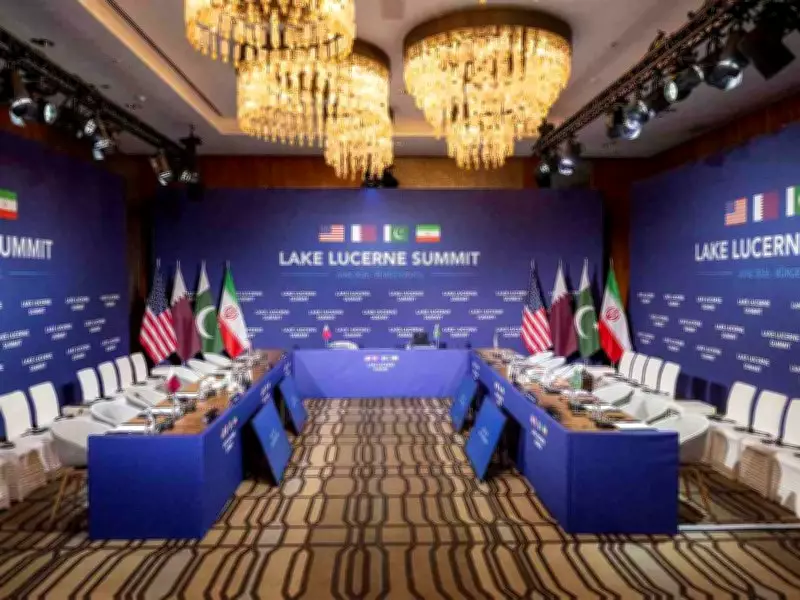
The United States and Iran have agreed to establish a "de-confliction cell" aimed at securing a cessation of military operations in Lebanon, marking a technical milestone in their 14-point memorandum of understanding (MoU). The first session of technical talks concluded at the Burgenstock resort in Switzerland, even as US President Donald Trump threatened to "hit Iran very hard" if it continued supporting proxy groups, and Iran called this the "first real test" of the agreement.
Agreement on De-Confliction Cell
According to a joint statement issued by mediators Qatar and Pakistan's Ministry of Foreign Affairs on Monday, the de-confliction cell will involve the parties and Lebanon, facilitated by the mediators, to ensure compliance with the termination of military operations in Lebanon under the MoU. "Moreover, the parties agreed on the creation of a de-confliction cell, between the parties, the Lebanese Republic and facilitated by the Mediators, to ensure the adherence of the termination of military operations in Lebanon as per the MoU," the statement noted. Technical talks will continue for the remainder of the week at the Burgenstock resort on all issues.
Trump's Threats and Iran's Response
In a post on Truth Social, Trump said, "Iran must immediately stop their highly paid PROXIES in Lebanon from causing trouble. If they don't, we'll hit Iran very hard again, just like we did last week, only harder!!!" His comment drew immediate condemnation from Iran, which had been enraged by continued Israeli military action in Lebanon, calling it "the enemy's breach of promise." Iranian Parliament Speaker MB Ghalibaf described the remarks as a sign of American desperation, adding that Iran would not be intimidated and that its armed forces were prepared to respond if necessary.

Iran's Stance on the Talks
Iranian Foreign Minister Seyed Abbas Araghchi said that the "first real test" of the talks remains the formation of the de-confliction cell. The conflict in Lebanon has become a volatile focal point of Middle Eastern instability, characterised by sustained military engagements between the Israel Defence Forces (IDF) and Hezbollah. The Israeli government has maintained that its military presence is necessary, with Prime Minister Benjamin Netanyahu stating that the IDF will continue operating to counter the threat posed by Hezbollah. Hezbollah claims strong backing from Iran, which considers ending aggression against Lebanon a top priority.
Broader Diplomatic Context
Iranian authorities have consistently asserted that the situation in Lebanon must be treated as an essential component of any comprehensive diplomatic agreement with the United States. Iran's Foreign Ministry spokesperson warned of "subsequent steps" if the MoU's terms are further breached, after Iran closed the Strait of Hormuz, calling Israel's actions "relentless and continuous violation of the ceasefire," according to Iran's news agency Fars. The US administration has navigated a complex position, with Trump warning Tehran to immediately stop its proxies. The mediators, Qatar and Pakistan, stated they "will continue to do their utmost to ensure that the negotiations continue to be conducted in a constructive atmosphere with the aim of reaching a final deal."