

White House Confirms Ongoing Iran Talks Despite Tehran's Public Denials
The White House has confirmed that diplomatic talks with Iran remain active, even as Tehran continues to publicly deny any direct negotiations while maintaining military pressure across the Middle East region. White House press secretary Karoline Leavitt stated that the United States has been engaged in productive conversations over the past three days, suggesting that the Iranian regime is seeking an exit strategy from the current conflict.
Contrasting Public Statements and Private Signaling
Former President Donald Trump, speaking to congressional Republicans, insisted that Tehran desperately wants to make a deal but is afraid to admit it publicly. "They want to make a deal so badly, but they're afraid to say it," Trump declared, adding that Iranian officials fear retaliation from their own people or from the United States.
Meanwhile, Iran's public messaging presents a starkly different picture. Parliament Speaker Mohammad Bagher Ghalibaf posted on social media platform X that Iran's enemies are preparing to occupy one of the country's islands with support from regional states. He warned that Iranian forces are monitoring all enemy movements and would target vital infrastructure of any regional state that supports such actions.

The Emergence of Mohammad Bagher Ghalibaf
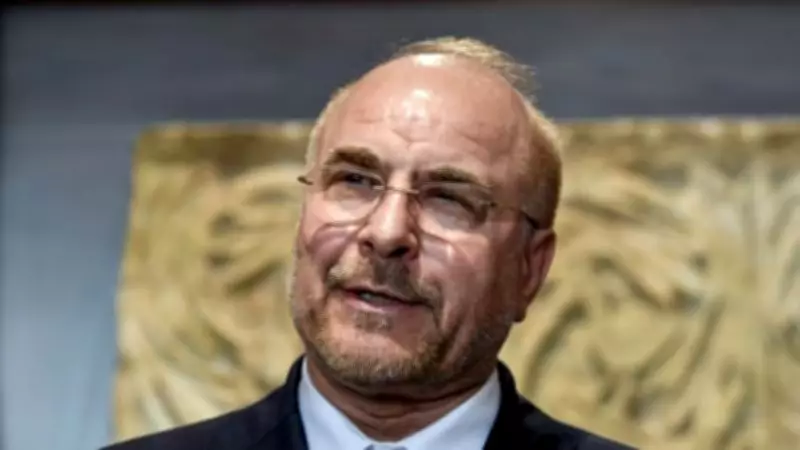
This contrast between private signaling and public denial has drawn significant attention to Ghalibaf, who has emerged as a potential diplomatic channel despite his hardline credentials. Trump described the Iranian interlocutor only as a "top person" who is "most respected," declining to identify him specifically to protect his safety. Multiple media outlets have pointed to Ghalibaf as the most likely figure involved in these discussions, though he has publicly denied that negotiations are taking place.
Ghalibaf represents an unusual choice for diplomatic engagement. Rather than being a reformist or peacemaker in the Western mold, he is a hardline survivor of Iran's political system whose career has been marked by populist imagery, allegations of corruption, and a reputation for ruthlessness. Analysts have noted striking similarities between Ghalibaf's political style and that of Donald Trump, with both men building their brands around strongman imagery and transactional approaches to power.
Ghalibaf's Political Background and Credentials
Ghalibaf's rise through Iran's power structure has been remarkable. His career has spanned multiple institutions:
- Service in the Islamic Revolutionary Guard Corps
- Command of the Revolutionary Guards' aerospace forces
- Position as Tehran police chief
- Eight-year tenure as mayor of Tehran
- Current role as parliament speaker
As mayor of Tehran, Ghalibaf promoted himself as a hands-on modernizer, expanding transportation infrastructure and public works while cultivating a managerial, television-ready executive image. Foreign Policy noted that his career was "fueled by populist imagery, real estate corruption, and ruthlessness," while The Wall Street Journal described him as "Iran's wannabe strongman."
Why Ghalibaf Appeals to Washington
Ghalibaf's appeal to the White House appears to stem precisely from his hardline credentials rather than despite them. A softer figure in Tehran might lack the authority to deliver on any agreement, whereas Ghalibaf maintains ties to the Revolutionary Guards, political institutions, and wartime command networks. Analysts see him as one of the few surviving figures with sufficient regime legitimacy to potentially carry a deal.
However, there are significant risks in this approach. The Guardian has cautioned that attempting to elevate Ghalibaf as Iran's point man may reflect either a misunderstanding of Iran's multilayered power structure or an effort to reshape it. Iran insists that formal authority still lies elsewhere in the government, and Ghalibaf's own denials demonstrate his awareness of the political danger in appearing too close to the United States.

Current Diplomatic and Military Dynamics
The White House continues to mix diplomatic overtures with open threats. Bloomberg reported Leavitt stating that if Iran fails to accept the reality of the current moment, Trump will ensure they are hit harder than ever before. "President Trump does not bluff and he is prepared to unleash hell," she warned.
Meanwhile, Iran is not signaling surrender. According to The Wall Street Journal, Tehran is demanding guarantees that U.S. and Israeli attacks will not resume, reparations for war damage, and recognition of its authority over the strategically vital Strait of Hormuz. Iran is also considering formal transit fees in the strait, having already sought ad hoc payments from some vessels. This underscores the central reality that even while exploring diplomatic options, Tehran continues to use escalation as leverage.
Obstacles and Next Steps
The immediate test is whether the private contacts the White House acknowledges can evolve into more formal negotiations before Trump's self-imposed deadline. Bloomberg reported that a 15-point U.S. peace proposal was delivered to Iran via Pakistan, and CNN suggested that Vice President JD Vance may travel there this weekend, though the White House has not confirmed any meeting.
The obstacles remain substantial. Trump wants Iran's nuclear infrastructure dismantled and its missile arsenal curtailed, while Iran has shown no willingness to accept terms that resemble capitulation. Oil prices continue to surge, the Strait of Hormuz remains a critical pressure point, and regional states are bracing for potential spillover effects from the conflict.
This leaves the war revolving around an increasingly paradoxical possibility: that the man best positioned to explore a deal for Iran is someone whose political instincts bear uncanny resemblance to Trump's own. As Foreign Policy noted, "What makes the prospective encounter between Trump and Ghalibaf genuinely strange is how much they share." In a conflict driven by force, ego, and survival, this unexpected resemblance may ultimately prove more significant than either side is willing to acknowledge.





