

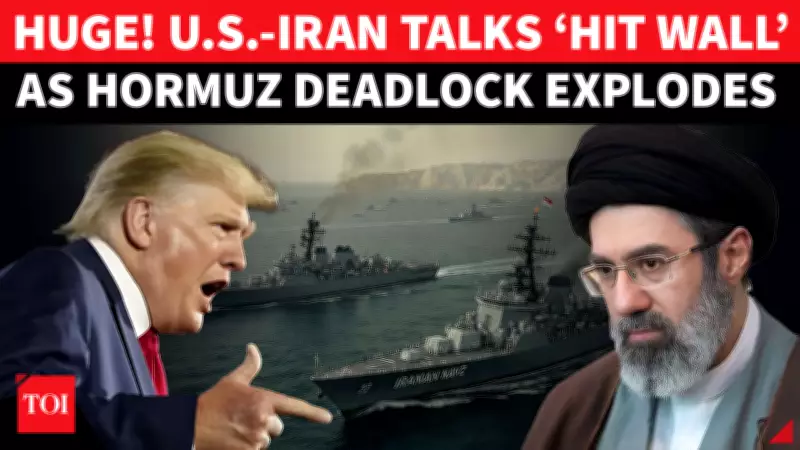
US-Iran Talks in Islamabad Stall Over Strait of Hormuz Dispute, Negotiations Continue
High-stakes negotiations between the United States and Iran in Islamabad have reportedly hit a major roadblock, with growing tensions centered around the strategic Strait of Hormuz. According to multiple reports, disagreements over key conditions have pushed the talks into a potential stalemate, raising concerns about the future of ongoing diplomatic efforts.
Key Points of Contention
The discussions, mediated by Pakistan, were expected to ease regional tensions, but conflicting positions on security, ceasefire terms, and maritime control have complicated progress. While both sides continue to engage in dialogue, reports suggest the gap between Washington and Tehran remains wide. The situation is being closely monitored as any breakdown could have serious implications for regional stability and global energy routes passing through Hormuz.
Background and Context
The talks in Islamabad come amid heightened geopolitical tensions in the Middle East, with the Strait of Hormuz serving as a critical chokepoint for global oil shipments. Iran has historically leveraged its control over this waterway as a bargaining chip in international negotiations. The United States, under the current administration, has emphasized the need for secure and free navigation through the strait as a non-negotiable condition for any broader agreement.

Mediation Efforts and Challenges
Pakistan's role as a mediator in these talks highlights its strategic position in the region, but the complexity of the issues at hand has tested its diplomatic capabilities. Sources indicate that while both parties remain at the table, the lack of consensus on fundamental issues such as maritime security protocols and ceasefire enforcement mechanisms has led to a deadlock. Experts warn that without a breakthrough, the risk of escalation in the region could increase significantly.
Implications for Global Stability
The stalemate in Islamabad negotiations carries profound implications not only for the Middle East but also for global energy markets. The Strait of Hormuz is a vital artery for oil exports, and any disruption could lead to price volatility and supply chain issues worldwide. Additionally, the ongoing dialogue is seen as a barometer for broader US-Iran relations, which have been strained for decades over nuclear proliferation and regional influence.
Future Prospects
Despite the current impasse, diplomatic channels remain open, with both sides expressing a commitment to continue talks. Observers note that while progress is slow, the mere continuation of dialogue is a positive sign in a historically contentious relationship. However, the need for compromise on core issues like the Strait of Hormuz control and security arrangements remains a critical hurdle that must be overcome to achieve a sustainable agreement.






