

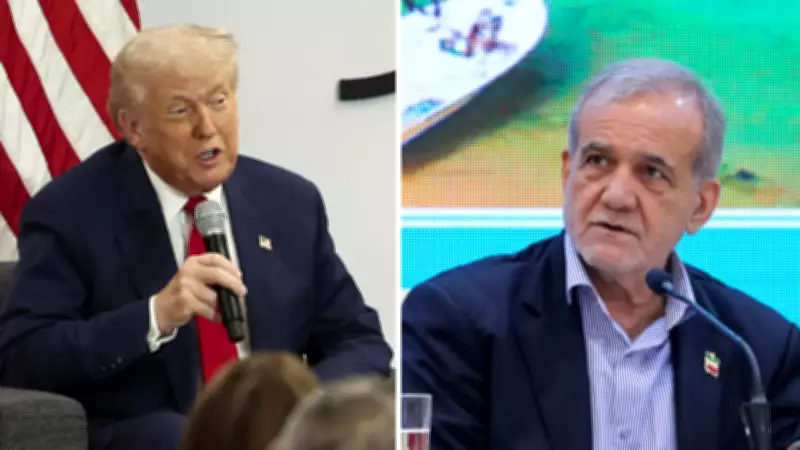
US-Iran Negotiations Hang in Balance Amid Escalating Tensions
The possibility of a second round of diplomatic talks between the United States and Iran remains shrouded in uncertainty, as a thick fog of mistrust and misinformation clouds the path forward. According to reports from Washington, Tehran has conveyed to Washington through Pakistani channels and Iranian official media that it is not prepared to participate in scheduled discussions in Islamabad. This refusal stems from what Iran perceives as deliberate American provocation in the sensitive waters of the Persian Gulf, effectively halting US Vice President JD Vance's planned second trip to Islamabad within a week.
Trump's Contradictory Moves and Vance's Precarious Position
President Trump had previously projected Vance's visit and its potential outcomes as a foregone conclusion, employing a strategy that blended coercion with cajoling to pressure Iran. However, at the time of reporting, Vance had not yet boarded Air Force Two for the anticipated 15-hour flight to Pakistan, leaving him in a state of limbo. Increasingly viewed as a casualty of the President's unpredictable whims, Vance faces a journey with no guaranteed diplomatic results. In a bizarre twist, Trump initially informed US news outlets that security concerns would prevent Vance from traveling, only to reverse course and confirm the trip, before seemingly derailing it altogether by announcing the seizure of an Iranian cargo ship allegedly attempting to evade the US naval blockade.
Iran's Firm Stance and Accusations Against the US
Iran has stood firm in its demands, insisting that the United States must lift its naval blockade of the Hormuz Strait and cease other aggressive actions as a precondition for any talks. Trump, on his part, has maintained that the blockade will remain in place until a formal agreement is signed, with threats to resume bombing Iran by Wednesday evening if the two-week ceasefire expires without progress. Iran's foreign ministry spokesman, Esmaeil Baqaei, condemned these actions from Tehran, stating, "While claiming diplomacy and readiness for negotiations, the US is carrying out behaviours that do not in any way indicate seriousness in pursuing a diplomatic process." He labeled the blockade and cargo ship seizure as clear violations of the ceasefire, adding that Iran has made no plans for further negotiations, even as Pakistan prepared Islamabad to host the talks.

Domestic and International Repercussions
The escalating situation has sparked domestic criticism in the US, where Trump faces growing pressure from voters and lawmakers to justify the financial costs of the conflict, particularly amid rising gas prices that have surged from pre-war levels of $2.50-$3.00 per gallon to over $4.00 in many regions. In response to polls showing his approval ratings dipping into the 30s, Trump lashed out on social media, dismissing reports as "FAKE NEWS" and alleging rigged polls, while defending his stance on Iran's nuclear capabilities. He also pushed back against perceptions that Israeli Prime Minister Benjamin Netanyahu influenced the war, attributing the conflict to his long-held belief that Iran must never obtain nuclear weapons, reinforced by recent events.
As tensions simmer, the diplomatic impasse highlights the fragile state of US-Iran relations, with both sides entrenched in their positions and no immediate resolution in sight. The international community watches closely, hoping for a breakthrough that could avert further escalation in the volatile region.






