

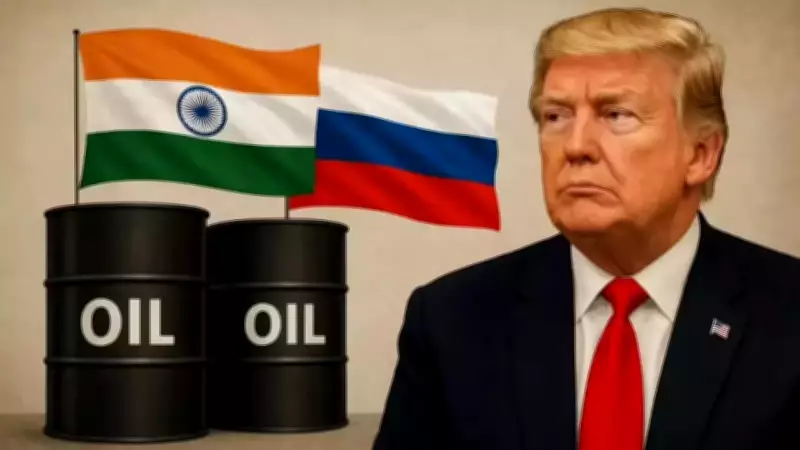
US Removes 25% Tariff on Indian Imports in Major Trade Shift
In a significant diplomatic and economic move, US President Donald Trump has officially terminated the additional 25 percent tariff that was imposed on imports from India. This decision stems from New Delhi's contentious purchases of Russian oil, which had previously strained bilateral relations. The tariff removal is a central component of a newly announced interim trade framework designed to reset and strengthen ties between the two nations after months of friction.
Conditional Relief Tied to Energy Policy
The executive order signed by President Trump specifies that the extra 25 percent ad valorem duty, initially enforced under Executive Order 14329, will be lifted effective 12:01 AM Eastern Standard Time on February 7, 2026. According to the White House, this action follows India's commitment to address US concerns by pledging to cease direct or indirect imports of oil from the Russian Federation. The White House acknowledged that India has taken "significant steps" in this direction, paving the way for the tariff suspension.
The suspension, however, is not unconditional. As outlined in the joint statement, the US Secretary of Commerce will actively monitor India's compliance with its pledge to stop importing Russian oil. Should India resume such imports, senior officials are mandated to recommend whether the President should reimpose the 25 percent tariff. This mechanism effectively uses trade incentives as leverage, directly linking tariff relief to India's energy choices and creating a high-stakes diplomatic balancing act.

Impact on Indian Exporters and Sectoral Relief
The tariffs had inflicted considerable hardship on Indian exporters, particularly since the US is India's largest export destination. Last August, Washington imposed a 25 percent reciprocal tariff along with an additional 25 percent levy related to Russian oil purchases, resulting in a total duty of 50 percent on certain goods. Key sectors such as textiles, leather, chemicals, and machinery bore the brunt of these increased costs, disrupting trade flows and economic stability.
Under the interim framework, US tariffs on Indian goods will now decrease from 50 percent to 18 percent. Furthermore, pending the finalization of the agreement, duties could eventually be reduced to zero on a range of products, including generic pharmaceuticals, gems and diamonds, and aircraft parts. This phased reduction offers a pathway to enhanced market access and economic cooperation.
India's Concessions and Broader Trade Ambitions
In return for the tariff relief, India has agreed to eliminate or reduce tariffs on US industrial goods and various agricultural products. These concessions cover items such as dried distillers' grains, soybean oil, tree nuts, fruit, wine, and spirits. Additionally, New Delhi has expressed its intention to purchase approximately $500 billion worth of US energy products, aircraft, technology goods, and coking coal over the next five years, signaling a substantial boost to bilateral trade.
The joint statement characterizes this arrangement as a preliminary step toward a more comprehensive Bilateral Trade Agreement. It also includes commitments to address non-tariff barriers and expand cooperation in defense and technology sectors, underscoring the multifaceted nature of the US-India partnership. This development marks a pivotal moment in trade diplomacy, with both nations navigating complex geopolitical dynamics while seeking mutual economic benefits.






