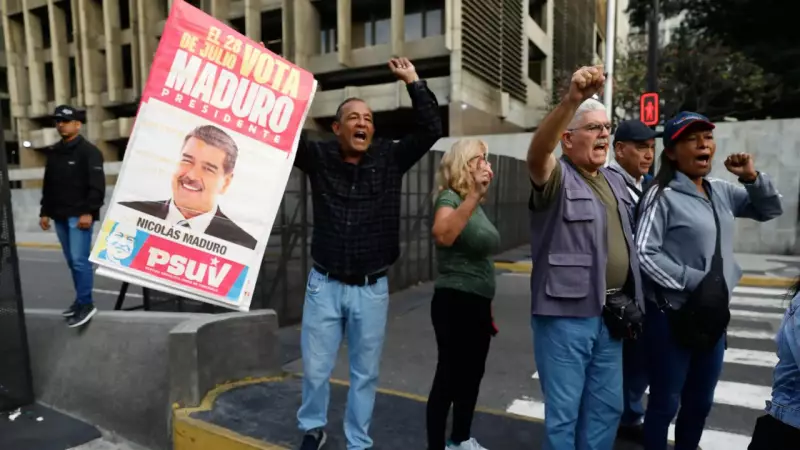
In a dramatic escalation of tensions, the United States has launched a major military operation against Venezuela, resulting in the capture of the country's President, Nicolás Maduro. US President Donald Trump announced that American forces carried out the assault, forcibly flying Maduro and his wife out of the nation. This unprecedented action has sent shockwaves across the international community, prompting urgent diplomatic responses and raising fears of regional instability.
International Outcry and Calls for Restraint
The US operation, described by Washington as the culmination of years of pressure on Caracas, has been met with widespread alarm. Venezuela's government immediately declared a state of emergency, labelling the American move as "an extremely serious military aggression." Regional allies and global powers have voiced deep concern, warning of potential humanitarian crises and a breach of international norms.
The European Union, through its top diplomat Kaja Kallas, called for restraint and respect for international law following a conversation with US Secretary of State Marco Rubio. "Under all circumstances, the principles of international law and the UN Charter must be respected," Kallas stated. While the EU does not recognise Maduro's legitimacy, it has also stopped short of formally recognising opposition figure Edmundo Gonzalez Urrutia as president.

In the United Kingdom, new Prime Minister Keir Starmer emphasised the need to uphold international law. "I want to establish the facts first, I want to speak to President Trump, I want to speak to allies," Starmer said, clarifying that Britain was not involved in the operation.
Sharp Condemnation from Global Allies and Adversaries
Reactions from nations traditionally aligned with Venezuela were swift and severe. Russia demanded immediate clarity, calling the event an "abduction" and condemning the strike as "an act of armed aggression against Venezuela." The Russian foreign ministry accused the US of letting ideological hostility triumph over pragmatism.
In Latin America, Colombian President Gustavo Petro termed the US action an "assault on the sovereignty" of the region and warned it would precipitate a humanitarian crisis. Colombia has called for an urgent meeting of the UN Security Council. Mexico's left-wing government also condemned the strikes, stating that unilateral military action "seriously jeopardizes regional stability."
Other nations added their voices to the chorus of condemnation:
- Spain offered to mediate, urging de-escalation and reiterating its non-recognition of Venezuela's 2024 election result.
- Iran strongly condemned what it called a flagrant violation of Venezuela's sovereignty and territorial integrity.
- Cuba denounced the operation as "state terrorism" and urged a global response to the "criminal attack" on Caracas.
Uncertain Future for Venezuela
The sudden removal of President Maduro has plunged the oil-rich South American nation into profound uncertainty. With the head of state in US custody, the immediate political and constitutional next steps remain unclear. The Venezuelan government's declaration of a state of emergency indicates a nation in crisis, facing an external intervention of a scale not seen in the region in decades.
The international community now finds itself navigating a volatile new reality. While several governments have long criticised Maduro's regime, the unilateral military action by the United States has created a diplomatic firestorm. The core principles of national sovereignty, non-intervention, and the use of force under international law are at the centre of the raging debate. The coming days will be critical in shaping the response from multilateral bodies like the United Nations and determining the path forward for Venezuela and its people.