

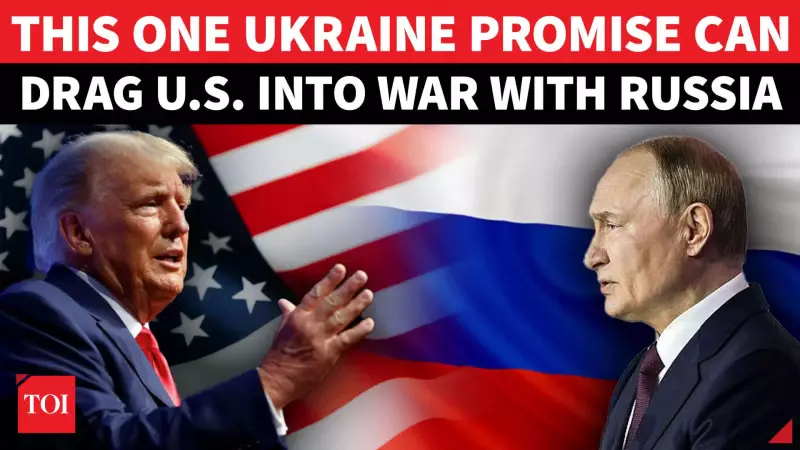
Washington is currently engaged in a high-stakes debate over whether to extend NATO-style security guarantees to Ukraine, a decision that analysts fear could dramatically increase the chances of a direct military confrontation between the United States and Russia. This critical discussion comes as former President Donald Trump prepares for a pivotal meeting with Ukrainian leader Volodymyr Zelensky.
The High-Stakes Promise on the Table
The core proposal under consideration involves providing Ukraine with security assurances that mirror the commitments of NATO's famous Article 5. This article is the alliance's collective defence clause, which treats an armed attack against one member as an attack against all. Supporters of the plan argue that such a firm, legal guarantee is essential to deter any future Russian aggression against Ukraine once the current war ends. They believe it is the only way to secure a lasting and stable peace in the region.
However, a powerful chorus of opponents warns that this is far from a symbolic gesture. They stress that an Article 5-like promise is a binding legal obligation. If the United States were to make such a commitment and Russia later tested it by attacking Ukraine again, America could be treaty-bound to enter the war directly. This scenario, critics caution, would erase the current red lines separating the West from a direct NATO-Russia conflict, with potentially catastrophic consequences.

Diplomacy Accelerates Amid Opposing Demands
The internal debate in Washington is intensifying just as diplomatic efforts are speeding up. The planned meeting between President Donald Trump and President Volodymyr Zelensky is a key focal point. Kyiv and Moscow continue to hold sharply opposing positions on the terms for any potential peace settlement, making the US's next move incredibly sensitive.
This situation highlights a growing sense of unease among American policymakers. They are grappling with a fundamental and dangerous question: where does legitimate deterrence end and unacceptable escalation begin? Providing a ironclad security guarantee could prevent a future war, but it could also become the very trigger for a broader, more devastating conflict involving the world's largest nuclear powers.
A Global Crisis at a Crossroads
The timing of this debate adds several layers of complexity. The United States is evaluating this monumental decision while managing a change in administration. The outcome of the Trump-Zelensky talks could significantly influence the final choice. Furthermore, Russia has consistently stated that Western security guarantees to Ukraine would cross a fundamental red line, viewing them as an existential threat.
Ultimately, the dilemma facing Washington encapsulates the extreme risks of the post-invasion world. The pursuit of a secure and sovereign Ukraine is now directly balanced against the terrifying prospect of a direct US-Russia military clash. The path chosen will not only define Ukraine's future but also determine the stability of the entire international order for decades to come.






