

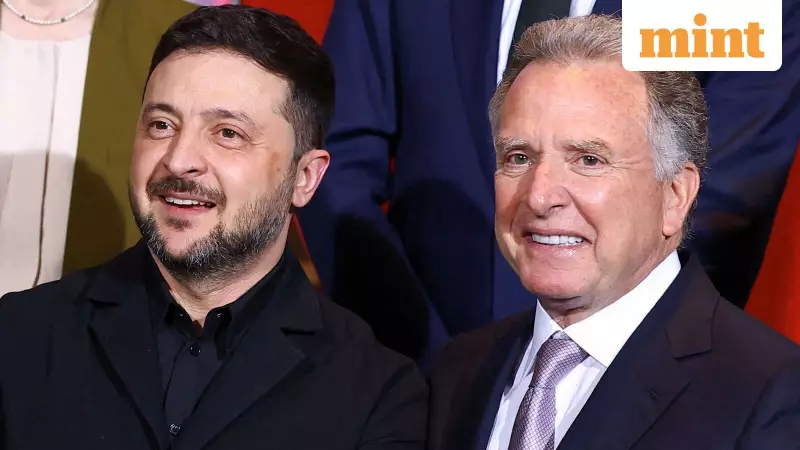
In a significant move to unblock stalled negotiations, the United States has formally offered Ukraine a security guarantee aimed at deterring future Russian aggression. This pledge emerged during intensive talks in Berlin involving American, Ukrainian, and European leaders, marking a potential turning point in the long-running conflict.
Details of the US Security Pledge
The American commitment, detailed by U.S. officials, involves Washington promising to seek Senate backing for a formal role in safeguarding Ukraine from any future attack. This guarantee is seen as a critical demand from Kyiv to consider signing a peace deal with Russia. While the exact details of the U.S. role remain publicly unspecified, officials clarified it would not involve deploying American ground troops.
The security framework, outlined in a draft document prepared by U.S., European, and Ukrainian militaries, is designed to be similar in spirit to NATO's Article 5 collective defense principle. It would include provisions for monitoring, verification, deconfliction, and the supply of weapons to deter a Russian force. Crucially, it lays out the response if Russia were to breach a future peace agreement and attack Ukraine again.

The presence of U.S. Air Force General Alexus Grynkewich, who heads both NATO's military operations and the U.S. European Command, underscored the seriousness of the military discussions. European officials noted that Washington is also open to providing enabling support like intelligence and logistics.
Progress and Remaining Hurdles in Berlin
The talks, which took place on December 15 and 16, 2025, saw eight hours of direct discussion between Ukrainian President Volodymyr Zelensky, Trump's Russia envoy Steve Witkoff, and senior advisor Jared Kushner. U.S. officials stated that consensus had been reached on approximately 90% of the issues under negotiation, describing the progress as "really, really positive."
President Zelensky confirmed advancements on the security guarantees, noting that "destructive" parts of an initial proposal had been removed. He emphasized the importance of U.S. acceptance of "Article 5-like" guarantees and welcomed the military draft, calling it "quite good." German Chancellor Friedrich Merz hailed the American commitments as "truly remarkable" and a "very important step forward."
However, a major obstacle remains: the status of contested territories. The issue of which areas Kyiv would retain and whether Ukraine would unilaterally withdraw from parts of the Donetsk region it currently controls is still unresolved. European officials have advised Ukraine to secure clear U.S. military support before agreeing to other major concessions.
The Path Forward and Political Dynamics
The Trump administration is pushing for a deal to be finalized by the end of the year, though Ukrainian and European officials express skepticism about such a rapid timeline. U.S. officials insist they are not pressuring Ukraine unduly but cautioned that the security guarantee offer "wouldn’t stay on the table forever," urging Kyiv to resolve remaining issues swiftly.
A critical next step is the U.S. domestic process. Officials stated that President Trump is open to putting the security package to a Senate vote. Allies like Senator Lindsey Graham have encouraged this move, arguing that a strong bipartisan vote would signal enduring U.S. support for Kyiv, regardless of future administrations. Graham suggested such an agreement, if supported by Ukraine and Europe, could gain wide Democratic and Republican backing, though it would likely be a "congressional blessing" rather than a formal treaty.
The overarching uncertainty is whether Russia would accept any deal that involves territorial compromise or the very security guarantees for Ukraine that Kyiv requires. Moscow has already stated it would strongly object to U.S.-backed security guarantees being included in a peace plan, setting the stage for further diplomatic challenges.






