US Launches Historic Recovery Mission for WWII Hell Ship Victims After 80 Years
Eighty years after the tragic sinking of the Japanese hell ship Ōryoku Maru in December 1944, the United States has initiated a bold and multi-year recovery expedition into the depths of the Philippine Sea. This mission, led by the Defense POW/MIA Accounting Agency (DPAA), aims to provide closure for the families of over 1,600 prisoners of war who perished in one of the worst maritime disasters of the Pacific War, with approximately 250 Americans still unaccounted for.
Tragedy of the Hell Ship Ōryoku Maru
According to US Naval History, the Ōryoku Maru was an infamous Japanese vessel used to transport Allied prisoners of war under horrific conditions. In December 1944, while carrying more than 1,600 POWs, the ship was attacked by US Navy aircraft from the USS Hornet. Unaware that their own countrymen were locked in the dark and stifling holds below deck, American pilots conducted 17 separate air strikes over three days. Records from the Naval History and Heritage Command describe scenes of chaos and madness as extreme dehydration and suffocation took a heavy toll before the ship finally sank to the bottom of Subic Bay.
Pentagon’s High-Precision Search for Missing Americans
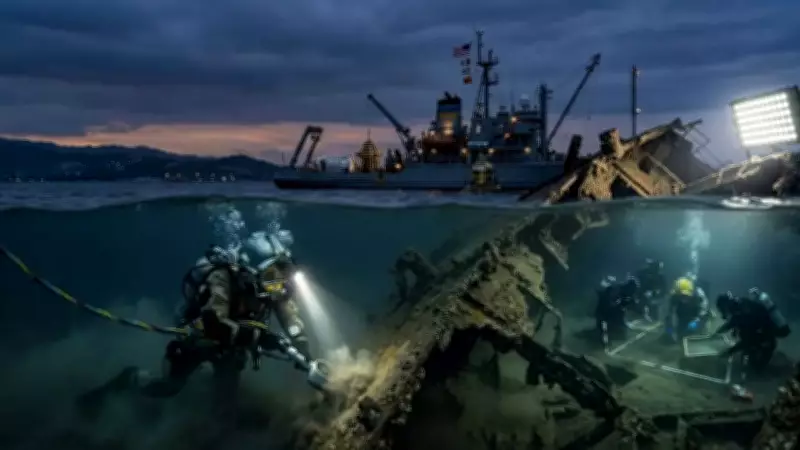
The DPAA has deployed a specialised team to the Philippine Sea to undertake the complex excavation of the Ōryoku Maru wreckage. Operating from the USNS Salvor, a rescue and salvage ship, fifteen naval divers and forensic anthropologists are working at depths of about 90 feet. They face challenging conditions, including zero visibility and a tangled mass of crushed metal, as they attempt to recover remains trapped for over eight decades. The site is described as a gnarled mass of steel covered by extensive layers of river silt, necessitating high-precision forensic dredging to separate biological evidence from the wreckage.

Legal Protections Under the Sunken Military Craft Act
This recovery effort is strictly regulated by the Sunken Military Craft Act (SMCA) of 2004, which grants the United States protected sovereign status over its sunken military craft and the remains of service personnel, regardless of their location in international waters. This federal law ensures that the Ōryoku Maru site is protected from unauthorised salvage or looting. The mission is conducted as a formal diplomatic partnership with the Philippine government, aligning with the US policy of achieving the Fullest Possible Accounting for missing military personnel.
The expedition represents a significant commitment by the United States to honour and account for soldiers who endured the worst conditions of the Pacific War, offering hope for long-awaited answers to families affected by this historical tragedy.