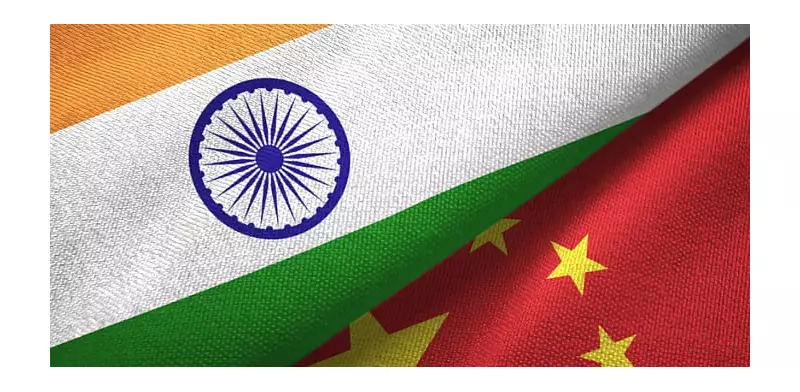
A significant annual assessment from the United States Department of War posits that China is likely attempting to leverage a period of decreased military friction along the Line of Actual Control (LAC) to achieve a crucial strategic objective: hindering the further deepening of ties between the United States and India. The report, released on 24 December 2025, underscores the complex geopolitical dynamics at play in the Indo-Pacific region.
China's Calculated Diplomatic Maneuvers
According to the analysis, Beijing probably views a relative calm on the disputed Himalayan border as a valuable opportunity. The underlying suggestion is that by temporarily dialing down tensions with India, China seeks to create a political environment less conducive for New Delhi to pursue an even closer strategic partnership with Washington. This move is interpreted as a long-term play to prevent the consolidation of a robust coalition that could challenge Chinese influence in Asia.
The report highlights that despite these potential overtures or tactical pauses from Beijing, India probably remains profoundly sceptical of China's actions and underlying motives. Historical grievances, ongoing trust deficits, and China's assertive behavior in the broader region continue to color New Delhi's perspective. Indian strategic circles are likely to scrutinize any Chinese proposal or de-escalation through the prism of national security and long-term regional balance of power.

India's Strategic Scepticism and Balancing Act
India's stance, as inferred from the US assessment, is one of cautious realism. While engaging in diplomatic and military talks to resolve the border standoff, the Indian leadership under Prime Minister Narendra Modi is not expected to let its guard down. The deepening partnership with the US, encompassing areas like defense procurement, technology sharing, and quadrilateral cooperation (the Quad), is seen as a vital component of India's strategy to manage the China challenge.
The report implies that New Delhi is adept at navigating this complex triangle. It engages with Beijing to ensure border stability but simultaneously accelerates its security collaboration with the United States and other like-minded partners. This dual-track approach allows India to address immediate concerns on the LAC while building capacity for long-term strategic autonomy and deterrence.
Implications for the Indo-Pacific Power Dynamics
The findings of the US Department of War report point to several critical implications. First, it confirms that the state of the India-China border relationship is a direct input into the larger geopolitical calculus of all three major powers. Second, it reveals China's perceived vulnerability to a stronger US-India axis, prompting preemptive diplomatic action.
Ultimately, the annual assessment suggests that the road to a genuine and lasting détente between India and China is long. President Xi Jinping's China faces a deeply skeptical partner in India, one that is unlikely to trade its growing strategic convergence with the United States for promises of border peace that may prove temporary. The evolving dynamics between Washington, New Delhi, and Beijing will continue to be a defining feature of Asian security in the coming years.