

New START Nuclear Treaty Expires, Ending Decades of US-Russia Arms Control
The final remaining nuclear arms control agreement between the United States and Russia expired today, marking a significant moment in global security. This development removes long-standing caps on the world's two largest nuclear arsenals for the first time in decades, intensifying concerns about a potential new and unconstrained arms race.
What Was New START and Why Its Expiration Matters
The Strategic Arms Reduction Treaty, commonly known as New START, was originally signed in 2010 and has been widely regarded as a fundamental pillar of strategic stability between Washington DC and Moscow. This landmark agreement served multiple crucial purposes:
- It limited the number of deployed strategic nuclear warheads for each side to precisely 1,550
- It restricted each party to no more than 700 deployed missiles and bombers
- It established comprehensive transparency measures including data transfers, notifications, and on-site inspections designed to prevent miscalculation between the nuclear powers
These verification mechanisms were temporarily paused in 2020 due to the COVID-19 pandemic and never fully resumed. In February 2023, President Vladimir Putin formally suspended Russia's participation in the treaty amid escalating tensions related to the conflict in Ukraine, though Moscow maintained it would continue observing the treaty's central limits.

With the treaty's expiration, the formal architecture that constrained strategic nuclear deployments and provided essential verification mechanisms has now disappeared entirely.
Russian Warnings and Official Statements
Russian officials have characterized the end of New START as destabilizing, even as Moscow indicates it will now consider itself free of treaty obligations. The Russian foreign ministry stated on Wednesday that "in the current circumstances, we assume that the parties to the New START are no longer bound by any obligations or symmetrical declarations in the context of the Treaty, including its core provisions, and are in principle free to choose their next steps."
The statement further emphasized that "the Russian Federation intends to act responsibly and in a balanced manner" while remaining "ready to take decisive military-technical measures to counter potential additional threats to the national security."
Kremlin spokesman Dmitry Peskov remarked on Tuesday that the world would become "more dangerous" without limits on US and Russian nuclear stockpiles. President Putin has previously argued that the treaty's expiration could accelerate nuclear proliferation, warning that the collapse of constraints might encourage other nations to seek nuclear weapons as deterrent measures.
United States Position and Trump Administration Stance
US President Donald Trump has appeared less concerned about the treaty's expiration, even as Washington acknowledges the strategic risks involved. Last month, Trump told the New York Times: "If it expires, it expires... We'll just do a better agreement."
A White House official stated on Monday that Trump has repeatedly indicated he would prefer to maintain limits on nuclear weapons but insists that China must be included in any future agreement. The official noted that Trump will make decisions regarding nuclear arms control "on his own timeline."
Beijing has consistently resisted restrictions on its smaller but rapidly expanding nuclear arsenal. Meanwhile, Moscow has argued that any successor arrangement should also involve France and the United Kingdom, Europe's other nuclear powers.
International Appeals for Restraint
As New START expires, international figures have appealed for renewed diplomatic efforts. On Wednesday, Pope Leo urged the United States and Russia to renew the treaty, stating that the current global situation "calls for doing everything possible to avert a new arms race."
Pattern of Arms Control Collapse
The expiration of New START follows the breakdown of several major agreements that once formed the foundation of European and global security. These include:

- The Intermediate-Range Nuclear Forces Agreement, which largely eliminated the deployment of shorter-range nuclear weapons within Europe
- The Open Skies Treaty, which allowed signatories to conduct unarmed reconnaissance flights over each other's territory
- The Conventional Armed Forces in Europe Treaty, which limited the numbers of tanks, troops, and artillery systems Russia and NATO could deploy within Europe
Britain's former head of the armed forces, Admiral Sir Tony Radakin, has warned that the framework that helped maintain global security "now risks unravelling." In a speech last year, he described the collapse of these key arms control treaties as "one of the most dangerous aspects of our current global security," alongside "the increasing prominence of nuclear weapons."
Experts Warn of Three-Way Arms Race Involving China
Analysts emphasize that New START's expiration removes predictability and increases incentives for worst-case planning, particularly as all three major nuclear powers are modernizing their arsenals. Daryl Kimball, executive director of the Arms Control Association in Washington, stated: "We're at the point now where the two sides could, with the expiration of this treaty, for the first time in about 35 years, increase the number of nuclear weapons that are deployed on each side."
Kimball further warned that "this would open up the possibility of an unconstrained, dangerous three-way arms race, not just between the US and Russia, but also involving China, which is also increasing its smaller but still deadly nuclear arsenal."
Kingston Reif of the RAND Corporation, a former US deputy assistant secretary of defense, cautioned during an online discussion that "in the absence of the predictability of the treaty, each side could be incentivised to plan for the worst or to increase their deployed arsenals to show toughness and resolve, or to search for negotiating leverage."
Russian Perspectives and Warnings
Russia's Dmitry Medvedev, who signed New START as president in 2010 and now serves as deputy head of Putin's Security Council, stated that the treaty's expiration should "alarm everyone." Medvedev has issued explicit warnings, declaring that Russia would respond firmly if it faced new threats.
"Without agreements limiting nuclear arsenals, Russia will promptly and firmly fend off any new threats to our security," said Medvedev. "If we are not heard, we act proportionately seeking to restore parity," he added in recent remarks.
Technological Drivers of Arms Race Concerns
Experts argue that the risk of an arms race is being driven not only by political factors but also by technological advancements. Darya Dolzikova, a senior Research Fellow with the UK-based RUSI's Proliferation and Nuclear Policy Programme, stated that the expiration of New START was "concerning, because there are drivers on both sides to expand their strategic capabilities."
She noted that Russia appears to have concerns about its ability to penetrate US air defenses, concerns that have been sharpened by Trump's plans to build a "Golden Dome" missile shield to protect North America from long-range weapons.
Russia has developed advanced systems designed to bypass missile defense, including Poseidon, an intercontinental, nuclear-armed and nuclear-powered undersea autonomous torpedo, and Burevestnik, a nuclear-armed and nuclear-powered cruise missile. Meanwhile, the United States, Russia, and China are all developing long-range hypersonic missiles capable of maneuvering at speeds above 4,000 mph (6,437 kmh), making them significantly harder to intercept.
Dolzikova emphasized that these expanding capabilities would "only make it harder" to negotiate a new arms control treaty.
Historical Context of Nuclear Arms Control
New START followed decades of US-Soviet and later US-Russian arms control efforts. The original START treaty, signed in 1991 by the United States and the Soviet Union, barred each side from deploying more than 6,000 nuclear warheads. Earlier, the Strategic Arms Limitation Talks (SALT I) in 1972 represented the first significant attempt to limit the superpowers' nuclear arsenals.
Other key pillars of nuclear arms control have since disappeared. The United States withdrew from the 1972 Anti-Ballistic Missile Treaty in 2001, and the Intermediate-range Nuclear Forces Treaty, signed in 1987, collapsed in 2019. These developments left New START as the final remaining treaty limiting the world's two largest nuclear arsenals until today's expiration.
Future Prospects and Diplomatic Challenges
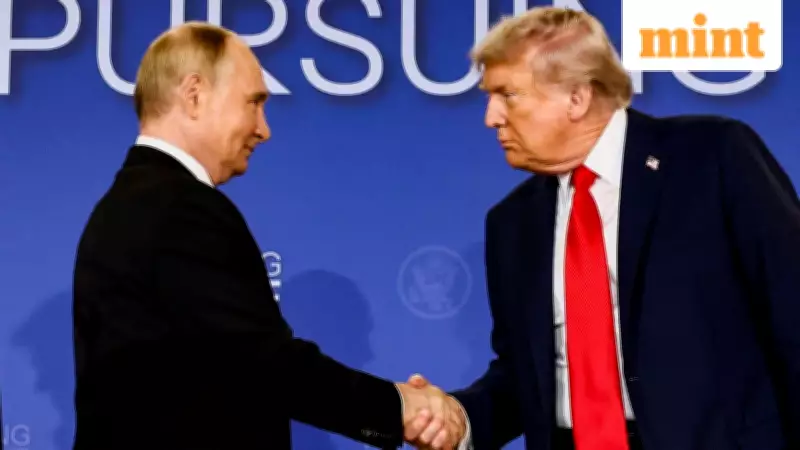
Despite periodic discussions, neither Washington nor Moscow appears close to signing a successor agreement. The issue was reportedly raised when Putin met Trump in Alaska last year, but no breakthrough followed. Putin has stated he was prepared to continue observing New START limits for another year if Washington did the same, though Trump has remained noncommittal.
Rose Gottemoeller, the chief US negotiator for the pact and a former NATO deputy secretary-general, argued that the United States should have accepted a temporary extension. "A one-year extension of New START limits would not prejudice any of the vital steps that the United States is taking to respond to the Chinese nuclear buildup," she told an online discussion last month.
Key Implications and Global Security Concerns
The expiration of New START represents a critical turning point in global nuclear arms control. The absence of a successor treaty significantly increases the risk of a renewed arms race, potentially involving not just the United States and Russia but also China as it expands its nuclear capabilities. International calls for renewed restraint highlight the urgent need for diplomatic efforts to prevent escalation and maintain strategic stability in an increasingly complex global security environment.





