

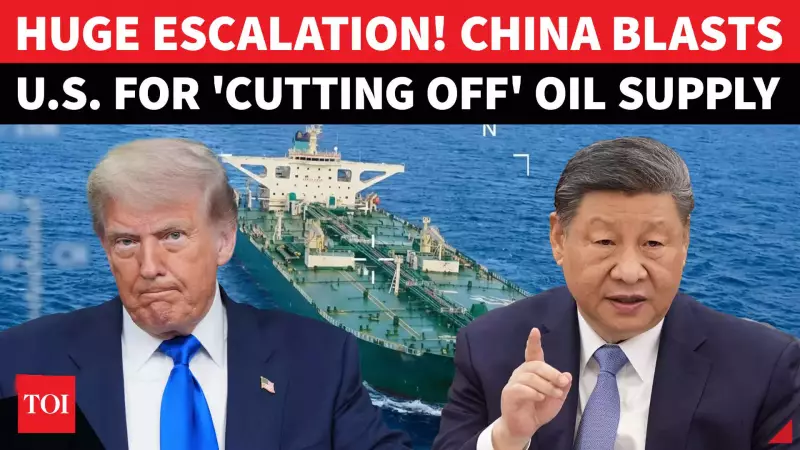
In a dramatic escalation of geopolitical tensions, United States forces have intercepted and seized a massive oil tanker carrying millions of barrels of Venezuelan crude destined for China. The incident, which occurred in open seas, has ignited a fierce diplomatic firestorm, with Beijing and Caracas accusing Washington of illegal acts and bullying.
A High-Stakes Seizure on the High Seas
The event unfolded on December 23, 2025, marking a significant flashpoint in the ongoing confrontation between global powers. The vessel, laden with Venezuelan crude oil, was en route to China when it was boarded and taken control of by US military personnel. This direct action represents a bold enforcement of US sanctions against Venezuela's oil industry, but it has been framed very differently by the other nations involved.
China's reaction was swift and severe. The government in Beijing condemned the seizure as an illegal interference and a blatant breach of international maritime law. Officials argued that the move sets a dangerous precedent for civilian shipping and undermines the principles of free navigation.

Accusations of Piracy and Bullying
Venezuela, under President Nicolás Maduro, leveled even more serious charges. The Venezuelan government explicitly accused Washington of engaging in piracy on the high seas. This rhetoric underscores the depth of animosity and the potential for the situation to spiral further. The seizure is seen as part of a broader US campaign to cripple Venezuela's economy by cutting off its vital oil exports, a primary source of revenue.
The United States, for its part, has defended its actions as a legitimate enforcement of international sanctions aimed at pressuring the Maduro regime. However, the method of enforcement—a military seizure of a civilian vessel in international waters—has raised alarms far beyond the immediate parties.
Analysts Warn of Dangerous Escalation
Security and trade analysts are sounding the alarm, warning that this incident represents a dangerous escalation. The targeting of a civilian oil tanker bound for a major power like China brings the great-power competition directly into the world's crucial maritime trade routes. The Caribbean, a strategic chokepoint for global energy supplies, is now at the centre of this confrontation.
Experts caution that such actions risk miscalculation and could lead to a tit-for-tat cycle that endangers commercial shipping worldwide. The fear is that global trade routes are becoming collateral damage in the rising strategic rivalry between the US and China, with secondary nations like Venezuela caught in the middle.
This seizure follows a pattern of heightened tensions, as referenced in related reports about Venezuela warning of 'global war' after a second tanker seizure in the Caribbean. The event solidifies concerns that economic sanctions are increasingly being enforced through military means, blurring the lines between law enforcement and armed conflict on the open ocean.






