Zelenskyy Reveals US June Deadline for Ukraine-Russia Peace Deal
Ukrainian President Volodymyr Zelenskyy has publicly confirmed that the United States has set a June deadline for Ukraine and Russia to reach a formal agreement to end the ongoing war, which has now persisted for nearly four years. This revelation comes amid a severe escalation in Russian military strikes targeting Ukraine's critical energy infrastructure, forcing nuclear power plants to drastically reduce their operational output.
US Pressure and Proposed Trilateral Talks
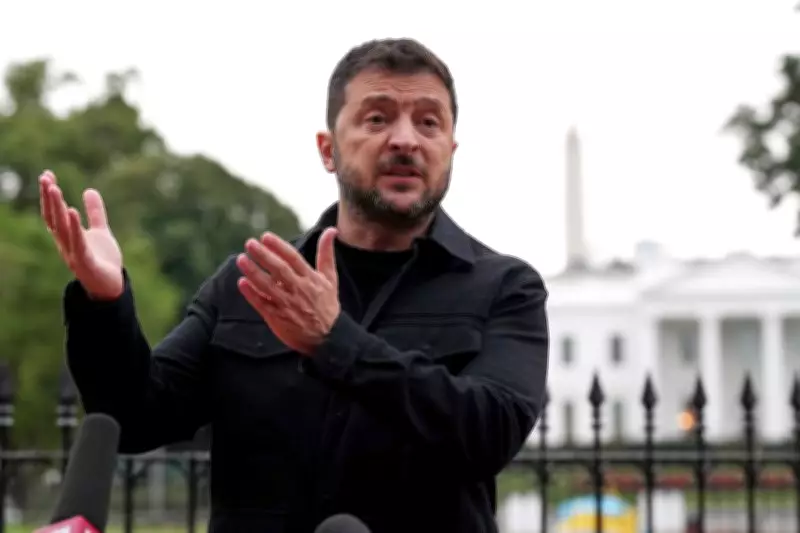
In detailed remarks made to reporters on Friday, with an embargo lifted on Saturday, President Zelenskyy stated that the Trump administration is likely to exert significant pressure on both nations if a peace deal is not finalized by the beginning of summer. "The Americans are proposing that the parties end the war by the beginning of this summer and will probably put pressure on the parties precisely according to this schedule," Zelenskyy explained. He further emphasized the US stance, noting, "They say they want to do everything by June. They want a clear schedule of all events and will do everything to end the war."
Zelenskyy also disclosed that the United States has proposed hosting the next round of trilateral peace talks on American soil for the first time, likely in Miami, scheduled for the upcoming week. "We confirmed our participation," he affirmed, highlighting Ukraine's commitment to the diplomatic process.

Russian Economic Proposal and Infrastructure Attacks
During his briefing, Zelenskyy revealed that Russia has presented the US with a substantial economic proposal valued at USD 12 trillion, which he referred to as the "Dmitriev package" after Russian envoy Kirill Dmitriev. He indicated that bilateral economic agreements between Russia and the US are integral components of the broader negotiation framework.
Simultaneously, Russian military forces launched a massive overnight assault on Ukrainian energy facilities. Zelenskyy reported via social media that over 400 drones and approximately 40 missiles targeted the nation's power grid, generation plants, and distribution networks. Ukraine's state energy transmission operator, Ukrenergo, confirmed this as the second large-scale strike on energy infrastructure since the start of the year, with eight facilities across eight regions damaged.
"As a result of missile strikes on key high-voltage substations that ensured the output of nuclear power units, all nuclear power plants in territories under control were forced to reduce their load," Ukrenergo stated. The company warned that the power deficit has increased significantly, leading to extended hourly power cuts across all regions, exacerbating the humanitarian crisis during winter.
Stalled Negotiations and Ceasefire Challenges
The June deadline follows earlier US-brokered trilateral talks in Abu Dhabi, which failed to yield a breakthrough due to sharply opposing demands from both sides. Russia continues to insist on Ukraine's withdrawal from the Donbas region, where intense fighting persists—a condition Kyiv has repeatedly rejected. "Difficult issues remained difficult. Ukraine once again confirmed its position on the Donbas issue. 'We stand where we stand' is the fairest and most reliable model for a ceasefire today, in our opinion," Zelenskyy remarked, adding that the most contentious issues would only be addressed at a leaders' summit.
No agreement was reached regarding the management of the Russian-held Zaporizhzhia nuclear power plant, and Zelenskyy expressed skepticism about a US proposal to transform the Donbas into a free economic zone as a potential compromise. "I do not know whether this can be implemented, because when we discussed a free economic zone, we had different views," he said.

Zelenskyy noted that the latest discussions focused on the technical monitoring of a ceasefire, with the US reaffirming its role in the process. He also mentioned that the US has proposed a ceasefire banning strikes on energy infrastructure, to which Ukraine is ready to adhere if Russia commits. However, he highlighted that a previous US-backed one-week halt collapsed after just four days due to Russian violations.
In recent months, Russian aerial attacks have increasingly targeted Ukraine's power grid, triggering widespread blackouts and disrupting essential heating and water supplies during the harsh winter, further straining the country's resilience and infrastructure.