

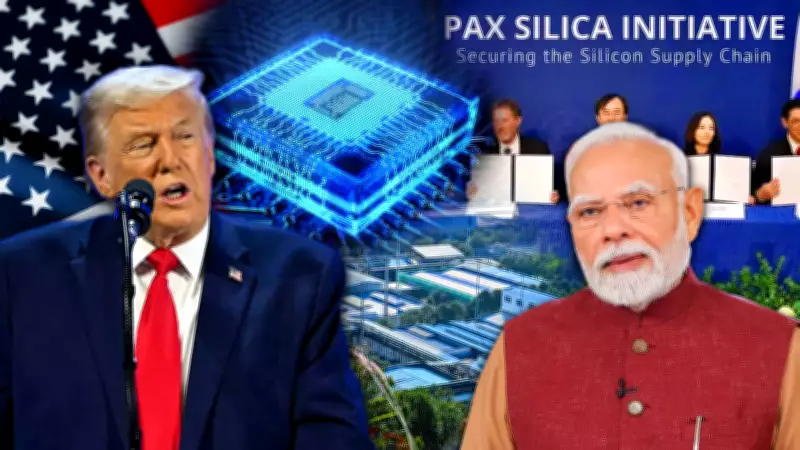
US Set to Welcome India into Pax Silica in February as Tech Alliances Shift Beyond Traditional Blocs
Washington has sent a clear and unambiguous message to the world: India is no longer a bystander in global technology planning. The United States is poised to formally induct India into Pax Silica, a strategic coalition led by the US aimed at securing critical and emerging technologies. This move significantly elevates New Delhi's status on the international stage, marking a pivotal shift in how global power dynamics are being reshaped in the tech domain.
Strategic Significance and Timing of the Induction
The confirmation of India's entry into Pax Silica comes at a crucial juncture, just ahead of External Affairs Minister S. Jaishankar's scheduled visit to the United States. This timing underscores the deepening strategic partnership between the two nations. Moreover, it occurs against a backdrop of rising global trade tensions and increasing fragmentation of supply chains, where trust has become a valuable currency in international relations.
Jacob Helberg's recent remarks have highlighted the core reasons behind India's inclusion. The nation's ambitious semiconductor manufacturing plans, its access to critical minerals essential for modern technology, and its rapidly growing artificial intelligence ecosystem are key factors that make India an indispensable partner. These elements position India not just as a participant, but as a potential shaper of the next phase of global economic and technological power.

Implications for Global Technology and Economic Power
India's induction into Pax Silica reflects a strong vote of confidence from the United States and its allies. It signals a belief that New Delhi can play a central role in stabilizing and securing technology supply chains that are currently under strain. As old power blocs give way to new, more fluid alliances based on technological capability and strategic interest, India's entry into this coalition is a testament to its rising influence.
The broader implications are profound:
- Enhanced Collaboration: This move is expected to foster deeper collaboration between Indian and US tech industries, particularly in sectors like semiconductors, AI, and green energy technologies.
- Supply Chain Resilience: By integrating India into Pax Silica, the coalition aims to build more resilient and diversified supply chains, reducing dependencies on single regions or countries.
- Global Leadership: India's participation positions it as a key player in setting global standards and norms for emerging technologies, moving beyond its traditional role in regional politics.
In essence, as the world grapples with technological decoupling and economic realignments, India's formal entry into Pax Silica in February 2026 marks a significant milestone. It not only acknowledges India's technological advancements but also integrates it into a framework designed to navigate the complexities of the 21st-century global order. This development is likely to influence diplomatic, economic, and technological strategies worldwide, reinforcing the idea that future power structures will be increasingly defined by technological prowess and strategic partnerships.






