

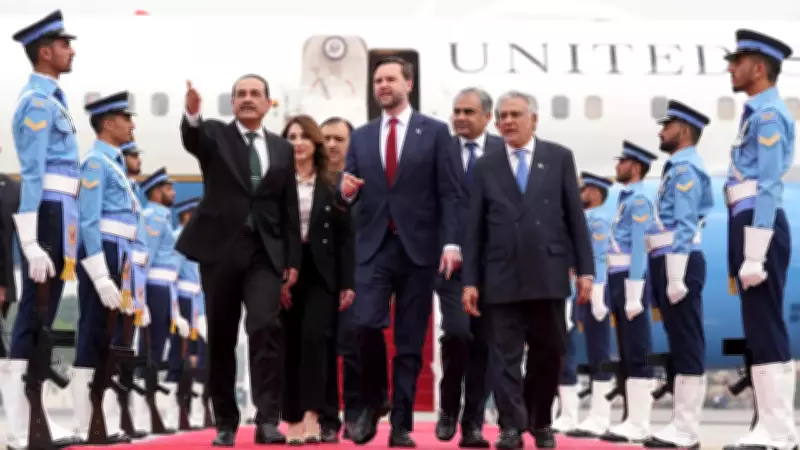
US Vice President JD Vance Arrives in Islamabad for High-Stakes Iran Negotiations
US Vice President JD Vance touched down in Islamabad on Saturday, leading a crucial American delegation in high-level negotiations with Iran. The talks are aimed at stabilizing a fragile ceasefire and exploring a viable path to peace in the volatile Middle East region. Vance, representing the United States on behalf of former President Donald Trump, landed at Nur Khan airbase near the Pakistani capital, where he was formally received by Pakistan's Army Chief, General Asim Munir.
Delegations and Preconditions Set the Stage
The American negotiating team includes key figures such as Special Envoy Steve Witkoff and Trump's son-in-law, Jared Kushner, adding significant political weight to the discussions. On the Iranian side, the delegation is led by Parliament Speaker Mohammad Bagher Qalibaf and Foreign Minister Abbas Araghchi, who had already arrived in Islamabad ahead of the scheduled talks.
These negotiations unfold at a critical juncture, with a Pakistan-brokered ceasefire between the United States and Iran still holding but under considerable strain. Speaker Qalibaf has laid out two non-negotiable preconditions for the talks to proceed: a ceasefire in Lebanon and the release of blocked Iranian assets, setting a tense backdrop for the discussions.

Cautious Optimism and Security Measures
Before departing Washington, Vice President Vance struck a cautiously optimistic tone, warning Tehran against any attempts to exploit the negotiations. "If they're going to try and play us, then they're going to find that the negotiating team is not that receptive," he stated, while also expressing hope that the discussions could yield positive outcomes for regional stability.
Security in Islamabad has been dramatically tightened in anticipation of this high-level engagement. Authorities have sealed off roads and advised residents to remain indoors, giving parts of the city a near-curfew-like appearance. Pakistan Prime Minister Shehbaz Sharif described this moment as a "make-or-break" phase, highlighting the immense difficulty of transitioning from a temporary truce to a lasting peace agreement.
Regional Tensions and Economic Implications
The talks are occurring against a backdrop of continued regional violence, particularly in Lebanon, where clashes between Israel and Hezbollah persist despite the broader ceasefire framework. This disagreement over the scope and enforcement of the truce has emerged as a major sticking point in the negotiations, threatening to derail progress.
Additionally, the Strait of Hormuz remains a significant flashpoint, with Iran's blockade disrupting global energy supplies and adding urgency to the diplomatic efforts. Oil prices have surged sharply since the conflict began, reflecting the wider economic impact of the regional instability on global markets.
With both sides holding firm on their key demands, the Islamabad talks are being viewed as a critical test of whether diplomatic efforts can prevent a renewed and potentially devastating escalation in the Middle East. The outcome could shape regional dynamics for years to come, making these negotiations a pivotal moment in international diplomacy.






