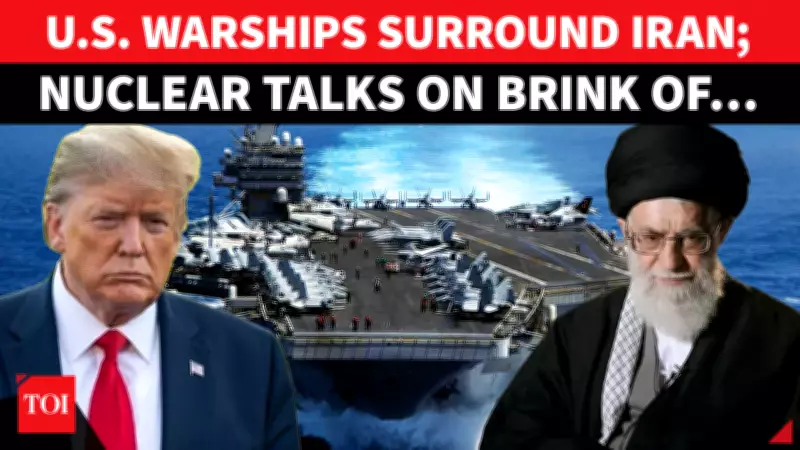
US Warships Enter Persian Gulf as Iran Missiles Stand Ready After Nuclear Talks Fail
The third round of high-stakes nuclear negotiations between the United States and Iran concluded in Geneva without reaching a deal, leaving regional tensions dangerously high. As the talks ended, US warships entered the Persian Gulf, a move seen as military pressure, while Iran reportedly readied its missile arsenal in response.
Nuclear Talks End Without Agreement
US and Iranian officials described the Geneva talks as "very serious," with both sides presenting detailed proposals aimed at preventing a wider conflict in the Middle East. The indirect negotiations focused on key issues including sanctions relief for Iran and limits on Tehran's nuclear program. Mediators reported some progress during the discussions, but deep disagreements remain unresolved.
Primary sticking points include enrichment limits for Iran's nuclear activities and broader regional security concerns. Iranian officials emphasized that their proposals were substantive, while American negotiators pushed for stricter controls on uranium enrichment levels. The failure to reach an agreement marks the third consecutive round of talks that have ended without a breakthrough, despite intensive diplomatic efforts.

Military Posturing Escalates
As the diplomatic process stalled, military tensions escalated significantly. US warships entered what analysts describe as a "danger zone" in the Persian Gulf, increasing American naval presence in the strategically vital waterway. This deployment comes amid growing concerns about potential conflict escalation in the region.
In response to the US military movements, Iran has reportedly placed its missile systems on heightened alert. Tehran's military readiness signals its determination to respond to any perceived threats, creating a volatile situation where miscalculation could lead to open confrontation. The timing of these military maneuvers, coinciding with the failed nuclear talks, underscores the fragile state of US-Iran relations.
Regional Implications and Global Concerns
The breakdown of nuclear talks and simultaneous military posturing has raised alarm among international observers. Several key factors contribute to the current crisis:
- Persistent disagreements over Iran's nuclear enrichment capabilities
- Ongoing disputes about sanctions relief and economic pressures
- Broader regional conflicts where both nations support opposing factions
- Increasing military presence and preparedness in the Persian Gulf
World leaders are closely monitoring the situation, recognizing that failure to resolve these issues diplomatically could have catastrophic consequences for Middle East stability and global security. The Geneva talks represented a crucial opportunity to de-escalate tensions through dialogue, but their inconclusive outcome has instead heightened the risk of military confrontation.
As both nations maintain their positions, the international community faces the challenge of preventing further escalation while seeking alternative diplomatic pathways. The coming weeks will be critical in determining whether renewed negotiations can bridge the divide or whether military posturing will dominate US-Iran relations.