

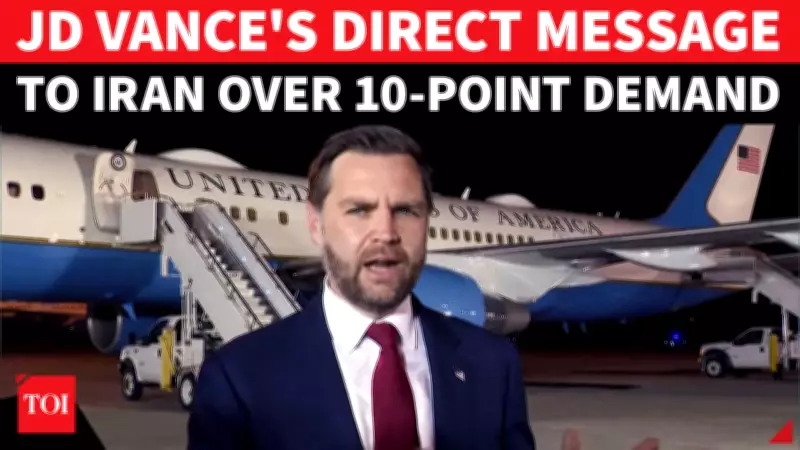
U.S. Vice President JD Vance: 'Ball In Iran's Court' Ahead Of Islamabad Ceasefire Negotiations
In a significant diplomatic statement ahead of crucial Middle East negotiations, U.S. Vice President JD Vance declared that "the ball is in Iran's court" regarding ceasefire implementation, while offering a nuanced assessment of Tehran's position.
Vance Sees Agreement Amidst Disagreement
Speaking to reporters before departing Hungary for Islamabad, where he will participate in weekend negotiations hosted by Pakistan, Vance addressed Iran's recent questioning of ceasefire workability. The Vice President offered an unexpected interpretation of Tehran's stated disagreements with the United States on three key points.
"When Iran expresses frustration about three specific issues, that actually means there's a lot of agreements," Vance asserted. "The fact they're focused on just three points must mean there are numerous areas where our positions align."

Ceasefire Realism and 'Choppiness'
Vance displayed diplomatic realism when discussing the ceasefire process, acknowledging the inherent challenges of such negotiations. "Ceasefires are always messy affairs," he noted. "They typically feature a little bit of choppiness as parties work through complex issues. This is normal in high-stakes diplomatic engagements."
The Vice President's comments come amid heightened tensions in the Middle East, with multiple conflicts requiring urgent diplomatic attention. The Islamabad negotiations represent a critical opportunity to stabilize the region through dialogue.
Questioning Iranian Official's English Comprehension
In a more contentious portion of his remarks, Vance questioned the English language skills of Iranian parliamentary Speaker Mohammad Bagher Qalibaf, particularly regarding Qalibaf's recent comments about the fragile nature of the ceasefire.
"I actually wonder how good he is at understanding English," Vance stated bluntly. "Because there are things that he said that just didn't make sense in the context of the negotiations that we've had. His interpretation of certain diplomatic nuances appears questionable."
Diplomatic Context and Islamabad Expectations
The Islamabad negotiations represent a significant diplomatic initiative with multiple stakeholders:
- Direct U.S.-Iran engagement on ceasefire implementation
- Pakistan's role as neutral negotiation host
- Broader Middle East stability considerations
- International monitoring mechanisms for any agreement
Vance's comments suggest the United States believes substantial common ground exists with Iran, despite public disagreements on specific points. His characterization of Iran's position as focused on just three contentious issues implies Washington sees potential for broader agreement.
Regional Implications
The success or failure of the Islamabad negotiations could have far-reaching consequences:
- Potential de-escalation of multiple Middle East conflicts
- Establishment of sustainable ceasefire monitoring
- Impact on U.S.-Iran relations beyond immediate security concerns
- Pakistan's emerging role as regional diplomatic facilitator
As Vance prepares for the Islamabad talks, his mixed message—combining optimism about potential agreement with criticism of Iranian officials—sets the stage for what promises to be complex and consequential negotiations.






