Venezuela's Political Crossroads: A Month After Maduro's Removal
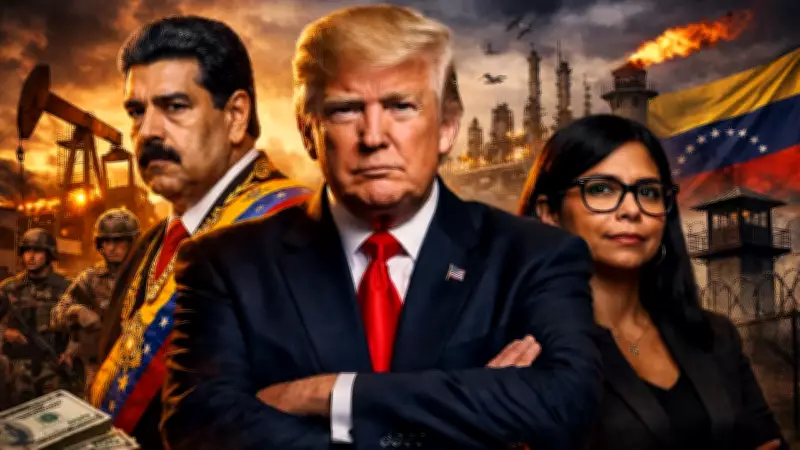
More than a month has passed since US special forces executed a dramatic nighttime operation in Caracas, extracting Venezuelan President Nicolas Maduro and transporting him to New York to face federal drug trafficking charges. This pivotal event has thrust the South American nation into a new, yet profoundly uncertain, political era—suspended between rupture and continuity.
The January 3 Operation and Its Aftermath
The January 3 operation, which Venezuelan Interior Minister Diosdado Cabello stated resulted in at least 100 fatalities and 100 injuries, removed the country's most polarizing political figure. Maduro had dominated Venezuelan politics for over a decade. However, his physical removal did not dismantle the political structure he meticulously built. Following the Supreme Court's declaration of Maduro's capture as a "forced absence," Vice President Delcy Rodriguez assumed the presidency, creating an unprecedented constitutional situation.
In the subsequent weeks, Caracas has witnessed rapid but uneven shifts. Diplomatic relations with Washington, severed in 2019, are being cautiously restored. The oil sector, once the ideological cornerstone of Hugo Chavez's socialist project, has been opened to private operators. Hundreds of detainees have been released under a proposed amnesty, and parts of the military leadership have been reshuffled. Opposition leaders have begun to cautiously resurface in public.

Yet, significant elements of the old regime persist. The security apparatus remains largely intact, no elections have been announced, and key figures from the previous establishment continue to hold power. While public fear has receded in tone, it has not disappeared in practice.
Diplomatic Reset with Washington: Cooperative but Conditional
Unlike the 2003 invasion of Iraq, the United States did not dismantle Venezuela's governing apparatus. Instead, it permitted continuity through Rodriguez, who now leads an interim administration. US President Donald Trump has publicly stated he has been working "really well" with Rodriguez. The US embassy in Caracas has resumed operations under Chargé d'Affaires Laura Dogu, and Venezuela has appointed Félix Plasencia as its envoy to Washington.
Dogu emphasized that her meetings with Rodriguez and National Assembly President Jorge Rodriguez reiterated three priorities outlined by Secretary of State Marco Rubio: stabilization, economic recovery, and reconciliation and transition. Venezuelan Foreign Minister Yván Gil described this step as the beginning of a new era committed to international law.
However, the relationship remains conditional. Trump has warned Rodriguez that she could face consequences similar to Maduro's if she fails to comply with US demands on reforms and oil access. Rubio told a Senate committee, "I can tell you right now with full certainty, we are not postured to nor do we intend or expect to have to take any military action in Venezuela at any time."
Structural Shift: Oil Reforms Mark a New Direction
The most significant policy change has occurred in the oil sector. Rodriguez introduced and signed into law reforms allowing private companies to operate independently in Venezuela's energy sector, rather than as minority partners of the state oil company PDVSA. Royalty payments have been lowered, and state control over exploration has been reduced.
"This is the only way to obtain significant investments," US-based Latin America energy analyst Francisco Monaldi told The Strait Times. Trump has urged US oil companies to invest, though firms remain cautious due to political uncertainty and the high costs of reviving production infrastructure weakened by corruption and sanctions. In the interim, the US government has directly seized and sold some Venezuelan oil.
Rodriguez defended the overhaul, stating, "The people of Venezuela do not accept orders from any external factor. The people of Venezuela have a government, and this government obeys the people." Analysts note that restoring production will take years and depends on stable governance and legal clarity.

Cabinet Reshuffle and Continuity in Power
Rodriguez has replaced several ministers and high-ranking military officials, with experts citing at least 28 significant changes within the armed forces. Yet, core figures remain. Interior Minister Diosdado Cabello and Defence Minister Vladimir Padrino continue in office.
Professor Guillermo Tell Aveledo described the situation as "a phase of readjustment." RAND analyst Kelly Piazza noted that recent events show "regime decapitation does not equal regime change." The armed forces have formally recognized Rodriguez as commander-in-chief, though legal scholar Juan Carlos Apitz questioned the move, stating, "There cannot be two commanders," in reference to Maduro's prior role.
Amnesty Announced, But Debate Over Scope Persists
Rodriguez has announced a general amnesty expected to be adopted by the National Assembly, with the government claiming more than 800 political prisoners have been released. However, rights organization Foro Penal states that about 700 political prisoners remain detained. Its director, Alfredo Romero, said, "The amnesty is more about forgetting than forgiving," and called for accountability.
The interim government has also announced the closure of Helicoide prison, widely criticized by rights groups for alleged torture of dissidents. Political expert Benigno Alarcón argued, "The transition has not truly begun," stating that credible democratic change requires institutional reform, decentralization of security forces, and new elections.
Economic Signals: Modest Shifts Amid Structural Distress
Tentative economic changes have emerged. Economist Asdrúbal Oliveros reported a 22% rise in real estate prices, while prices of meat and chicken have declined. Airlines, including American Airlines, have resumed operations. However, the broader economic crisis persists. Public sector workers survive on roughly $160 a month, and private sector employees earn about $237 on average. The minimum wage—130 bolivars, or around $0.35—has not been raised since 2022.
Margaret García, a teacher in Caracas, remarked, "We see that a negative moment has brought us positive things." Yet, anxiety lingers among citizens waiting to see if fundamental change is possible.
Opposition Re-emerges Cautiously
Some opposition figures, including Andrés Velásquez and Delsa Solórzano, have appeared publicly after months in hiding. A private television channel aired footage of opposition leader María Corina Machado addressing reporters in Washington. Velásquez stated, "I believe that Venezuela's destiny cannot be an oil agreement and a dictatorship headed by Delcy Rodriguez, because we could simply define that as a continuation of the dictatorship."
However, large demonstrations demanding elections have not taken place, and many citizens continue to self-censor. Wanted posters of opposition candidate Edmundo González, who disputes the July 2024 election results, remain displayed in some official locations.
Regional Implications and Migration Trends
Venezuela's crisis extends beyond its borders, contributing to one of the largest displacement crises in modern Latin American history, with nearly 8 million Venezuelans having left the country. Regional responses vary, with Argentina supporting Maduro's removal and Colombia criticizing it as a violation of sovereignty.
RAND expert Tahina Montoya noted that migration trends will be a key indicator, with a coherent transition potentially slowing outward flows, while instability could sustain them.
Transition or Managed Continuity? The Central Question
Alarcón suggested authorities may delay elections depending on political calculations, stating, "It will depend on the polls. If they see a chance of winning, they'll call for elections. If not, they'll postpone them. They intend to buy time and maintain power." Apitz argued that "the first step towards democracy in Venezuela is the full and unconditional release of all political prisoners."
RAND experts emphasize that policymakers should monitor institutional independence, military alignment, economic transparency, and human rights conditions.
One Month On: Partial Reset, Not Full Transition
Venezuela today reflects a partial reset rather than a full transition. Diplomatic ties with Washington are reopening, oil policy has shifted toward privatization, some prisoners have been freed, and opposition figures are cautiously visible. However, the governing structure remains largely intact, elections have not been scheduled, and fear has not disappeared.
As the country moves beyond the immediate shock of Maduro's capture, the critical question is no longer what happened on January 3, but whether the changes that followed amount to a genuine democratic opening or merely a recalibration of the same system under new leadership.