

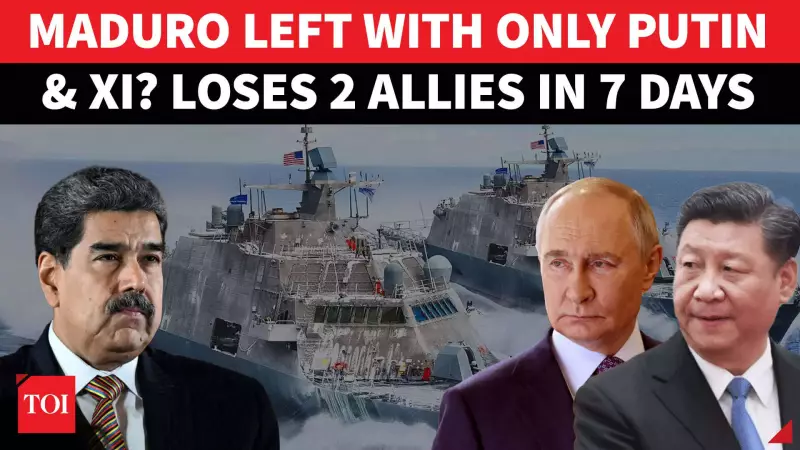
In a dramatic move that has sent fresh shockwaves across Latin America, Venezuela's President Nicolas Maduro has executed a surprising political power play in Honduras. This unexpected tilt towards Caracas marks a significant shift in the region's diplomatic landscape, occurring against a backdrop of heightened tensions between the United States and several Latin American nations.
A Surprise Alignment in Central America
The development, reported on December 2, 2025, centers on Honduras signaling an unexpected alignment with Venezuela's government. This maneuver by Nicolas Maduro is seen as a bold assertion of growing influence in Central America, a region traditionally within the sphere of US diplomatic and political sway. The move has effectively caught Washington off-guard, prompting urgent reassessments of its regional strategy.
Analysts view this as Maduro strategically expanding his government's reach, potentially cornering international positions aligned with global figures like Russia's Vladimir Putin and China's Xi Jinping, who have been supportive of Caracas. The timing is crucial, as it comes amidst a perceived hardening of the US stance, with former President Donald Trump and key US senators issuing strong warnings to Maduro and his allies.

Deepening Diplomatic Faultlines
The Honduran political shift has immediately deepened existing diplomatic faultlines. The region is now bracing for a new round of geopolitical power plays, with nations forced to reconsider their alliances. This event is not isolated; it reflects the ongoing and complex struggle for influence in Latin America, where external powers like the US, Russia, and China have vested interests.
Washington's scramble to respond underscores the seriousness of the development. Maduro's claim of expanding influence challenges years of US policy aimed at isolating his socialist government. The situation is further complicated by the rhetoric from US political figures, including remarks from Trump and Senator Leavitt, who have taken a hardline stance on immigration and foreign policy, and references to actions against Maduro by figures like Kash Patel.
Regional Repercussions and Future Implications
The immediate consequence is a fresh wave of instability and uncertainty. Other nations in Latin America will be watching closely, calculating their next moves in a rapidly changing environment. The "regional shockwaves" mentioned in initial reports suggest that more political realignments could follow, potentially reshaping the continent's political map.
Furthermore, this move places Honduras at the center of a major international dispute. The country's new political direction, favoring Caracas, could invite significant economic and political pressure from the United States and its allies. As geopolitical upheaval looms, the focus turns to how the US administration will counter this expansion of Maduro's influence and whether other nations will follow Honduras's lead.
Ultimately, Maduro's power push in Honduras is more than a bilateral issue; it is a strategic gambit with global implications, testing the resolve and strategies of world powers while determining the future balance of power in the Western Hemisphere.






