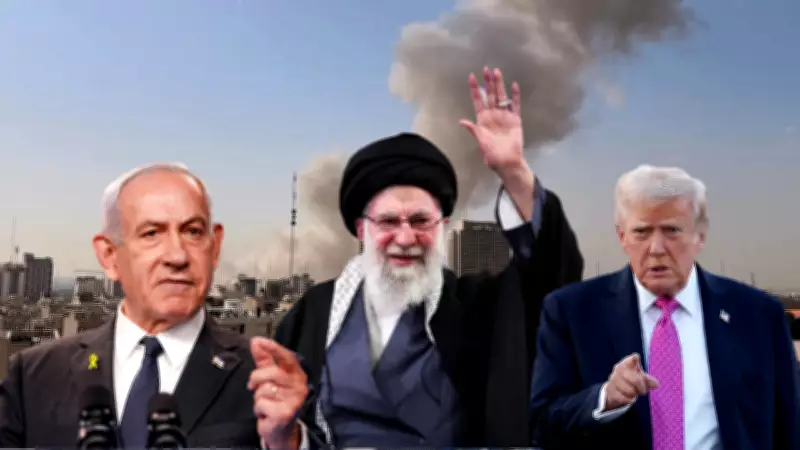
Global Leaders React to US-Israel Strikes on Iran, Urge Restraint Amid Escalation
In the wake of coordinated military strikes by the United States and Israel on Iran, global leaders have issued swift responses, ranging from calls for maximum restraint and adherence to international law to outright condemnation and support for Washington's actions. The conflict threatens to widen across the Middle East, prompting statements from governments across Europe, Asia, and the region.
EU Labels Situation 'Perilous', Emphasizes Restraint
European Commission President Ursula von der Leyen and European Council President Antonio Costa expressed deep concern over developments in Iran, urging all parties to exercise maximum restraint, protect civilians, and fully respect international law. In a joint statement reported by Al Jazeera, they assured that steps would be taken in coordination with EU member states to support EU citizens in the region.
EU Foreign Policy Chief Kaja Kallas described the Middle East situation as "perilous", highlighting Iran's ballistic missile and nuclear programs as serious threats to global security. She noted that the EU has imposed sanctions on Iran and supports diplomatic solutions, including on nuclear issues. Kallas emphasized close coordination with Arab partners to explore diplomatic paths and prioritize civilian protection and international humanitarian law. Additionally, she mentioned that the EU's Aspides naval mission is on high alert in the Red Sea to maintain open maritime corridors, according to Reuters.

Spain and Malaysia Call for De-escalation and Dialogue
Spain's Foreign Minister José Manuel Albares closely monitored the situation, demanding adherence to international law and advocating for de-escalation and dialogue as paths to peace and stability. He confirmed that all Spanish embassies in the region remain operational for citizens.
Malaysia's Prime Minister Anwar Ibrahim condemned Israel's strikes on Iran and the accompanying US military action, warning that the escalating conflict has pushed the Middle East to the "edge of catastrophe". He described Israel's initiation as a "vile attempt" to derail negotiations and draw other nations into broader conflict, calling for an immediate and unconditional cessation of hostilities, as reported by AP.
Qatar Condemns Iranian Missile Attack, Reserves Right to Respond
Qatar's foreign ministry strongly condemned what it described as an Iranian missile attack on its territory, calling it a "flagrant violation" of sovereignty and a direct assault on security. The ministry reserved the right of response, emphasizing that such actions threaten regional stability, according to Al Jazeera. Iran's retaliatory strikes targeted multiple US military facilities and allies, including Qatar, Kuwait, UAE, and Jordan.
Australia Backs US Efforts Against Iranian Nuclear Threat
Australia's Prime Minister Anthony Albanese stated that Iran's nuclear program has long been viewed as a threat to global peace and security. He noted the international community's stance against Iran developing nuclear weapons, referencing UN sanctions and IAEA non-compliance declarations. Albanese expressed support for US actions to prevent Iran from obtaining nuclear weapons and threatening international security.
Norway and Russia Question Legality and Intent of Strikes
Norway's Foreign Minister Espen Barth Eide expressed deep concern over the potential for a new, extensive war in the Middle East, questioning the legality of Israel's preventive strike under international law. He urged restraint and continued diplomatic efforts.
Russia's former President Dmitry Medvedev sharply criticized US President Donald Trump, suggesting negotiations with Iran were a cover operation. He highlighted the historical longevity of the Persian Empire compared to the USA, implying a long-term perspective on the conflict.
Belgium and Pakistan Advocate for Civilian Protection and Diplomacy
Belgium's Foreign Minister Maxime Prévot emphasized that civilians should not bear the consequences of escalating tensions, stating that the Iranian people must not pay the price for their government's choices. He regretted the failure of earlier diplomatic efforts and underscored the need to revive engagement to prevent further deterioration.

Pakistan's Foreign Minister Ishaq Dar strongly condemned the attacks against Iran and called for an immediate halt to escalation through urgent resumption of diplomacy to achieve a peaceful, negotiated resolution. Islamabad's response adds to international calls for de-escalation and a return to negotiations.
The global reaction underscores the urgent need for diplomatic solutions to prevent further conflict in the region, with leaders emphasizing restraint, international law, and civilian safety.