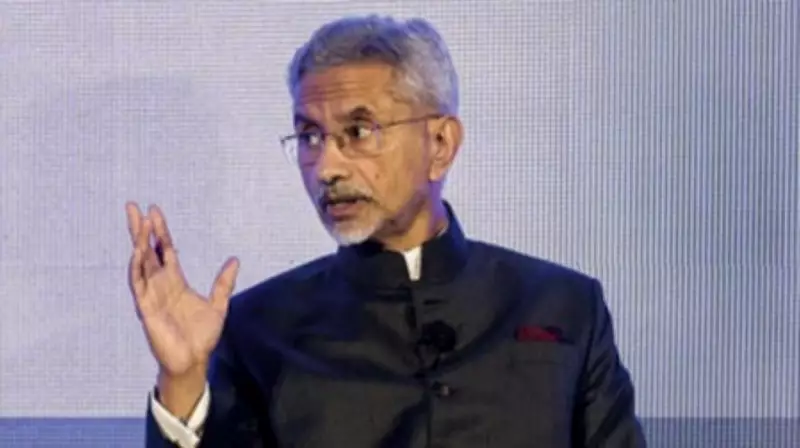
World Shifts to Multi-Polar Order, Democratization Underway: Jaishankar
External Affairs Minister S. Jaishankar has articulated a significant transformation in global dynamics, asserting that the world is increasingly moving towards a multi-polar structure. This shift, he emphasized, is accompanied by a democratization process within the international order, marking a departure from traditional power hierarchies.
Jaishankar's Vision of a Changing Global Landscape
In his recent address, Jaishankar highlighted that the current era is witnessing a redistribution of influence and authority across nations. He pointed out that this evolution is not merely a theoretical concept but a tangible reality shaping diplomatic engagements and economic partnerships worldwide. The minister underscored that such changes are fostering a more inclusive and representative global framework, where diverse voices and perspectives gain prominence.
Key aspects of this transition include:

- Enhanced Role of Emerging Economies: Countries like India are playing pivotal roles in driving this multi-polarity, contributing to balanced global governance.
- Decline of Unipolar Dominance: The era of single-nation hegemony is giving way to a more collaborative and distributed power structure.
- Increased Diplomatic Engagement: Nations are actively participating in international forums to advocate for equitable policies and reforms.
Implications for India's Foreign Policy
Jaishankar elaborated on how this global shift aligns with India's strategic objectives and foreign policy initiatives. He noted that India's approach is centered on fostering partnerships based on mutual respect and shared interests, rather than alignment with traditional blocs. This stance, he argued, positions India as a key stakeholder in the democratization of global institutions and decision-making processes.
India's contributions to this evolving order are multifaceted:
- Advocating for reforms in international bodies like the United Nations to reflect contemporary realities.
- Promoting South-South cooperation and enhancing ties with nations across Asia, Africa, and beyond.
- Leveraging economic growth and technological advancements to bolster its global influence and diplomatic outreach.
Broader Global Trends and Future Outlook
The minister's observations resonate with broader trends in geopolitics, where economic interdependence and digital connectivity are reshaping traditional alliances. Jaishankar emphasized that the democratization of the global order is an ongoing process, requiring sustained efforts from all nations to ensure stability and prosperity. He called for a collective approach to address global challenges such as climate change, pandemics, and economic disparities, underscoring the need for collaborative solutions in a multi-polar world.
In conclusion, S. Jaishankar's remarks highlight a pivotal moment in international relations, characterized by the rise of a more multi-polar and democratized global order. As India continues to navigate this complex landscape, its proactive diplomacy and strategic engagements are poised to play a crucial role in shaping the future of global governance and cooperation.