

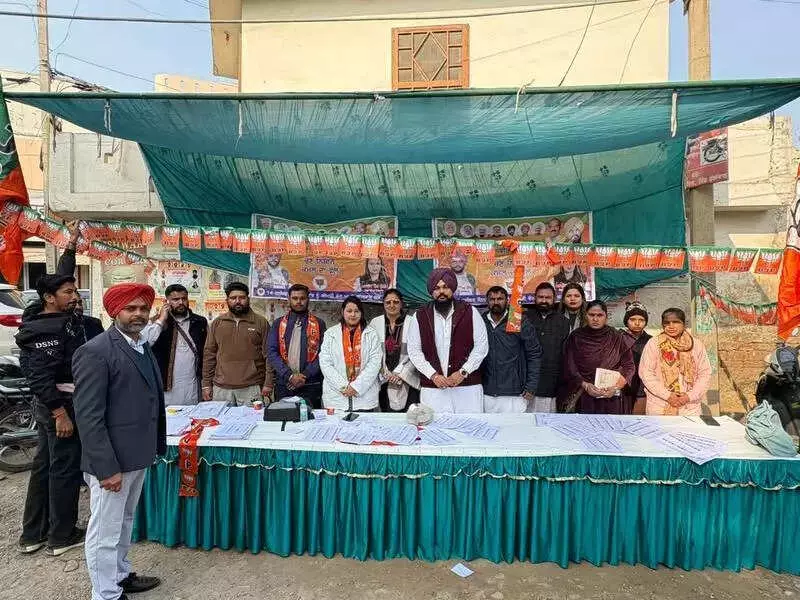
The Bharatiya Janata Party's (BJP) confident solo campaign in the Ludhiana district's rural local body elections has ended in a disappointing performance, casting a shadow over its strategy for the 2027 Punjab assembly polls. Making its debut in these elections without its former ally, the party managed to win a mere three panchayat samiti seats and failed to secure any of the 25 zila parishad seats.
A Reality Check for the Saffron Party
The results have served as a stark eye-opener for the party, highlighting its persistent struggle to build a strong base in Punjab's rural hinterland. Since the breakup of its long-standing alliance with the Shiromani Akali Dal (SAD) in 2020, both parties have faced electoral headwinds in the state. The recent outcome in Ludhiana underscores the challenge, with the Aam Aadmi Party (AAP) emerging ahead by winning 11 zila parishad and 88 panchayat samiti seats, followed by Congress and SAD.
Senior BJP leaders have been prompted to call for a major strategic rethink. One leader described the election as an exercise to "test the waters" in rural areas, admitting the party faced a shortage of strong, suitable candidates to field on all seats. This admission points to a critical need for the BJP to nurture credible grassroots leadership in rural pockets to match its urban appeal.

Leadership Admits to Shortcomings and External Factors
BJP district president Gagandeep Singh Sunny Kainth, who oversaw the campaign in Gill and Sahnewal constituencies, conceded that the performance leaves considerable room for improvement. He offered an explanation for the low voter engagement, suggesting that turnout was affected because people believed the administration was being pressured to ensure a victory for the ruling party "at any cost."
This perception, whether accurate or not, indicates a communication and trust deficit the party must address. The poor showing contrasts sharply with the BJP's performance in most urban constituencies during the 2024 Lok Sabha elections, barring Atam Nagar. This continuing urban-rural divide remains the party's central political challenge in Punjab.
The Road to 2027: Rethink or Perish?
The zila parishad and panchayat samiti results are more than a local setback; they are a significant indicator for the state's political future. The numbers tell a clear story:
- Zila Parishad (25 seats): AAP – 11 | Congress – 8 | SAD – 3 | BJP – 0 | Independents – 3
- Panchayat Samiti (235 seats): AAP – 88 | Congress – 73 | SAD – 44 | BJP – 3 | Independents – 27
The alliance era with the SAD had allowed for seat-sharing that factored in the distinct preferences of rural and urban voters, helping both parties consolidate their strongholds. Going solo, the BJP now finds itself on a slippery pitch in the countryside. The party's decision to contest independently, despite warnings, has not translated into votes, raising fundamental questions about its outreach, candidate selection, and connection with rural Punjab's electorate. As the countdown to the 2027 assembly elections begins, this result in Ludhiana will likely force a hard look at alliance politics and grassroots capacity building within the BJP's state unit.






