

Major Discrepancy in Election Commission Data on Bengal Voter Notices
Two conflicting sets of data from the Election Commission of India have revealed a significant mismatch in the number of voters served notices during the Special Intensive Revision (SIR) of electoral rolls in West Bengal. The discrepancy centers around voters flagged for sharing parents' names with six or more individuals, raising questions about data accuracy in the crucial electoral process.
The Conflicting Numbers
According to an affidavit submitted by the Election Commission to the Supreme Court on January 18, approximately 13 lakh voters in West Bengal received notices for having six or more individuals sharing the same parent names in their submitted documents. However, data obtained from the West Bengal Chief Electoral Officer's Office, also dated January 18, presents a dramatically different picture - showing 50.89 lakh voters identified in the same "6 progeny or more" category.
This represents a nearly four-fold difference between the two official figures, with the CEO's data indicating significantly more voters being flagged than what the Election Commission disclosed in its Supreme Court submission.

Background of the Special Intensive Revision
The Special Intensive Revision process in West Bengal, along with eight other states and three Union Territories, commenced in October 2025. This marks the first time in two decades that electoral rolls are being prepared from scratch rather than simply updating existing records through the annual Special Summary Revision.
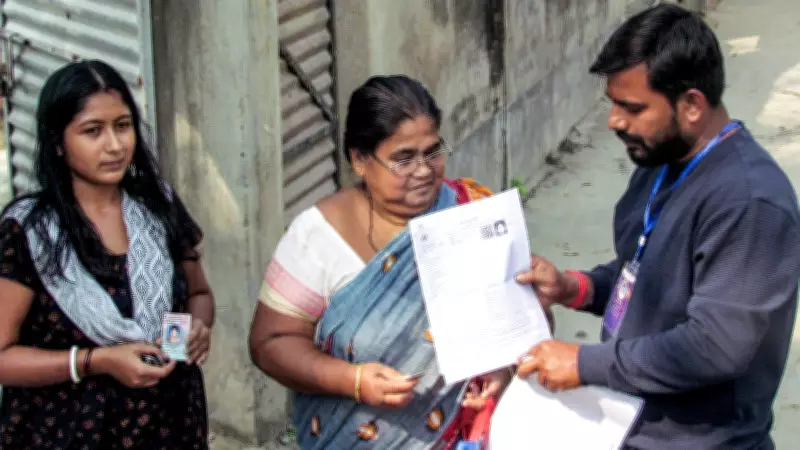
During this process, over 1.16 crore electors in West Bengal alone were flagged for various "logical discrepancies" in their documents after the initial round of SIR. These voters have been asked to appear for hearings to prove their eligibility, with proceedings currently underway across the state.
Detailed Breakdown of Categories
The West Bengal CEO's data provides a district-wise breakdown of voters identified for logical discrepancies, including:
- Fathers' name mismatch
- Age difference with parents being 50 years or more
- Age difference with grandparents being 40 years or less
- The controversial "6 progeny or more" category
The Election Commission defended its notices in the "6 progeny or more" category, stating that the measure was necessary to "ensure that details of citizens of West Bengal are not misused through mapping to any name where there is no proof of parent-children relationship." The EC further explained that in many cases, electors had marked unrelated persons as their parents to establish links to previous electoral rolls.
Evolving Numbers and Official Silence
Interestingly, the West Bengal CEO office's January 18 figure of 50.89 lakh notices represents more than double the data it had released in December 2025, when the number stood at 23.64 lakh voters in the same category.
When questioned about the actual number of notices in this category and whether the figures had changed, the Election Commission did not respond. Similarly, the West Bengal CEO office declined to comment, with sources indicating that the notices were generated by the Election Commission rather than state authorities.
Technological Implementation and Legal Challenges
For the first time in the electoral revision process, the Election Commission is deploying specialized software to flag electors for logical discrepancies as part of the SIR. All voters are required to provide details of themselves or their parents from the last intensive revision of rolls, which for West Bengal dates back to 2002.
The Election Commission's decision to conduct the SIR and its methodology, including requiring certain categories of voters to submit documents to prove eligibility, has been challenged in the Supreme Court. The final electoral rolls for all states and Union Territories (except Uttar Pradesh) are scheduled for publication on February 14.

This data discrepancy emerges as the Election Commission expands its nationwide SIR initiative, which began in Bihar ahead of Assembly elections and now includes nine states and three Union Territories in its second phase. The conflicting figures highlight potential challenges in implementing large-scale electoral reforms and maintaining data consistency across different government offices.





