

Gujarat's Electoral Roll Revision Receives Massive 14.7 Lakh Forms
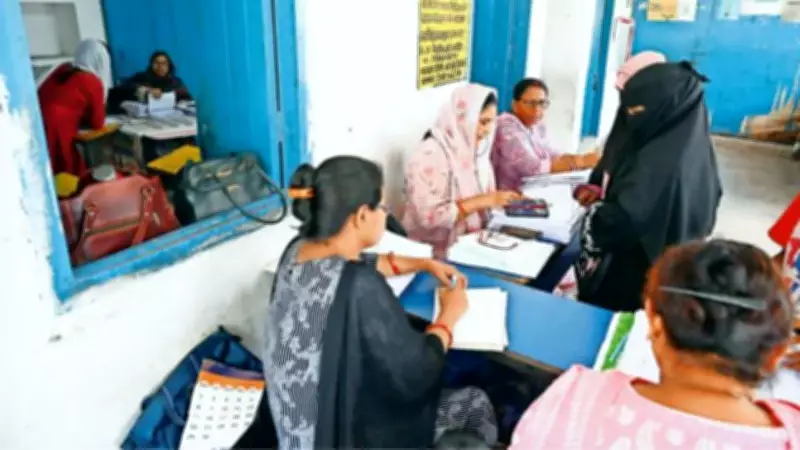
The Special Intensive Revision (SIR) campaign of the Electoral Roll in Gujarat has witnessed an overwhelming response from voters across the state. According to the State Election Commission, a staggering total of 14,70,125 forms were deposited during this crucial electoral exercise. This massive participation underscores the heightened public engagement in the democratic process ahead of upcoming elections.
Breakdown of Form Submissions Across Categories
The submitted forms were distributed across three primary categories, each serving distinct electoral purposes:
- Form 6: Application for inclusion of name in the electoral roll - 7,25,920 submissions
- Form 7: Application for objecting inclusion or seeking deletion of name - 1,83,235 submissions
- Form 8: Application for correction, transposition, or EPIC replacement - 5,60,970 submissions
The revision process commenced on October 27, 2025, culminating in the publication of the Draft Electoral Roll on December 19, 2025, following the completion of the counting phase. Initially, the deadline for citizens to submit claims and objections was set for January 18, 2026, but recognizing the importance of comprehensive voter participation, the Election Commission of India (ECI) extended this deadline to January 30, 2026.

District-Wise Distribution of Electoral Forms
An analysis of the district-wise data reveals interesting patterns in voter engagement across Gujarat:
- Ahmedabad: 2.16 lakh forms
- Surat: 1.31 lakh forms
- Anand: 78,790 forms
- Rajkot: 72,149 forms
- Bhavnagar: 63,116 forms
- Vadodara: 58,822 forms
- Kutch: 54,221 forms
- Kheda: 53,679 forms
- Gandhinagar: 50,849 forms
- Banaskantha: 47,066 forms
The Anand District Anomaly: Highest Form-7 Submissions
Among all districts, Anand presents a particularly intriguing case study. Despite being smaller than major urban centers, Anand recorded 40,607 Form-7 submissions, the highest number of objections in the entire state. This figure surpasses even Ahmedabad's 34,008 Form-7 submissions, highlighting a unique electoral dynamic in this region.
Remarkably, the number of Form-7 submissions alone in Anand exceeds the total number of all forms submitted in 19 other districts of Gujarat. Furthermore, Anand stands as the only district where Form-7 submissions outnumber both Form-6 and Form-8 submissions, indicating a significant focus on voter list purification in this area.
Notable Case: BJP Corporator's Objection Against Padma Shri Awardee
In a related development, BJP corporator Sanjay Manvara from the Junagadh Municipal Corporation filed a Form-7 objection on January 13, challenging the inclusion of Haji Rathod and his family in the electoral rolls. The objection cited "absent/permanently shifted" as the reason for seeking deletion.
Interestingly, Haji Rathod, a 74-year-old dholak artist also known as Mir Hajibhai Kasambhai and 'Haji Ramakdu', was recently honored with the Padma Shri award in the Republic Day 2026 honors list. Following the award ceremony, Kasambhai was felicitated by Chief Minister Bhupendra Patel at a function in Junagadh, where he also met with Sanjay Manvara, creating an intriguing intersection of electoral processes and national recognition.
ECI's Commitment to Comprehensive Electoral Roll Preparation
The Election Commission of India has emphasized its commitment to ensuring electoral integrity through this revision process. In a statement issued recently, the ECI reiterated its fundamental principle: "to ensure that 'no eligible voter is excluded, and no ineligible voter is included' in the electoral rolls."

Voter Registration Officers have been directed to verify all submitted forms and complete their disposal by February 10, 2026. The ECI has also provided reassurance to citizens who may have missed this intensive revision window, stating that under the continuous revision process, they will still have opportunities to submit necessary forms in the coming period.
This comprehensive electoral exercise represents a significant step toward refining Gujarat's voter database, ensuring greater accuracy and inclusivity in the democratic framework. The substantial public participation, particularly the high number of objections in certain districts, reflects an engaged electorate actively contributing to the integrity of the electoral process.





