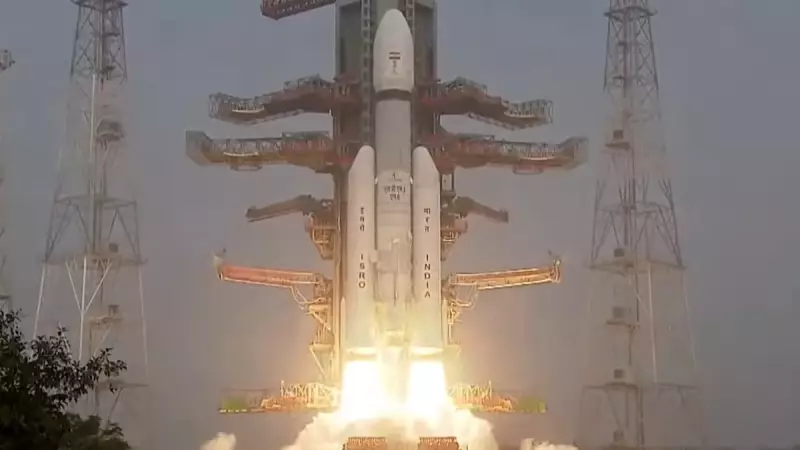
In a significant boost to India's strategic defence capabilities, the Indian Space Research Organisation (ISRO) successfully launched a powerful new Earth observation satellite for the Defence Research and Development Organisation (DRDO) on Monday. The satellite, named EOS-N1, lifted off atop a Polar Satellite Launch Vehicle (PSLV) from the Satish Dhawan Space Centre in Sriharikota.
Mission Details and Strategic Importance
The launch took place on 12 January 2026, marking a pivotal moment in India's space-based surveillance efforts. The EOS-N1 is a next-generation satellite specifically designed to support critical national defence functions. Its primary mandate includes strategic monitoring and reconnaissance, providing India's armed forces with enhanced situational awareness and intelligence-gathering capabilities from space.
This mission underscores the deepening collaboration between ISRO and DRDO, leveraging space technology for national security. The satellite was launched by the commercial arm of India's growing space ecosystem, highlighting the increasing role of public-private partnerships in the country's space ambitions.

Five Crucial Facts About the EOS-N1 Mission
1. A Dual-Use Satellite: While its primary application is defence and strategic surveillance, the EOS-N1 satellite is understood to have dual-use capabilities. This means its advanced sensors and imaging technology can also be utilized for civilian purposes such as environmental monitoring, disaster management, and urban planning, maximizing the return on national investment.
2. A Multi-Payload Mission: The PSLV rocket that carried the EOS-N1 into orbit was configured for a multi-payload mission. This efficient approach allows ISRO to deploy multiple satellites or experimental payloads in a single launch, optimizing costs and launch frequency. The exact details of any secondary payloads on this flight have not been publicly disclosed.
3. Deployment in a Strategic Orbit: A key question following any launch is where the satellite will be stationed. The EOS-N1 was deployed into a precise Earth observation orbit. This specific orbital path is calculated to allow the satellite's cameras and sensors to repeatedly pass over areas of strategic interest, ensuring comprehensive coverage and timely data collection for defence analysts.
4. Built for Advanced Surveillance: The satellite is engineered as a sophisticated spy satellite. It carries high-resolution imaging systems capable of capturing detailed pictures of the Earth's surface by day and potentially by night, supporting activities like border monitoring, infrastructure observation, and maritime domain awareness.
5. A Testament to Indigenous Capability: The end-to-end execution of this mission—from satellite design by DRDO to launch by ISRO—showcases India's self-reliance in developing and deploying complex space-based defence assets. It reduces dependency on foreign intelligence sources and strengthens the country's strategic autonomy.
Implications and the Road Ahead
The successful insertion of the EOS-N1 satellite into orbit represents a major leap forward for India's defence preparedness. It enhances the country's ability to gather real-time, actionable intelligence, a critical factor in modern warfare and national security strategy. The data from this satellite will empower decision-makers with greater clarity on activities along India's borders and in the wider region.
This launch also signals India's growing prowess in the specialized domain of military space applications. It places the nation among a select group of countries that can independently build, launch, and operate advanced reconnaissance satellites. The mission sets a strong precedent for future collaborative ventures between ISRO and DRDO, paving the way for an even more robust and responsive space-based security architecture in the years to come.