

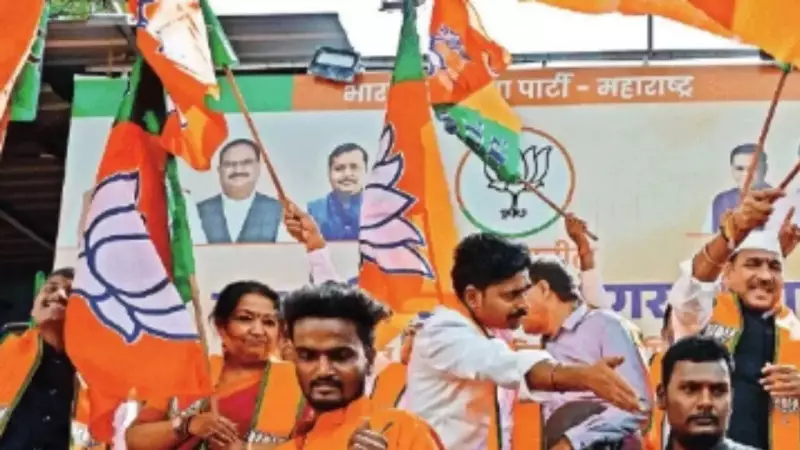
The ruling Mahayuti alliance, led by the Bharatiya Janata Party (BJP), has secured a dominant victory in the recent municipal council and nagar panchayat elections across Maharashtra. This win mirrors the alliance's sweeping mandate in the 2024 state assembly polls and demonstrates its organizational strength, effectively countering the opposition Maha Vikas Aghadi's (MVA) allegations of "vote chori." The result significantly multiplies the challenge for opposition parties ahead of the high-stakes contest for 29 municipal corporations, most notably the Brihanmumbai Municipal Corporation (BMC), scheduled for January 15.
BMC Polls: The Final Acid Test for Thackerays and MVA
According to political observers, the upcoming BMC election will serve as the ultimate litmus test for the Thackeray cousins—Shiv Sena (UBT) chief Uddhav Thackeray and Maharashtra Navnirman Sena (MNS) president Raj Thackeray—and the "almost defunct" MVA coalition. In September, Uddhav Thackeray himself admitted that the BMC polls would be an acid test for his alliance. Political analyst Birju Mundra predicted that the Mahayuti will adopt a more aggressive stance for the corporation polls. However, he highlighted a potential internal challenge: "BJP and the Eknath Shinde-led Shiv Sena will face a tough time in seat-sharing as both will refuse to cede seats now."
Mundra added that the strong performance of most Mahayuti ministers in their respective constituencies will boost the morale of both leaders and party cadre, who are expected to work overtime in the next 45 days. He also forecasted another potential outflow of leaders and grassroots workers from Shiv Sena (UBT) and MNS to the Mahayuti following Sunday's results. With the Congress deciding to go solo, the BMC battle is poised to be the definitive examination of the Thackeray family's political influence.

Seat-Sharing Challenges and Shifting Dynamics
Poll data analyst Hitesh Jain concurred that seat-sharing negotiations within the Mahayuti would be a significant challenge. "At the moment, Mahayuti holds an edge, but the MVA, especially Sena (UBT), still holds sway in the island city and central Mumbai," Jain noted. He pointed out that the long delay in conducting the BMC polls means there will be many rebels who do not receive party tickets, which could influence outcomes.
Jain emphasized that the winner in the fiercely contested BMC election could be decided by thin margins and the votes secured by smaller parties like the MNS, which retains influence in an estimated 25-30 wards. He also highlighted the unprecedented nature of this election: "This is the first BMC election after the split in Sena and NCP, so the situation could be complicated." Jain suggested that the Mahayuti's demonstrated ability to form tactical alliances and break them when necessary could be a pattern repeated in the corporation polls.
Momentum and Campaign Strategies
Observers noted that Shiv Sena (UBT) hardly campaigned for the concluded municipal council and nagar panchayat elections, conserving its energy and resources for the Mumbai fight. While the Uddhav-Raj alliance is expected to make an impact in the BMC polls, one analyst cautioned that "just harping on the Thackeray brand may not be enough" to secure victory. The BJP, on the other hand, is expected to carry forward the momentum from Sunday's victory directly into the campaign for India's richest and most politically significant civic body.
The stage is now set for a monumental political clash in Mumbai. The Mahayuti's recent success has fortified its position, but the unique demographics and legacy loyalties of Mumbai's electorate, combined with complex post-split party dynamics, promise a closely fought and unpredictable battle for control of the BMC on January 15.






