

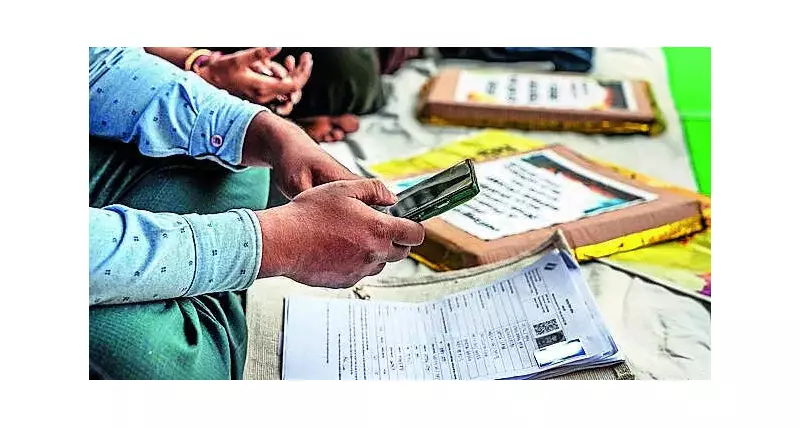
The Election Commission of India has taken a significant step towards cleaning up voter lists, with the publication of draft electoral rolls for five states and Union Territories undergoing a special revision. The move is expected to lead to the removal of a substantial number of names, primarily due to voters being deceased, having permanently relocated, or being untraceable.
Scale of the Cleanup Operation
The draft rolls for West Bengal, Rajasthan, Goa, Puducherry, and Lakshadweep were published on Tuesday as part of the second phase of the Special Intensive Revision (SIR). Sources indicate that the percentage of deletions is projected to be significant for most regions. All areas except Lakshadweep are likely to see deletions in the range of 7.5% to 8.5%. In a stark contrast, the island territory of Lakshadweep is expected to have only about 2.5% of its voters struck off the list.
The scale varies dramatically by state. In West Bengal, a massive 58 lakh (5.8 million) electors are set to be removed. These names belong to individuals who are dead, have shifted permanently, are untraceable, or were registered in multiple locations. However, officials suggest an even larger number of voters—far exceeding 58 lakh—may receive notices for discrepancies in their submitted enumeration forms.

Root Cause: A Rule Change and a Legal Gap
This wave of discrepancies stems from a recent change in the SIR procedure. The new rule eliminated the requirement for voters to submit supporting documents during the initial enumeration stage to prove their eligibility for enrollment. This has led to many forms being filled out without specifying the voter's link to the previous electoral roll, creating a backlog of cases for Booth Level Officers to assess.
Officials have also pointed to a deeper, systemic issue. A 2010 amendment to the Representation of the People Act mandated that no entry in the electoral roll could be amended or deleted without proper verification. Crucially, the rules prescribing the manner of this verification were never formulated. "This is why the dead, shifted and multiple entries have remained in the roll, creating scope for bogus voting," explained an official, highlighting how this legal gap allowed inaccuracies to persist for over a decade.
State-by-State Breakdown and Next Steps
The impact of this cleanup is being felt differently across the five regions:
- West Bengal: Faces the highest absolute numbers, with approximately 58 lakh identified for deletion.
- Rajasthan: With a total electorate of 5.46 crore, the state may see 7.5% to 8% of voters removed.
- Goa: Out of its 11.8 lakh electorate, around one lakh voters (roughly 8.5%) have been identified as dead, shifted, duplicate, or untraceable.
- Lakshadweep: Will witness the smallest percentage cut, with only about 2.5% of its 57,813 voters slated for removal.
The publication of the draft roll is just the beginning of the process. District collectors will now share printed and soft copies with political party functionaries at the district level. The rolls will also be uploaded to the respective District Election Officer's website for public scrutiny.
The final number of exclusions will depend on the response to the notices. Voters who receive notices will have to appear before Electoral Registration Officers and provide the requisite documentation to prove their citizenship and eligibility. Only those who fail to satisfy the officers will be permanently excluded from the final electoral roll, paving the way for more accurate and fraud-resistant elections in the future.






