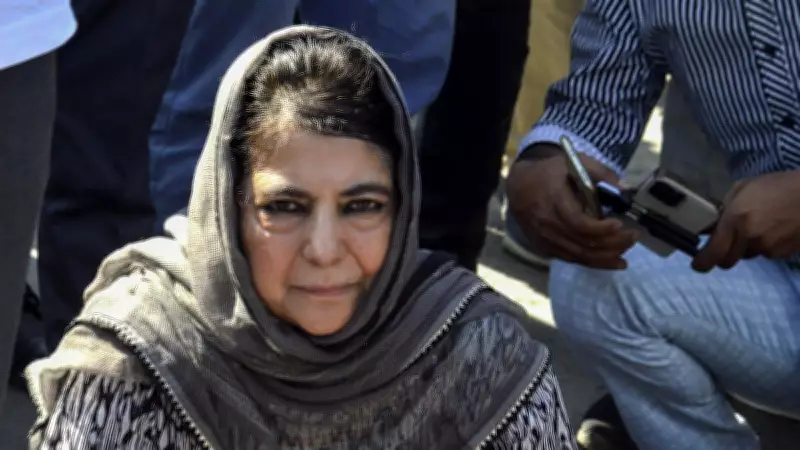
Mufti's Remarks Spark Fresh Controversy
Former Jammu and Kashmir Chief Minister Mehbooba Mufti has triggered a political firestorm with her comments justifying the use of force against protesters in Kashmir. Speaking at a recent event, Mufti argued that the state's security forces had no choice but to employ pellet guns to counter militant activity, drawing sharp criticism from opposition parties and human rights activists.
Her remarks have revived painful memories of the 2016 unrest in the Kashmir Valley, when security forces used pellet guns extensively to disperse stone-pelting protesters. According to official records cited by human rights groups, over 15,000 civilians were injured during that period, with more than 1,000 pellet injury patients requiring specialized treatment at the Shri Maharaja Hari Singh Hospital in Srinagar.
Pellet Guns: A Controversial Weapon
Introduced as a 'less-lethal' alternative to live ammunition, pellet guns fire steel pellets that can cause severe injuries, including blindness, fractures, and internal damage. Human rights organizations, including Amnesty International, have called for a ban on their use, labeling them indiscriminate and excessively harmful. In a 2018 report, Amnesty noted that pellet guns had caused 'devastating and irreversible harm' to civilians, particularly young protesters.

The controversy surrounding pellet guns is not new. After the 2016 protests, the Jammu and Kashmir government set up a compensation fund for victims, but many families say the payments were insufficient and delayed. The Indian Supreme Court also intervened, ordering the government to explore alternative non-lethal weapons. Despite this, pellet guns remain in use, with authorities citing their necessity in controlling violent crowds.
Political Backlash and Hypocrisy Accusations
Mehbooba Mufti's comments have drawn sharp rebuke from political rivals. The Bharatiya Janata Party and Congress accused her of hypocrisy, pointing out that she had previously criticized the use of pellet guns when in opposition. 'She has flip-flopped on the issue, first condemning the weapons and now justifying them,' said a Congress spokesperson. The National Conference called her remarks 'insensitive' and demanded accountability for the victims.
Mufti defended her stance, stating that the security situation in Kashmir required tough measures. 'When militants are using guns and grenades, how can we expect security forces to respond with sticks?' she asked. However, critics argue that her statements amount to endorsing state violence and blur the line between militants and peaceful protesters.
Human Rights Concerns Persist
The debate over pellet guns underscores broader concerns about human rights in Kashmir. Amnesty International has consistently documented cases of excessive force, arbitrary detentions, and torture in the region. The use of pellet guns, they argue, violates international standards on the use of force. 'These weapons cause lifelong disabilities and trauma,' said a researcher. 'The government must prioritize de-escalation and accountability over repression.'
As the political war of words continues, families of pellet gun victims remain frustrated. Many have filed petitions seeking justice, but convictions of security personnel are rare. For them, Mufti's remarks are a painful reminder of how their suffering is often politicized and overlooked.
Conclusion: A Divisive Legacy
Mehbooba Mufti's latest comments have reopened old wounds in Kashmir, highlighting the enduring impact of the 2016 unrest and the contentious role of pellet guns. While she insists on the necessity of force, the human cost remains a stark reality. As the region grapples with a fragile ceasefire and ongoing security challenges, the debate over state violence and human rights is far from settled.
According to local doctors, many pellet gun victims still suffer from chronic pain and psychological trauma. The incident serves as a grim reminder that 'less-lethal' does not mean harmless, and that any weapon used against civilians must be subject to strict scrutiny and accountability.