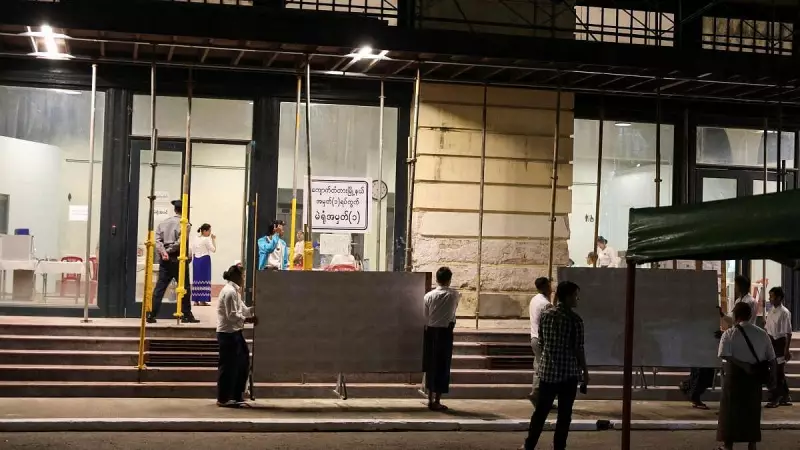
Polls have opened in Myanmar for a general election, an event taking place under the dark shadow of a widespread civil war and with the country's most prominent democratic leader, Aung San Suu Kyi, imprisoned. The election, held on 28 December 2025, is widely expected to be won by political factions backed by the ruling military junta, which seized power in a coup over four years ago.
A Nation Votes Amid Conflict and Repression
The act of voting is unfolding across parts of Myanmar, but the process is far from free or fair. Large swathes of the country are engulfed in intense fighting between the military and a diverse array of ethnic armed organisations and pro-democracy resistance forces. This violent conflict has displaced millions and made voting impossible in many regions. Furthermore, the electoral environment has been heavily controlled and manipulated by the State Administration Council, as the junta calls itself, to ensure a favourable outcome for its allied Union Solidarity and Development Party (USDP).
The Ghost of the 2020 Landslide
The current election is a stark contrast to the last general election held in November 2020. That poll resulted in a landslide victory for Aung San Suu Kyi's National League for Democracy (NLD). The NLD's overwhelming mandate from the people was brutally overturned just months later when the military arrested Suu Kyi and other senior leaders, alleging voter fraud—claims dismissed by international observers. The Nobel Peace Prize winner remains in detention, facing a series of convictions widely seen as politically motivated. Her party, the NLD, has been effectively dismantled and barred from contesting the current polls.

International Condemnation and Domestic Defiance
The election has been met with almost universal condemnation from the international community and major domestic political groups. Critics label it a sham designed to lend a veneer of legitimacy to military rule. Key elements of this criticism include:
- The exclusion of the popular, elected NLD party.
- A climate of extreme fear and repression suppressing genuine political campaigning.
- The ongoing civil war preventing participation for a huge portion of the electorate.
- Control of media and information by the junta.
Many pro-democracy activists and ethnic leaders have called for a complete boycott of the election, urging people not to validate the military's process. For the junta, however, a successful election—defined by high turnout and a win for its proxies—is crucial for its narrative of restoring normalcy and democratic transition.
The results of the Myanmar election, while a foregone conclusion, will do little to resolve the deep political and humanitarian crisis gripping the nation. Instead, it is likely to entrench the military's hold on power formally and deepen the divisions within the country, prolonging a conflict that has brought immense suffering to the people of Myanmar.