

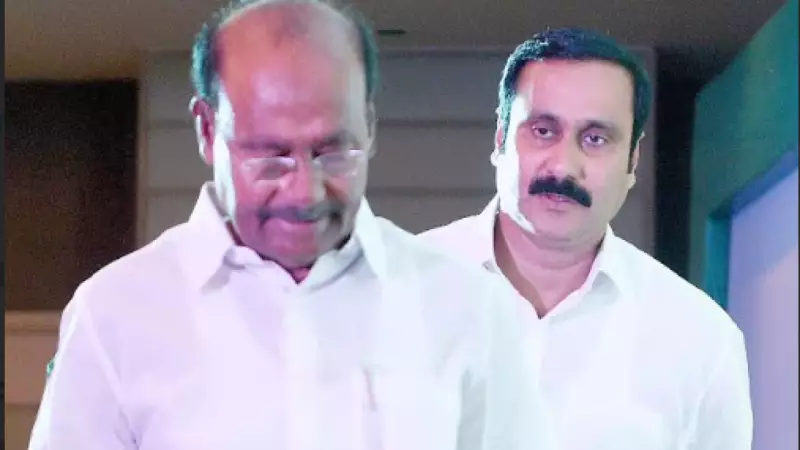
The Election Commission of India (ECI) has officially stated that it cannot assign the iconic 'mango' election symbol of the Pattali Makkal Katchi (PMK) to either of the two warring factions led by founder Dr. S Ramadoss and his son, Dr. Anbumani Ramadoss. The commission made this submission before the Delhi High Court on Thursday, citing an unresolved internal leadership dispute that has plunged the party into chaos.
The Core of the Conflict: Who Leads the PMK?
The legal battle reached the court after party founder S Ramadoss challenged the ECI's earlier recognition of his son, Anbumani, as the legitimate president of the PMK. The senior Ramadoss, aged 90, argued that his son's tenure had constitutionally ended, thereby reinstating him as the party's rightful leader. He accused the ECI of accepting "wrong documents" from Anbumani's faction without proper scrutiny while overlooking the genuine records he had submitted.
Representing the founder, senior advocate Balbir Singh presented a detailed timeline to the court. He asserted that Anbumani's presidency was limited to a three-year term ending in May 2025. Singh alleged that the younger Ramadoss misrepresented facts by submitting documents that portrayed a general body meeting held in 2023 as the one convened in 2022, thereby falsely extending his term until 2026.

ECI's Stance: Symbol Remains Frozen
Before Justice Mini Pushkarna, the ECI clarified its constrained position in such internal party conflicts. The commission's counsel explained that when two individuals stake claim to a party's leadership, especially during an election cycle, the ECI cannot act as an adjudicator. The matter must be resolved by a competent court.
Consequently, the ECI informed the court that it cannot accept the mandatory Form A and Form B submitted by either camp as long as the ownership dispute persists. The logical outcome of this deadlock is that the PMK's prized 'mango' symbol will remain "frozen" until the legal process delivers a final verdict on the legitimate leadership.
Allegations and Counter-Allegations in Court
The hearing saw sharp exchanges between the two sides. While Ramadoss's counsel accused Anbumani of factual misrepresentation, the counsel for Anbumani Ramadoss dismissed all allegations as a blatant attempt to mislead the judiciary. Anbumani's faction insisted that they represent the legitimate PMK and urged the court to reject the founder's petition, subtly referencing the latter's advanced age.
The ECI, for its part, defended its procedural approach. It emphasized that the commission should not be held responsible for conflicts that originate within political organizations. Its role is to ensure a fair electoral process, which in this case necessitates the freezing of the symbol to prevent unfair advantage to either claimant.
This high-stakes family feud has significant implications for the PMK's political future, especially with the symbol being a crucial part of its identity in Tamil Nadu politics. The court's eventual decision will determine not only the party's leadership but also its ability to contest elections under a unified banner.






