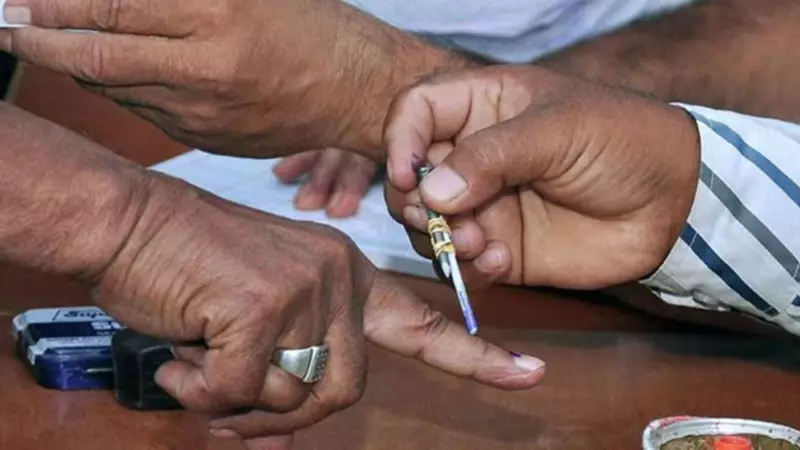
Voting for the crucial 2025 local body elections in Pune district commenced on a sluggish note, recording a turnout of just 8.37% in the first two hours on Monday. The polls, covering 12 nagar parishads and three nagar panchayats, mark the beginning of a multi-phase electoral process across Maharashtra mandated by the Supreme Court.
Phase One Kicks Off Amid Low Initial Participation
The first phase of Maharashtra's extensive local body elections began on Tuesday, encompassing hundreds of municipal councils and nagar panchayats. In Pune district, however, the process started a day earlier on Monday. Despite the slow morning footfall, election officials expressed confidence that the pace would pick up as the day progressed. The counting of votes is scheduled for Wednesday, December 3, 2025.
These elections are being conducted under a directive from the Supreme Court, which has set a deadline of January 31, 2026, to complete all local body polls in the state. This timeline adds significant urgency to the electoral calendar.

Mahayuti vs MVA: The Major Political Contest
The elections have crystallized into a direct contest between the state's ruling coalition and the main opposition alliance. The Mahayuti alliance, which governs Maharashtra, comprises the Bharatiya Janata Party (BJP), the Eknath Shinde-led Shiv Sena, and the Ajit Pawar-led faction of the Nationalist Congress Party (NCP).
Opposing them is the Maha Vikas Aghadi (MVA), which includes the Indian National Congress, the Uddhav Thackeray-led Shiv Sena (UBT), and the Sharad Pawar-led NCP (SP). Several other parties, including the Maharashtra Navnirman Sena (MNS) led by Raj Thackeray and the Vanchit Bahujan Aghadi (VBA), are also in the fray, with the VBA forming local-level alliances with some MVA constituents in select seats.
New Electoral Measures and Reservation Dynamics
The State Election Commission (SEC) has implemented enhanced vigilance for these polls. A key initiative is a new system to flag suspected duplicate voters with "double stars" on the electoral rolls, prompting polling officials to conduct stricter identity verification. This move addresses concerns raised by opposition parties about potential bogus entries.
Furthermore, these are the first local body elections being held after a significant Supreme Court ruling on reservations. The court has allowed 27% reservation for Other Backward Classes (OBCs), while simultaneously mandating that the total quota—including those for Scheduled Castes and Scheduled Tribes—must not exceed the 50% cap. In a tech-forward step, the SEC has also launched a mobile application to provide voters with easy access to candidate details and affidavits.
The initial low turnout in Pune sets the stage for a closely watched electoral battle, with political alliances testing their strength ahead of larger state-wide contests. All eyes are now on whether voter participation will surge in the latter half of the day.