Congress leader Rahul Gandhi's high-profile 'Voter Adhikar Yatra' across Bihar, which culminated in a massive rally in Patna, has encountered a significant roadblock on the ground. Despite drawing large crowds, the campaign's central accusation of 'vote chori' or vote theft against the ruling party has failed to connect with the electorate, according to ground reports from several districts.
The Yatra and the 'Vote Chori' Allegation
Rahul Gandhi launched his whirlwind campaign, covering 1,300 km across 20 districts, from Sasaram on August 17. The yatra, which concluded at Patna's Gandhi Maidan on September 1, saw Gandhi, often accompanied by RJD chief and Mahagathbandhan's chief ministerial face Tejashwi Yadav, consistently level charges of electoral manipulation. The campaign's focus was the Special Intensive Revision (SIR) of electoral rolls in Bihar, which the Opposition alliance claimed was a tool for disenfranchisement.
The turnout was so significant that it buoyed the Congress to demand a greater share of seats within the Mahagathbandhan, a factor that contributed to delays in the alliance's final seat-sharing agreement. However, as the election progresses towards its second phase on November 11, the core message of the yatra appears to have lost its steam.

On the Ground: A Disconnect with Voters
In north Bihar, regions through which the yatra passed in its final week, the 'vote chori' narrative finds little mention unless specifically prompted. Voters are instead preoccupied with more immediate and tangible concerns.
In East Champaran's Chiraiya constituency, this disconnect is evident. Mahesh Yadav, an RJD supporter and mechanic, stated his support for Tejashwi Yadav, citing the jobs issue and a general mood for change. His friend, ration dealer and BJP voter Ramlal Gupta, offered a more pragmatic view, asserting that people will ultimately vote based on caste. When asked about 'vote chori,' both were dismissive, with Gupta quipping about the reliability of EVMs compared to the old ballot system.
Muslim Voters, The Intended Audience, Remain Unconvinced
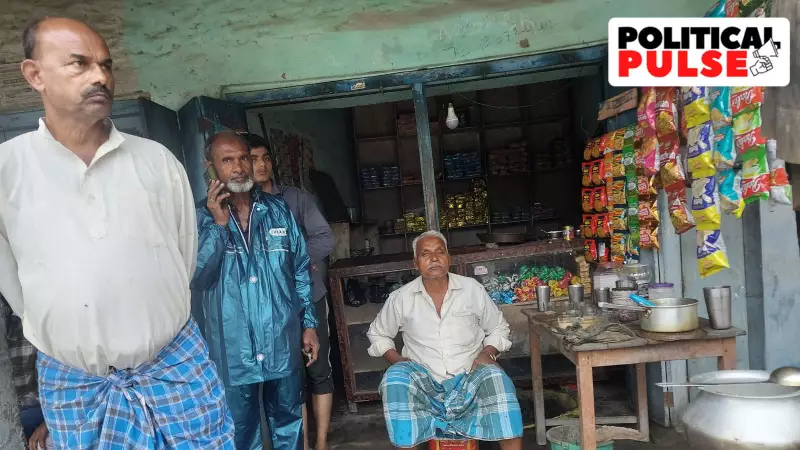
Even among Muslim communities, who were at the centre of the alleged fears of disenfranchisement, the issue holds little resonance. At a tea stall in Ramanagar, a Muslim-majority village in the Darbhanga Rural constituency, Mohammed Iftikhar, 50, expressed confusion.
"I have 16 votes in my family. All are on the voter list," Iftikhar said. "Those saying there is vote chori must explain how it is happening. We don't understand it."
His sentiment was echoed by 30-year-old Mohammed Ishtiyaq, who highlighted the importance of local candidates. "Nobody cares about what Rahul Gandhi says. In rural areas, it's the candidate that matters," Ishtiyaq noted, predicting a split in the Muslim vote based on local issues.
This perspective was reinforced in other areas. In Lalu Prasad Yadav's native village of Phulwaria in Gopalganj district, Durgesh Yadav, 30, expressed skepticism about the possibility of manipulating voter rolls to favour one party. In East Champaran's Madhopur, a Muslim-dominated village, Atiqur Rehman called 'vote chori' an unnecessary issue, redirecting the focus to jobs and migration.
Campaign Strategy Under Scrutiny
The failure of the 'vote chori' pitch to gain traction has led to introspection, even from within the alliance. An RJD leader in Patna bluntly assessed the situation, stating it was a difficult issue to build an election campaign around. "If you are in the voter rolls, it doesn't matter to you. And if you are out of it, you don't matter to the elections," the leader said.
Some voters have also critiqued the negative tone of the campaign. In West Champaran's Bagaha subdivision, farmer Ram Dayal Kushwaha, who intends to vote for the Congress, faulted Gandhi's approach.
"Vote chori was picked up because they had no issue," Kushwaha said. "The problem with Rahul Gandhi is that he doesn't know what people's issues are. He should talk to us farmers: our crops get destroyed every year in floods." He advised that Gandhi should focus on promoting his own positive agenda rather than solely attacking the opponent.

As Bihar heads into a crucial phase of its assembly elections, Rahul Gandhi's 'vote chori' campaign seems to have been overshadowed by the wall of everyday voter anxieties—jobs, caste dynamics, welfare, and local grievances—that continue to be the true determinants of the electoral outcome.