

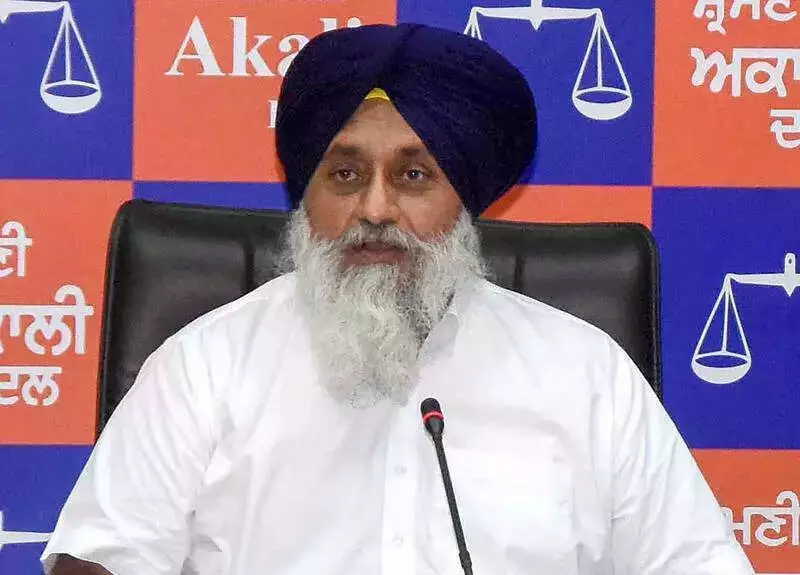
In a major development casting a shadow over the ongoing local body elections in Punjab, the Shiromani Akali Dal (SAD) and the Bharatiya Janata Party (BJP) have lodged serious complaints with the State Election Commission (SEC). The parties have alleged systematic and partisan actions by returning officers, leading to the wholesale rejection of opposition candidates' nomination papers, particularly in the district of Tarn Taran.
Allegations of a Systematic Pattern
On Friday evening, the Shiromani Akali Dal submitted a detailed representation to the Punjab State Election Commission, flagging what it termed a "highly alarming and unprecedented situation." The party's core allegation is that in Tarn Taran district, the nomination papers of all its candidates were rejected without due process. The SAD claimed the rejections were made on "wholly frivolous and unjustified grounds," suggesting a deliberate attempt to sideline the opposition.
The party did not stop at Tarn Taran. It extended its complaints to several other districts, including Amritsar, Gurdaspur, Fazilka, Ferozepur, Kotkapura, and SBS Nagar (Nawanshahr). In these areas, the Akali Dal alleged gross violations of the Model Code of Conduct, stating that even by 7 pm on the scrutiny day, no final list of eligible candidates was publicly displayed.

Demand for Action and Historical Precedent
In its complaint, the SAD demanded an immediate inquiry and strict action against the "erring returning officers and partisan police officials." The party accused these officials of influencing the election process to ensure that only the nomination papers of the ruling Aam Aadmi Party (AAP) candidates were accepted.
The representation drew a parallel to recent events in Tarn Taran, referencing blatant misuse of power during earlier byelections. It noted that the democratic process was salvaged then only after the intervention of the Central Election Commission, which led to the transfer of several officials, including Senior Superintendent of Police Ravjot Kaur Grewal. The SAD expressed shock that a similar pattern of partisan administrative behavior has resurfaced despite this recent precedent.
The party's primary demands include the immediate restoration of the nomination papers of its candidates in Tarn Taran and other affected districts, and a guarantee of a free and fair electoral process.
BJP Echoes Concerns Over Transparency
Adding weight to the allegations, the Punjab unit of the BJP also filed a formal complaint with the State Election Commissioner. The BJP highlighted "serious irregularities and lack of transparency" in the scrutiny of nomination forms for the Zila Parishad and Block Samiti elections.
The BJP pointed out a critical procedural lapse: although scrutiny was mandated to conclude by 3 pm, several returning officers failed to declare their decisions within the stipulated time. More alarmingly, the party alleged that many candidates were barred from entering the returning officers' offices during the scrutiny. This, the BJP argued, is a direct violation of the legal requirement that scrutiny must be conducted in the presence of the candidate.
"Each candidate has a fundamental right to be heard, respond to objections, and rectify any curable defects in their nomination papers," the BJP stated. It condemned the practice of conducting scrutiny behind closed doors, calling it deeply concerning for the fairness, legality, and impartiality of the entire election administration. The BJP labeled the conduct of certain returning officers as "suspicious and arbitrary" and urged the SEC to issue strict instructions to ensure fairness.
Implications for Democratic Process
The combined complaints from two major opposition parties present a significant challenge for the Punjab State Election Commission. The allegations, if proven true, strike at the heart of democratic principles—fair access and a level playing field for all contestants. The reference to past misconduct in Tarn Taran suggests a worrying pattern that could undermine public trust in local governance elections.

The ball is now in the court of the State Election Commission to investigate these grave charges with urgency and transparency. Its response will be crucial in determining whether the ongoing Zila Parishad and Block Samiti elections in Punjab can proceed with their credibility intact. All eyes are on the Commission's next move to address what the opposition claims is a systematic obstruction of democratic participation.





