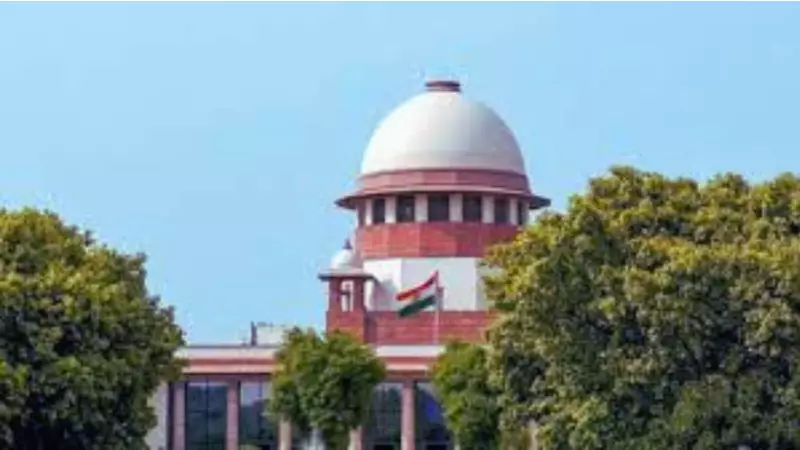
In a significant intervention, the Supreme Court of India has directed state governments to consider providing additional staff to the Election Commission to alleviate the immense work pressure faced by Booth Level Officers during the ongoing Special Intensive Revision of electoral rolls. The order came on Thursday, December 4, 2025, during a hearing on a plea highlighting the severe hardships and even suicides among BLOs.
Court Takes Note of BLOs' Plight
The bench, comprising Chief Justice Surya Kant and Justice Joymalya Bagchi, was hearing an application filed by actor Vijay's political party, the Tamilaga Vetri Kazhagam. The TVK had sought a direction to the Election Commission to refrain from taking coercive actions under the Representation of the People Act against BLOs who fail to meet tight deadlines. The plea pointed to the tragic consequence of this pressure, stating that many BLOs have committed suicide.
Senior advocate Gopal Sankaranarayanan, representing TVK, informed the court that BLOs, who are often teachers or anganwadi workers, are facing extreme pressure from EC officials, leading to fatalities. He further alleged that the poll panel is getting FIRs lodged under Section 32 of the RP Act against BLOs for neglecting their duties, a provision that carries penalties of imprisonment and fines.

Supreme Court's Directive to States
The Supreme Court bench acknowledged the difficulties and issued a clear directive. "The states may consider the desirability of deputing additional staff at the disposal of the EC, so that the working hours can be proportionately reduced," the court stated in its order. It emphasized that state governments cannot evade their obligation and must obviate hardships faced by employees burdened with both routine and additional EC duties.
The court also provided a mechanism for relief, stating that if any employee has a specific reason for seeking exemption from SIR duty, the competent state officer can consider such requests on a case-by-case basis and provide a substitute. However, it clarified that employees cannot be withdrawn unless a replacement is arranged.
The bench made it obligatory for states where the SIR is underway to deploy the requisite workforce for the EC, with the flexibility to increase strength as needed. The plea was disposed of, with the liberty to revive prayers for ex-gratia compensation for BLOs who died during duty at a later stage.
Arguments and EC's Stance
During the hearing, Sankaranarayanan painted a grim picture of the ground reality. He argued that BLOs are ill-equipped to perform SIR duties within such short timelines, citing internet connectivity issues. He described how teachers and anganwadi workers are forced to conduct door-to-door enumeration early in the morning or late at night, around their regular jobs. In a poignant example, he mentioned a young BLO who was denied leave for his wedding, suspended, and subsequently took his own life.
Appearing for the Election Commission, senior advocates Rakesh Dwivedi and Maninder Singh countered that in states like Tamil Nadu, over 90% of enumeration forms have been supplied. Dwivedi asserted that criminal proceedings are initiated only when BLOs show reluctance to perform their duties, and such arguments are often used to craft a particular political narrative. The EC had previously extended the SIR schedule in nine states and three UTs by a week on November 30, responding to concerns over tight deadlines.
The massive SIR exercise, announced on October 27, aims to clean up voter lists covering nearly 51 crore electors across twelve regions: Andaman and Nicobar Islands, Lakshadweep, Chhattisgarh, Goa, Gujarat, Kerala, Madhya Pradesh, Puducherry, Rajasthan, Tamil Nadu, Uttar Pradesh, and West Bengal. Among these, Tamil Nadu, Puducherry, Kerala, and West Bengal are scheduled for assembly polls in 2026.