Supreme Court Expresses Concern Over NOTA's Effectiveness in Elections
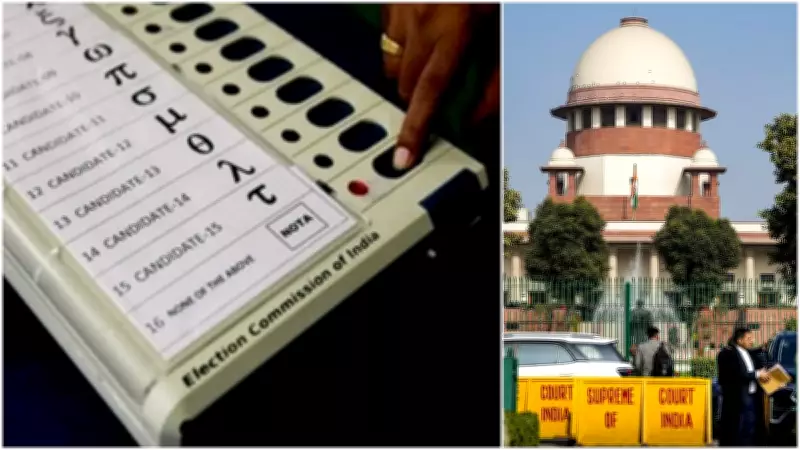
The Supreme Court of India has recently voiced significant doubts regarding the impact of the 'None of the Above' (NOTA) option in electoral processes. During a hearing, the bench questioned whether the introduction of NOTA has genuinely enhanced the quality of elected representatives across the country. The court emphasized that while NOTA provides voters with a means to reject all candidates, it fundamentally cannot fill a legislative seat, thereby limiting its practical utility in improving governance outcomes.
Bench Rues Limitations of NOTA Provision
In a pointed observation, the bench highlighted the inherent constraint of the NOTA provision. It noted that despite allowing voters to express dissatisfaction, NOTA does not lead to the selection of alternative candidates or trigger re-elections in constituencies where it receives the highest votes. This structural flaw, the court argued, undermines its potential to foster better leadership, as it fails to address the vacuum created when voters reject all options without offering a constructive path forward.
Alarming Voter Participation Trends Identified
Beyond NOTA, the Supreme Court bench expressed deep concern over emerging patterns in voter turnout. It lamented a troubling trend where educated and economically well-off citizens are increasingly abstaining from voting in elections. In contrast, the court observed that uneducated voters and women are participating more actively, raising questions about the representativeness and inclusivity of the electoral process.

Key points from the bench's remarks include:
- The NOTA option, while symbolically important, lacks the mechanism to ensure that rejected candidates are replaced with more qualified leaders.
- There is a growing disparity in voter engagement, with affluent and educated segments showing lower participation rates.
- This imbalance could skew election results and affect the overall quality of democratic representation.
Implications for Electoral Reforms and Democracy
The Supreme Court's comments have sparked a broader discussion on the need for electoral reforms in India. Experts suggest that while NOTA serves as a protest tool, its effectiveness in driving tangible improvements in leadership quality remains limited. The bench's observations underscore the urgency of addressing voter apathy among educated and wealthy demographics, as their disengagement could weaken the democratic fabric.
Potential solutions being considered include:
- Enhancing voter education campaigns to encourage participation across all social strata.
- Reevaluating the NOTA provision to explore ways it could influence candidate selection or trigger corrective measures.
- Implementing policies that make voting more accessible and appealing to diverse voter groups.
The Supreme Court's intervention highlights critical issues in India's electoral system, calling for a reevaluation of how tools like NOTA and voter engagement strategies can collectively contribute to electing more competent and representative leaders. As the debate continues, stakeholders are urged to consider these insights in shaping future electoral policies and practices.