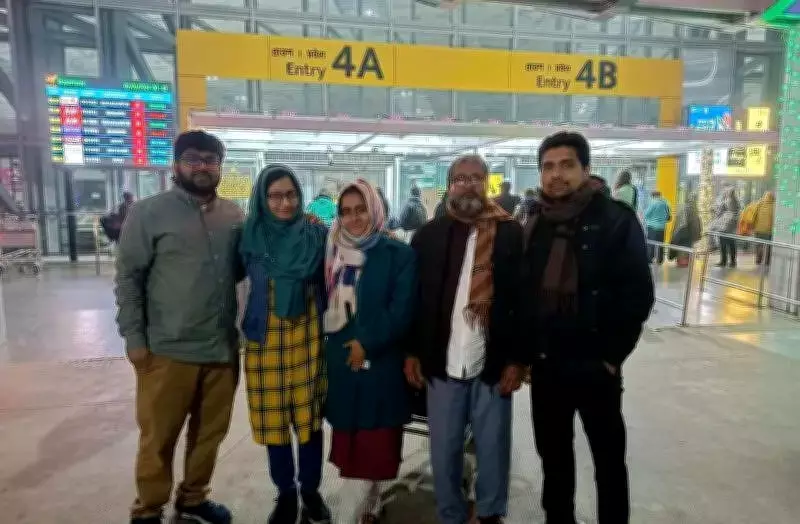
In a disheartening turn of events, Mehebub Sahana, a Manchester-based university lecturer, had his hopes of participating in the assembly elections shattered when his name, along with those of his immediate family members, was unexpectedly deleted from the electoral roll. The 36-year-old academic, who had booked flights for himself, his wife, and their 18-month-old daughter to exercise his democratic right, was forced to cancel the trip after discovering the omission.
Generational Roots Cut from Voter List
Sahana is a registered voter in the Khandaghosh constituency under East Burdwan district. Shockingly, not only was his name removed, but the names of his father, brother, and sister were also deleted from the electoral records. This development came despite the family's five-generation history in the village and their active participation in the electoral process.
Documentation and Hearing Process
Last December, during a visit to his village, Sahana diligently filled out the enumeration form as required. He submitted his passport following instructions from the Booth Level Officer (BLO). His father, who has been voting since 1982, faced a discrepancy because his name appeared as 'Kuddus Sahana' on the 2002 voter list, while all official documents listed him as 'Abdul Kuddus Sahana'. To rectify this, he updated his voter ID card in 2024.

This name variation triggered a hearing process where the mismatch was labeled as a logical discrepancy. While Sahana's family attended the hearing in person, he participated via video call from the United Kingdom. Each family member submitted all necessary documentation to verify their identities and residency claims.
Family Legacy and Social Contribution
The Sahana family has deep roots in the community. Mehebub's grandfather, Abdul Khalilar Rahaman Sahana (1896-1992), was a respected village figure known for his social service contributions. He played an active role in supporting both the Khandaghosh primary school and secondary high school, leaving a lasting legacy of community engagement.
Despite this historical presence and complete documentation, the family found their names listed under adjudication in the final electoral roll. Ultimately, on April 5, their names were formally deleted, effectively disenfranchising them from the electoral process.
Personal Impact and Emotional Toll
Sahana expressed profound disappointment about missing this election, particularly given ongoing debates about native and non-native issues. He had been especially motivated to vote this time after being unable to participate in the 2021 elections due to pandemic-related restrictions.
"I desperately wanted to vote this time, considering the ongoing debates around native and non-native issues," Sahana explained. "I also felt it was important since I couldn't vote in 2021 due to the pandemic. So I booked tickets for April but cancelled them after our names were deleted and amidst uncertainty about whether we would be able to vote or not."
Dual Vulnerability and Identity Crisis
Sahana and his wife have resided in the United Kingdom since 2019 and are eligible to apply for British citizenship. However, they have consciously chosen to retain their Indian passports, maintaining their connection to their homeland with plans to eventually return to their village roots.
The electoral roll deletion has created what Sahana describes as "a deep scar that cannot be expressed in words." He articulated feeling a dual vulnerability: facing anti-immigrant rhetoric in Western countries while simultaneously experiencing rejection from his own nation, despite possessing deep ancestral ties and all required documentation.
Academic and Professional Achievements
While working as a Geographic Information Systems lecturer at the University of Manchester, Sahana has earned several prestigious fellowships, including the Leverhulme Trust Fellowship. His professional contributions extend to significant bilateral projects, such as one funded by the British Council and the Indian Council of Social Science Research focusing on flood management in Bengal.

During the pandemic, Sahana collaborated closely with the Uttar Pradesh State Disaster Management Authority, contributing valuable expertise to initiatives like the Heatwave Action Plan. His educational background includes schooling in Burdwan, followed by master's and doctoral degrees from Jamia Millia Islamia, and research assistance work at Jawaharlal Nehru University.
This incident highlights the challenges faced by diaspora communities attempting to maintain their democratic participation rights while living abroad, particularly when administrative processes create unexpected barriers to exercising fundamental civic duties.