

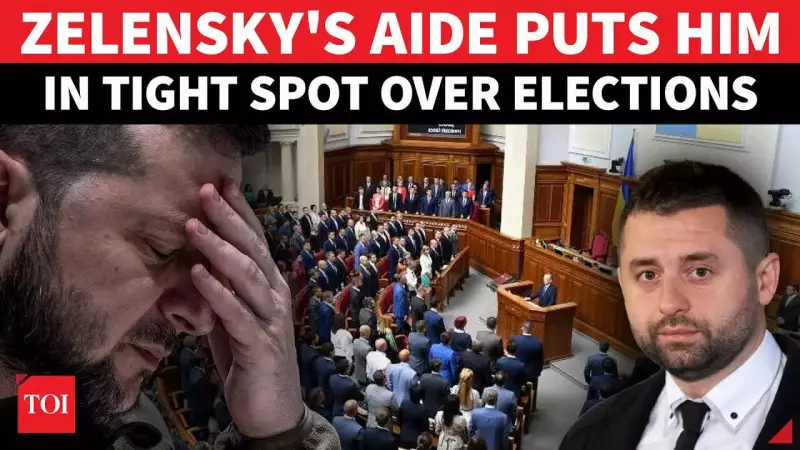
Ukraine faces an unprecedented democratic challenge as the ongoing war with Russia forces a radical rethink of how to conduct its next presidential election. With millions of citizens displaced both inside the country and abroad, a senior ally of President Volodymyr Zelensky has proposed a hybrid election model combining in-person and online voting. This controversial idea, floated on December 28, 2025, aims to preserve voter turnout but has ignited a fierce debate about security, credibility, and the very legitimacy of the state during conflict.
The Proposal: A Digital Ballot for a Nation at War
The core of the proposal is to allow remote voting via digital means. Supporters of the plan, including key figures close to Zelensky, argue that this is not a matter of choice but of necessity. They contend that with a significant portion of the electorate scattered, a traditional election would risk catastrophically low participation. Such an outcome, they warn, could be exploited to undermine the legitimacy of the elected government, both domestically and on the international stage. The goal is to ensure every Ukrainian, whether a soldier on the front line, an internally displaced person, or a refugee abroad, has a viable way to cast their vote.
Security Fears and the Risk of Deepened Mistrust
However, the plan faces substantial opposition from critics who raise serious alarms. The primary concern is that digital voting could be vulnerable to cyber attacks and manipulation, opening the door for widespread fraud claims. In a nation already grappling with the stresses of war, such allegations could deepen public mistrust and create dangerous political fractures. Furthermore, Russia, which has consistently questioned Zelensky's authority since the invasion began, would likely seize on any controversy surrounding the election's integrity to further its narrative. Polls indicate that the Ukrainian public is sharply divided on the issue, reflecting the profound difficulty of the decision.

Elections as a New Front in Ukraine's War
The debate transcends mere logistical planning; it highlights how democratic processes themselves have become another battleground. Kyiv's government must carefully weigh three critical factors: the physical security of conducting an election under constant threat of attack, the need for high turnout to confer a clear mandate, and the overarching requirement for unquestionable credibility. The decision will set a global precedent for how democracies function under extreme duress. As the discussion continues, the world watches to see if Ukraine can safeguard its sovereignty not just militarily, but also through the preservation of its democratic institutions in the most challenging circumstances imaginable.






