

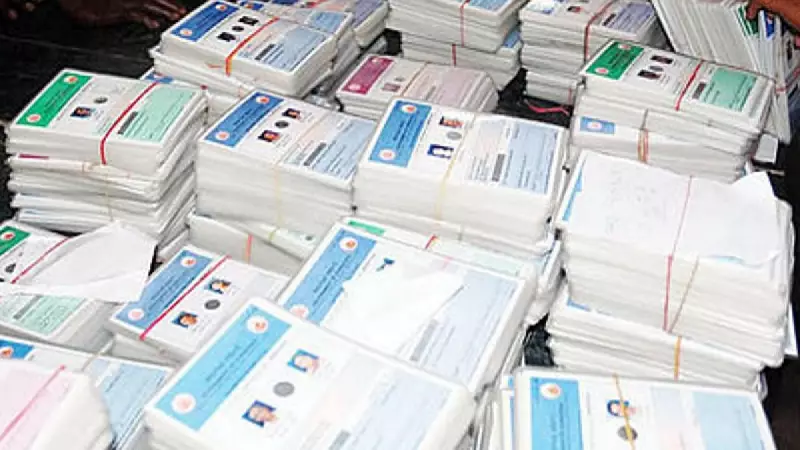
The central government has achieved a significant milestone in its drive to clean up the Public Distribution System (PDS), revealing the removal of a staggering number of ineligible beneficiaries. This massive cleanup operation has resulted in substantial savings for the national exchequer, directly benefiting the genuine poor who rely on subsidized food grains.
A Nationwide Drive Against Leakage
In a written reply presented in the Rajya Sabha, the Minister of State for Consumer Affairs, Food and Public Distribution, Ashwini Kumar Choubey, disclosed the scale of the operation. So far, a total of 2.12 crore bogus or ineligible ration card beneficiaries have been deleted from the system across all states and union territories. This decisive action is a core component of the government's strategy to modernize and streamline the PDS, ensuring that welfare reaches its intended targets.
The minister highlighted that this large-scale deletion was made possible through a continuous process of "review and verification" of beneficiary data. States and UTs have been actively using Aadhaar seeding and other technological tools to identify and weed out duplicate, fake, or non-existent entries from their ration card lists.

Massive Financial Savings and Future Goals
The financial impact of this cleanup is monumental. Minister Choubey stated that the elimination of these fake beneficiaries has prevented a potential leak of approximately ₹17,000 crore from the food subsidy bill. These are funds that can now be redirected to support other welfare initiatives or to further strengthen the food security net for the truly needy.
The government's efforts are not stopping here. The reply indicated that the identification and removal process is ongoing. An additional 1.75 crore ration cards have been identified as suspicious or potentially ineligible. These are currently under scrutiny by the respective state governments for further verification and necessary action, suggesting the final tally of deletions could grow even larger.
Technology as the Cornerstone of Reform
This crackdown on corruption and inefficiency within the PDS has been largely enabled by technological integration. The flagship "One Nation One Ration Card" (ONORC) scheme has been instrumental. By allowing portable benefits linked to Aadhaar, the system inherently discourages duplication and makes it easier to track and consolidate beneficiary data on a national scale.
The widespread seeding of Aadhaar numbers with ration cards has created a digital backbone for the PDS. This allows for:
- De-duplication: Automated systems can flag and remove multiple cards linked to a single individual or family.
- Biometric Authentication: Ensures that food grains are collected by the actual beneficiary, curbing diversion and black marketing.
- Transparent Portability: Migrant workers can access their entitlements anywhere, reducing the incentive for maintaining fraudulent local cards.
The Centre's reply underscores that while the initiative is driven at the national level, the actual implementation and verification work is carried out by the states. The central government provides the policy framework and technological infrastructure, but the on-ground action of reviewing and deleting bogus entries falls under the states' jurisdiction.
Implications and the Road Ahead
The removal of over two crore fake beneficiaries represents a major step towards a more efficient and trustworthy Public Distribution System. The direct consequences are twofold: enhanced fiscal prudence by plugging a massive drain on subsidies, and strengthened social justice by ensuring food security for the authentic poor.
As the government continues to push for complete Aadhaar integration and the pan-India implementation of ONORC, the system is expected to become even more robust. The focus will likely remain on leveraging data analytics and technology to create a seamless, leak-proof distribution network that truly serves as a lifeline for millions of vulnerable Indian families.






