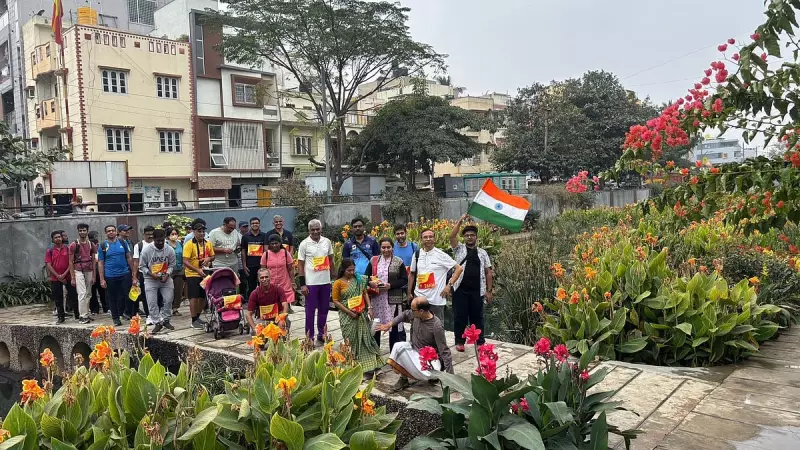
A recent exploratory walk spanning 26 kilometers inside the labyrinthine stormwater drain (SWD) network of Bengaluru has unveiled the city's hidden and often forgotten pathways. This unprecedented journey, undertaken by a team of urban researchers and activists, provides a startling ground-level view of the infrastructure meant to protect India's tech capital from floods.
The Underground Expedition: Tracing Water's Path
The team, which included members from the Friends of Lakes group and other civic organizations, embarked on this trek to physically trace the flow of water. Their path began at a drain near Sarjapur Road and culminated at Bellandur Lake. The primary objective was to understand the connectivity, condition, and bottlenecks within the SWD system, which has repeatedly failed during heavy monsoon rains, leading to severe urban flooding.
Over the course of their journey, the explorers navigated through dark, confined spaces, some large enough to walk upright and others requiring them to crouch. They documented the interior world of Bengaluru's drainage, noting points where the drains were clogged with plastic waste, construction debris, and silt. The walk highlighted a critical finding: while the drains are largely interconnected, illegal encroachments and poor maintenance severely hamper their capacity.
Key Findings from the 26-Km Trek
The expedition yielded several crucial insights into the state of Bengaluru's vital flood management infrastructure. The team discovered that the SWD network does function as an interconnected system, but its efficacy is compromised by multiple human-made issues.
Encroachments pose a major threat. The team identified several spots where buildings and compound walls have been constructed directly over the drain channels, physically blocking the water's path. Furthermore, the dumping of solid waste and construction material was rampant, causing artificial blockages that would accelerate flooding upstream during a downpour.
Another significant observation was the haphazard construction of utility lines—including electricity cables and sewage pipes—that crisscross through the drain channels. These not only obstruct flow but also create dangerous conditions for anyone attempting maintenance or inspection. The explorers also noted the absence of proper safety grilles and vents at many entry points, which poses a serious risk to public safety.
Implications for Bengaluru's Flood Resilience
This ground-truthing exercise has profound implications for how Bengaluru manages its water and plans its urban growth. The visual evidence and data collected during the 26-km walk provide irrefutable proof of the system's vulnerabilities.
The findings directly challenge the effectiveness of conventional desk-based audits and underscore the need for physical inspections by the Bruhat Bengaluru Mahanagara Palike (BBMP). The team's work demonstrates that preventive maintenance, clearing of encroachments, and stringent waste management are non-negotiable to avert future flooding disasters. The health of Bellandur Lake, which receives this water, is also tied to the cleanliness of these feeder drains.
Urban experts argue that such citizen-led initiatives are invaluable. They fill the gap left by civic authorities and create a detailed, actionable map of problem areas. The trek inside the stormwater drains is a clarion call for integrated urban governance, where drainage networks are protected as critical infrastructure, not used as dumping grounds or building sites.
In conclusion, the hidden pathways beneath Bengaluru's streets tell a story of neglect and potential peril. The 26-km journey is more than an adventure; it is a vital diagnostic tool. Addressing the issues it revealed is essential for transforming Bengaluru into a city resilient to the climate challenges of the 21st century.