

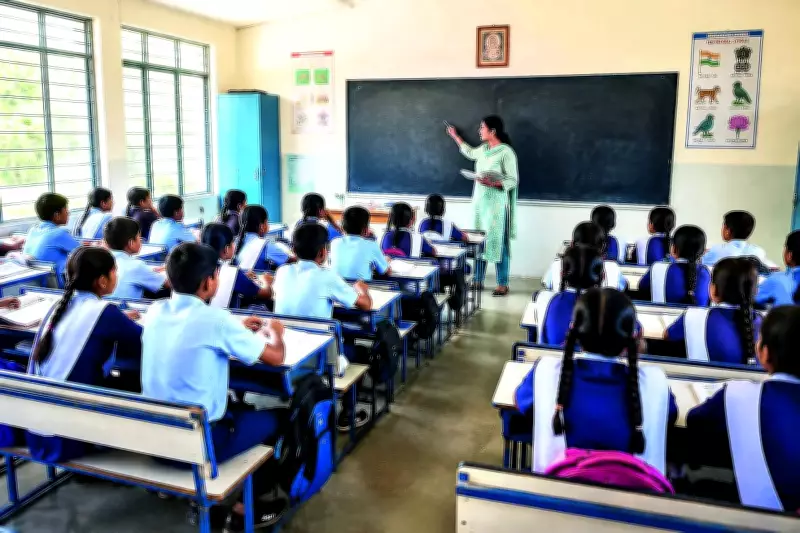
As many as 116 out of 285 schools run by the Pune Municipal Corporation (PMC) are operating without principals, according to data provided in response to queries raised by elected members. This accounts for approximately 40 percent of the total schools. The vacancies have arisen due to retirements and the non-availability of teachers who have cleared the Supreme Court-mandated Teachers Eligibility Test (TET), a prerequisite for promotion to the principal post.
Concerns Over Vacancies
Educators and experts have expressed concern over the prolonged absence of principals. They emphasize that the principal role is crucial not only for academic management but also for administrative functions. Efforts must be accelerated to fill these posts at the earliest, they added.
Vasundhara Barve, deputy commissioner of PMC’s education department, stated, “The Supreme Court has made it mandatory for teachers to clear TET to be promoted as principals. The education department is awaiting the results of the teachers who appeared for this exam. We will complete their appointment process by September.”

Expert Opinions
Mahendra Ganpule, former vice president of the Maharashtra State Principals’ Federation, warned that these posts must not remain vacant for long. “Principals are bridges between government authorities and the school, and their absence will create administrative and academic mismanagement,” he added.
Deepali Sardeshmukh of Maharashtra Rajya Vidyarthi Palak Shikshak Mahasangh alleged that taxpayers’ money is used for developing the municipal education system, but authorities appear to be purposely creating obstacles, possibly to benefit private schools. Not having heads of schools is one such hurdle, she claimed.
Impact on Teachers and Schools
A PMC schoolteacher noted that in the absence of a full-time principal, schools often assign the responsibility to another teacher, adding to mental stress and hampering primary academic duties. “The administrative work is adversely affected, as the temporary principal doesn’t have enough experience to deal with admin issues,” the teacher added.
Another teacher from a civic school in merged areas highlighted that the principal’s role is even more critical in these regions due to the need for effective communication between the school management and PMC. Schools added after the merger of areas suffer more due to lack of infrastructure and require additional attention to match facilities available in city schools.
Furthermore, exploring corporate social responsibility (CSR) funds for schools in fringe areas is hampered without a principal, who is a key figure in communication between CSR units, PMC, and the school management.
Breakdown by Medium
According to civic data, seven English-medium and 11 Urdu-medium schools are also without principals. PMC runs 285 schools offering education in Marathi, English, Urdu, and Kannada mediums, serving nearly 85,000 students from poor social and financial backgrounds. The civic administration also operates e-learning schools, sports schools, music schools, and other facilities.
Role of Principals
Principals are responsible for day-to-day duties, overseeing teaching and non-teaching staff, supporting professional development, managing instructional design, teaching standards, and evaluating student learning outcomes. They also oversee infrastructural maintenance and implement student welfare initiatives such as midday meals, distribution of books, and school uniforms. Additionally, they implement PMC guidelines and initiatives from the education department and head school management committees and Parent-Teacher Associations.






