

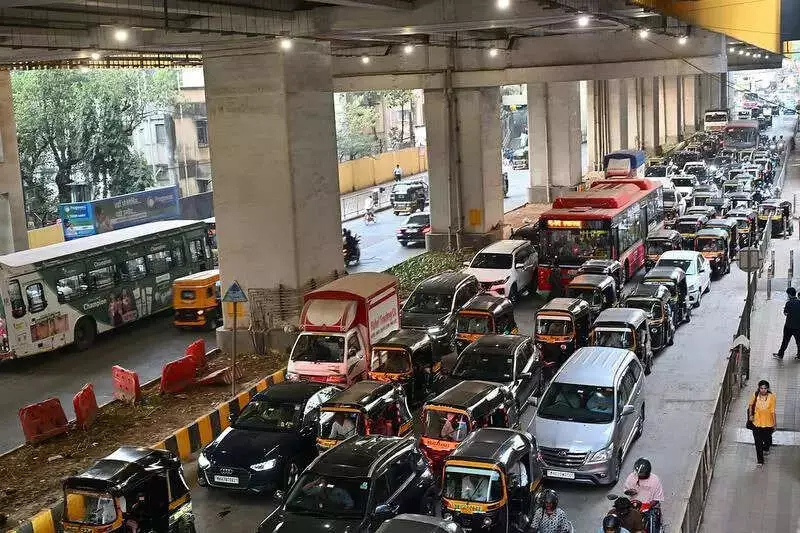
Traffic movement on a crucial stretch near the Andheri West Metro station finally returned to normal on Wednesday, December 17, marking the end of a grueling 46-day ordeal for commuters and local residents. The road had been partially shut since a major cave-in was detected beneath it on October 30.
Months of Congestion and Resident Frustration
The sinkhole appeared on the DN Nagar side of the Metro station, forcing authorities to divert all vehicles from both directions into a single northbound lane. This bottleneck created severe and persistent traffic jams in the densely populated area. Residents expressed relief at the reopening but also voiced surprise and dissatisfaction with the repair work.
"It took two months to repair is awful," said one local resident, summarizing the public sentiment. Others highlighted how the congestion had turned a short crossing into a 20-minute nightmare during peak hours. A point of contention was the replacement of the earlier concrete road surface with an asphalt one, despite the prolonged closure. Activist Zoru Bhathena criticized the move, calling the laid asphalt "third grade Mastic Asphalt" and questioning its substandard quality.

The Complex Underground Challenge
Brihanmumbai Municipal Corporation (BMC) officials defended the timeline, explaining that the repair work was far more complex than initially anticipated. The cave-in was traced to an ageing sewer line from the 1980s, located nearly 30 feet underground.
The 850-mm diameter sewer line had been disturbed, leading to leakage and the formation of the cavity. A major hurdle was the loose soil surrounding the pipe, which repeatedly collapsed as engineers tried to fill the void. This unstable ground posed a significant risk to other essential utilities, including water lines and the Metro infrastructure directly above.
To mitigate this, civic teams had to dig multiple trial pits to meticulously map every utility line between the Metro staircase and the collapsed section. "The pits were crucial to accurately trace and safeguard the utilities before stabilising the cavity," officials stated. This careful, time-consuming process was necessary to prevent further damage.
Official Scrutiny and Future Concerns
The incident had earlier prompted BMC Commissioner Bhushan Gagrani to write to MMRDA chief Sanjay Mukherjee on November 19. The letter flagged the repeated road cavities and damage to sewer lines in the area, allegedly linked to ongoing Metro and bridge construction projects. This official communication underscores the wider infrastructure coordination challenges in the city.
In response to the quality concerns, civic officials asserted that the stretch has been "properly reinstated" considering the dense traffic and the live metro line above it, and only then was it opened to the public. While traffic has now eased, the episode leaves behind questions about the durability of the repair and the need for more resilient urban infrastructure in Mumbai.






