In a significant move to enhance weather forecasting accuracy across India, the meteorological department has announced plans to install 81 new Doppler radars by next year. This expansion includes four new radars specifically for Rajasthan, a state that currently relies on only one such device located in Jaipur.
Rajasthan's Radar Network Expansion
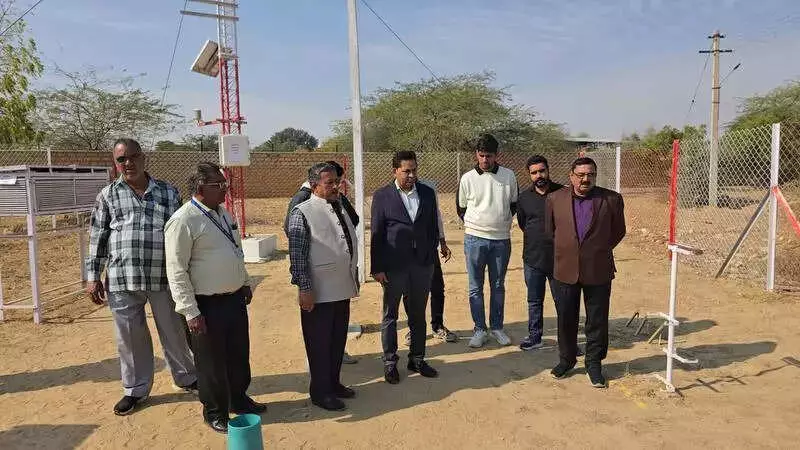
The four new Doppler radars will be strategically installed in Jaisalmer, Bikaner, Udaipur, and Sriganganagar. This development was shared by Gajendra Kumar, deputy director general of the meteorological department, during an exclusive conversation with TOI while on a two-day visit to Jaisalmer. Kumar emphasized that this expansion aims to ensure comprehensive coverage, leaving no area without access to precise weather predictions.
How Doppler Radars Work
Kumar explained that Doppler radars operate with a range of approximately 250 kilometers. These advanced systems utilize radio electromagnetic transparency waves to determine the exact position, direction, speed, and intensity of moving objects in the sky. By employing the "Doppler effect," which involves changes in frequency, the radars provide real-time data on various atmospheric phenomena.

Enhanced Forecasting Capabilities
The implementation of these radars will significantly improve the monitoring of rain, clouds, cyclones, and storms. Previously, forecasting thunderstorms was limited by insufficient data, but with Doppler radars, meteorologists can obtain accurate and rapid information. This includes details on where thunderstorms form, the storms that emanate from them, and associated rainfall and lightning strikes.
Additionally, these systems enable the tracking of thunderclouds to understand their movement and predict where they might rain or are currently raining. This advancement marks a crucial step forward in India's meteorological infrastructure, promising more reliable weather alerts and better preparedness for extreme weather events across the country.