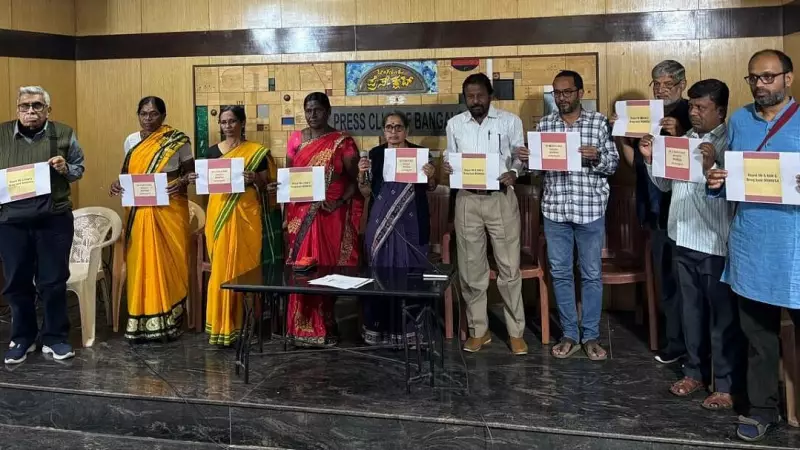
Civil society activists have launched a fierce condemnation of the central government's decision to repeal the Mahatma Gandhi National Rural Employment Guarantee Act (MGNREGA). They have branded the newly enacted legislation that replaces it as a direct "assault on federalism" and a betrayal of India's rural poor.
Widespread Condemnation from Advocacy Groups
The criticism emerged prominently on January 2, 2026, with activists demanding the immediate restoration of the landmark rural jobs scheme. They argue that the previous act was a critical safety net, and its abolition strips away a fundamental right to work. The new law, they assert, systematically "thefts the dignity" of millions of Dalit and Adivasi workers who formed the backbone of the MGNREGA workforce. These communities, often facing systemic discrimination and economic marginalisation, relied heavily on the guaranteed employment and wages provided under the old scheme.
Core Issues with the New Legislation
The activists' primary grievance centres on the perceived erosion of state powers and the centralisation of authority. MGNREGA, in its original form, was implemented through a collaborative framework between the centre and states. The new Act is seen as undermining this balance, giving excessive control to the central government over rural employment programmes. This shift, they claim, violates the federal spirit of the Indian Constitution and disregards the ground-level realities understood by state administrations.

Furthermore, the protestors highlight the potential socio-economic impact. They fear the replacement law lacks the robust legal guarantee of 100 days of work per household, which was the cornerstone of MGNREGA. This could lead to increased insecurity, distress migration, and deepened poverty among vulnerable populations. The timing of the repeal, without extensive parliamentary debate or widespread public consultation, has also been flagged as a major procedural concern.
Demands and the Path Forward
The collective demands are clear and urgent:
- An immediate rollback of the repeal and reinstatement of the original MGNREGA.
- A comprehensive review of the new law through a parliamentary committee.
- Wide-ranging consultations with state governments, worker unions, and civil society.
The activists have vowed to intensify their campaign, planning nationwide demonstrations and legal challenges. They stress that the right to work is inseparable from the right to live with dignity, a principle they believe has been severely compromised. The coming weeks are likely to see heightened political and social debate on this issue, putting the government's rural development policy under intense scrutiny.