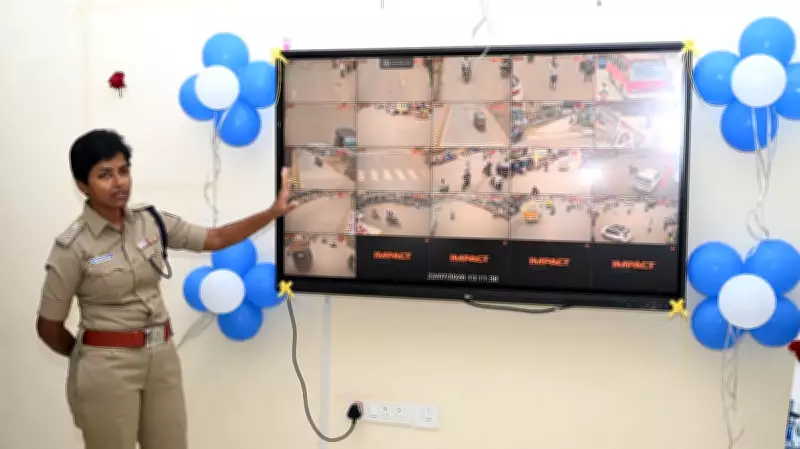
As part of a modernisation drive in traffic management, the Haveri district police have deployed eight artificial intelligence (AI)-based cameras at four key junctions in the district headquarters. This initiative marks the first phase of a broader plan to introduce contactless traffic enforcement across the city.
Camera Locations and Capabilities
The cameras have been installed at busy intersections including the bus stand circle, the old DC office junction, the KMF junction, and the Hosur cross. These AI-powered units are equipped with advanced sensors and software capable of detecting a range of traffic violations in real time, such as running red lights, overspeeding, unauthorised parking, and helmet-less riding.
According to district police sources, the cameras can capture high-resolution images and video footage day and night, and they are connected to a central monitoring system. Traffic violations recorded by the cameras will be processed automatically, and e-challans will be issued to the vehicle owners without any human intervention.

Objectives and Expected Impact
The primary goal of the AI camera system is to implement strict, unbiased traffic law enforcement while minimising direct contact between traffic police and violators. This contactless approach is intended to reduce corruption and allegations of harassment, as well as to improve road safety through consistent enforcement.
A senior officer from the Haveri traffic department stated, “These cameras will act as a deterrent. Once motorists know they are being monitored automatically, they are likely to follow rules more diligently. We expect a significant drop in traffic violations and accidents in the coming months.”
In the first week of operations alone, the system recorded over 500 violations, primarily for signal jumping and improper parking. Officials anticipate that number will rise as the system becomes fully operational and citizens become aware of its presence.
Future Expansion Plans
The current installation of eight cameras is just the beginning. Haveri district authorities have announced plans to extend the network to other major towns and along state highways within the district. A proposal for an additional 40 cameras at 20 locations has been submitted to the state government for funding approval.
Deputy Commissioner of Haveri, speaking on condition of anonymity, said, “We are committed to leveraging technology for better governance. The success of this pilot will determine the speed of expansion. Our aim is to cover all critical traffic points within the next two years.”
Technology and Data Management
The AI cameras operate using machine learning algorithms that have been trained to identify different types of vehicles and traffic rule breaches. The system is integrated with the state's transport database, allowing instant access to vehicle registration details for challan issuance. Data storage and privacy measures are in place, with footage retained for 30 days before being automatically deleted.
Local residents have expressed mixed reactions. Some welcome the move as a step toward safer roads, while others worry about privacy and potential misuse of data. The police have assured that the system is designed to focus only on traffic violations and does not involve facial recognition or continuous surveillance of public movement.
Conclusion
The contactless traffic enforcement initiative in Haveri represents a significant technological leap for the district. With AI cameras already showing results, the model could serve as a blueprint for other small cities in Karnataka looking to modernise their traffic management systems. The success of this pilot will be closely watched by policymakers and law enforcement agencies across the state.