AMTS Buses to Soon Operate on Both Banks of Sabarmati Riverfront in Ahmedabad
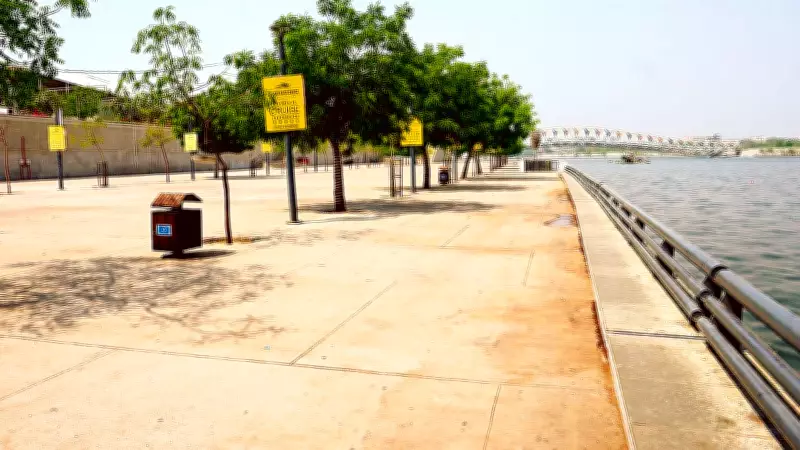
In a significant development for public transportation in Ahmedabad, the Ahmedabad Municipal Corporation (AMC) has announced that its Ahmedabad Municipal Transport Service (AMTS) buses will soon ply on both the east and west banks of the Sabarmati Riverfront. This marks the first time since the Riverfront's opening in 2012 that public transport, including buses, will be allowed on this iconic stretch, which has previously been restricted to private two and four-wheelers only.
Breaking a Long-Standing Barrier
Till now, no public transport vehicles, such as autorickshaws or buses, have been permitted on the Sabarmati Riverfront. The AMC authorities had maintained this policy to prevent traffic congestion and preserve the area's recreational nature, which includes parks, gardens, and promenades designed for public enjoyment rather than as an alternate city route. However, commuters have long demanded access to public transport services on both banks to enhance connectivity and convenience.
Details of the New Initiative
The announcement was made as part of the AMTS's Rs 991-crore draft budget for the fiscal year 2026-27. According to AMTS Transport Manager (General) R L Pandey, electric buses will be introduced on both banks, although a specific timeline has not been disclosed yet. A survey will determine the number of electric buses and their frequency. Currently, only two CNG buses operate on a pilot basis along a nearly 12-km stretch between Vadaj and Vasna on the West Bank, making about eight to ten trips daily, which began in June 2024.

Expansion and Environmental Focus
The Sabarmati Riverfront is undergoing expansion from its current Phase 1 length of 11.5 km to a planned total of 38 km across six phases, extending up to Chiloda Bridge in Gandhinagar. This expansion is claimed to be the longest riverfront project in India. Work on phases two to five, reaching up to GIFT City in Gandhinagar, is progressing steadily.
In line with environmental goals, the AMTS aims to convert its entire fleet to air-conditioned and electric vehicles by 2030. As part of this, 225 electric buses are slated for procurement in 2026-27, with 25 already delivered. Solar charging stations will be developed at depots in Jamalpur, Vasna, Vadaj, and Memnagar to support this transition. Additionally, the budget includes plans to increase the total number of buses from nearly 1,200 to 1,600, improving frequency and expanding routes to cover surrounding villages and GIDC areas in Ahmedabad.
Benefits for Commuters and Workers
To enhance passenger convenience, special bus services to heritage and tourist locations will be added, with 1,492 out of 1,571 buses expected to be operational on regular days. Furthermore, workers registered with the Shramyogi Kalyan Board will be offered free bus rides on any route and any bus through a shramik pass, as part of social welfare initiatives.
Financial and Operational Plans
The Rs 991-crore budget allocates Rs 347 crore for salary and pension expenses, with an anticipated income of Rs 358 crore, including Rs 100 crore in support from the AMC. A loan of Rs 600 crore is also expected to fund these initiatives. The AMTS also envisions multi-modal integration with BRTS and GSRTC buses on the Outer Ring Road and plans to develop the state's first multi-level bus depot.
This move represents a pivotal shift in Ahmedabad's urban transport strategy, balancing public demand with sustainable development goals.