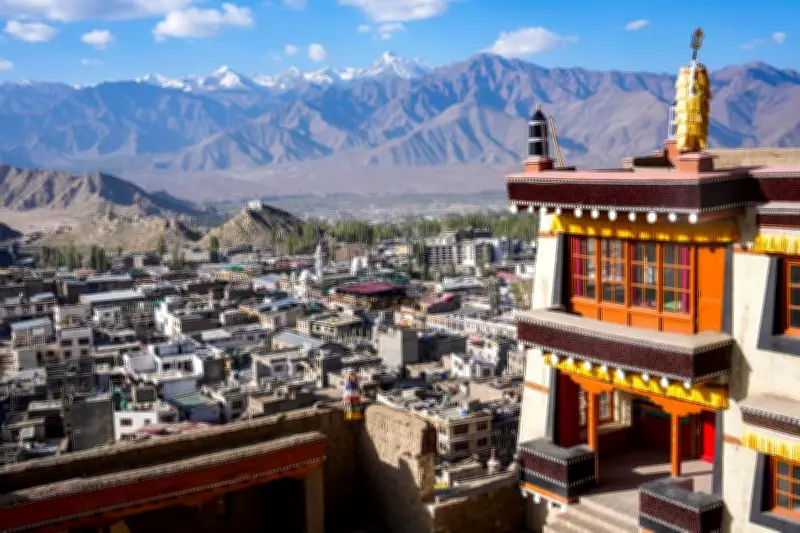
A new liquor policy in Ladakh has sparked widespread anger and criticism from religious leaders, women's groups, and political figures. The policy, recently approved by Ladakh Lieutenant Governor Vinai Kumar Saxena, was introduced as a measure to curb drug abuse and modernize the excise regime in the Union Territory.
Policy Details and Justification
The Ladakh administration stated that the excise policy primarily aims to curb the growing dependence on narcotics and drugs. LG Saxena described it as a significant reform, introducing a liberalized, transparent, and technology-enabled regulatory framework. The administration claimed the policy balances public convenience, tourism promotion, revenue optimization, and effective regulation of the liquor trade. It also argued that offering a wider choice of low-alcoholic-content liquor would help combat drug abuse.
Opposition from Religious and Civil Society Groups
The All-Ladakh Gonpa Association expressed strong resentment against the expansion of liquor varieties and the opening of new liquor vends. In a statement, the association said that during a meeting chaired by the LG on narcotic substance abuse, all civil society participants opposed the policy. The group advocated for declaring Ladakh a dry state like Gujarat and Bihar, questioning the logic of using liquor to overcome drug abuse.

The women's wing of the Ladakh Buddhist Association (LBA) also opposed the policy, warning of far-reaching social consequences for the region.
Political Leaders Speak Out
Political leaders have joined the chorus of criticism. Sajjad Kargili, a political leader from Kargil, called the policy's logic difficult to understand. He argued that alcohol itself is an intoxicant and often serves as a gateway to substance dependence rather than a solution. Kargili emphasized that Ladakh, particularly Kargil, has long been guided by social values discouraging intoxicants. He stated that alcohol has never been part of the cultural ethos and is not accepted by the overwhelming majority. He condemned any attempt to normalize alcohol under the pretext of revenue generation or tourism promotion as contrary to local sentiments and traditions.
The growing opposition reflects deep-seated concerns that the policy could undermine Ladakh's social fabric and cultural values.